

Test yourself on the past week’s K-12 news
What important progress has been made in the K-12 education sector this week? Take our five-question quiz to test your awareness and share your results on social media.
Test yourself on the past week’s K-12 news
What important progress has been made in the K-12 education sector this week? Take our five-question quiz to test your awareness and share your results on social media.
Quill.org Selected for New York City Public Schools AI Pilot | K-12 Dive
New York City public schools announced the launch of an AI pilot, with Quill.org as one of five selected tools, providing free writing learning tools to high schools across the city. The organization emphasizes that its platform does not generate answers for students but instead guides them through feedback to revise their own writing.
Bipartisan House bill aims to stop outsourcing of some Education Department offices
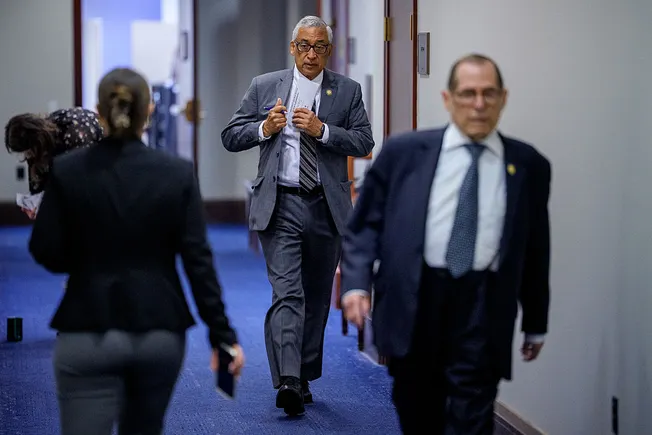
The U.S. House of Representatives introduced a bipartisan bill on Wednesday (local time) aimed at preventing the transfer of four offices under the U.S. Department of Education—responsible for special education, postsecondary education, Indigenous education, and elementary and secondary education—to other federal agencies. The bill, co-sponsored by Representatives John Mannion (D-NY), Bobby Scott (D-VA), and Brian Fitzpatrick (R-PA), is a companion measure to a Senate bill awaiting a full vote. Currently, under the Trump administration, the Department of Education has signed 14 interagency agreements with six other federal agencies to transfer various K-12 and higher education responsibilities.
LAUSD restricts all students from using AI tools
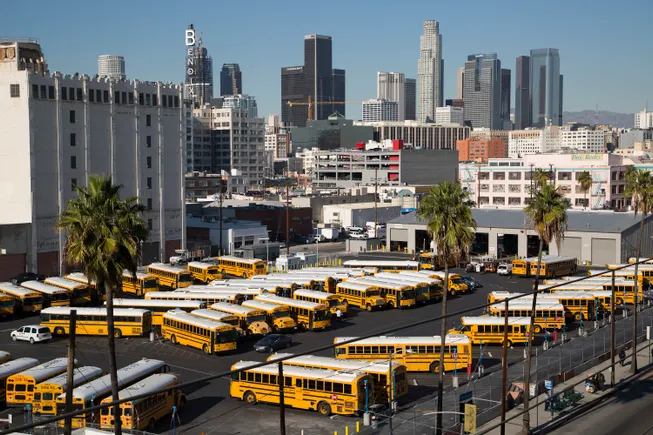
Los Angeles Unified School District (LAUSD) has confirmed that it will comprehensively restrict all student access to generative artificial intelligence platforms for the 2026-27 school year. Previously, students aged 13 and older who had completed digital citizenship education could use approved AI tools. The restriction takes effect while the district reviews AI's instructional uses and safeguards. This move follows New York City's announcement of a one-year AI ban for K-12 schools, as the two largest U.S. education systems take successive actions, prompting discussions about the direction of national AI education policy.
Education Department’s latest civil rights data redacts hundreds of LGBTQ+ entries

High schoolers say school counselors emphasize college pathways — and not CTE
A report released Monday by the RAND Corporation shows that 66% of high school students from middle-income families said their schools emphasized four-year colleges when discussing future paths, while only 11% mentioned community colleges, 16% mentioned technical training and apprenticeships, and 17% mentioned full-time work. Meanwhile, 70% of students pursuing a bachelor's degree or higher said their schools did a good job planning for their futures, compared with only 50% of non-bachelor's degree students.

Portland Public Schools ponders up to 18 school closures
At Tuesday's board meeting, Portland Public Schools presented a 'right-sizing' plan that could close up to 18 schools, 15 of which are elementary schools. District data shows declining enrollment, and without action, by the 2031-32 school year, 37 of 45 elementary schools are projected to have fewer than 360 students. District officials stated they will seek broad input but emphasized that no final decisions have been made.
K-12 School Choice Research: Academic Quality Triggers Withdrawal Intent, Campus Climate Drives Final Decision
Sogolytics released its "Family School Choice Priorities and Satisfaction" report, based on a national survey of 534 U.S. K-12 parents. Data shows that educational quality (32%) is the primary trigger for families considering leaving school, but the driving factors behind the final decision to leave are specific incidents (42%), campus climate (37%), and family relocation (32%). The study also found that ELL families face the highest attrition risk, while public school families show the strongest loyalty.