
Kindergarten Vaccine Exemptions Rise for Third Consecutive Year, CDC Data Shows
New CDC data reveals that 4.2% of U.S. kindergartners had vaccine exemptions in the 2025-26 school year, up from 3.6% the prior year. Coverage declined for all reported vaccines, and the Trump administration's recent executive order aims to reshape childhood vaccine recommendations.
Kindergarten Vaccine Exemptions Rise for Third Consecutive Year, CDC Data Shows
The proportion of U.S. kindergartners entering school with exemptions from one or more required vaccines continued its upward trajectory during the 2025-26 school year, according to data released by the U.S. Centers for Disease Control and Prevention (CDC). The national exemption rate reached 4.2%, up from 3.6% in the previous year.
Approximately 155,000 kindergartners had exemptions from at least one vaccine during the 2025-26 school year. The data also show that exemption rates increased in 41 states and the District of Columbia, with 24 states reporting exemption rates exceeding 5%.
The vaccination rate among K-12 students has declined in recent years, a trend that some health organizations attribute to misinformation about vaccine safety and effectiveness. The National Association of School Nurses (NASN) issued a statement on Aug. 11 warning that conflicting vaccine recommendations can "create confusion for families, complicate school health practice, and undermine confidence in vaccines that have protected generations of children."
Coverage Declines Across All Reported Vaccines
The CDC data, released this week, show that vaccination coverage among kindergartners in the 2025-26 school year fell for all reported vaccines compared with the prior year. Coverage ranged from 92% for the diphtheria, tetanus, and acellular pertussis (DTaP) vaccine to 92.4% for both the measles, mumps, and rubella (MMR) vaccine and the polio vaccine.
About 280,000 kindergartners attended school without documentation of completing the MMR vaccine last school year, the CDC said. The number of reported measles cases for people of all ages reached a 35-year high nationally by July 30 this year.
Executive Order Seeks to Reform Childhood Vaccine Standards
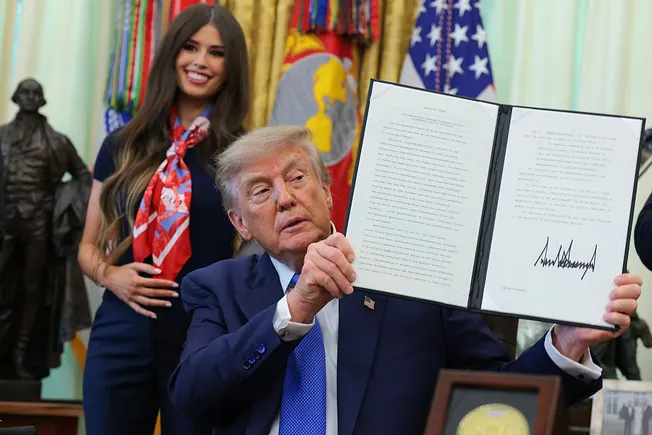
The newly released CDC data come as the Trump administration attempts to reform childhood vaccine standards by making recommendations for the number and sequencing of vaccines. President Donald Trump signed an executive order on Aug. 10 calling for changes "ensuring that Americans are receiving the best scientifically supported medical advice in the world, as well as to protecting religious liberty and parental authority."
According to a fact sheet released by the White House on Aug. 10, the executive order includes the following recommendations:
- Reducing the number of immunizations to provide protection against 11 diseases, rather than the 18 diseases recommended by the CDC in 2024.
- Separating the combined measles, mumps, and rubella vaccine into three single-disease shots and administering all vaccines during separate medical visits.
- Updating state laws for school vaccine policies to align with the new standards for childhood vaccinations.
- Ensuring states comply with constitutional and federal laws related to parental authority, religious freedom, disability accommodations, and equal protection under the law. This includes what the order calls "state obligations to provide religious and medical exemptions" from childhood and adolescent immunization requirements.
State-Level Policies and Exemptions
Although the CDC makes recommendations for childhood vaccination schedules, school immunization requirements are typically set at the state level. All 50 states and Washington, D.C., require certain vaccinations for school attendance, according to the National Conference of State Legislatures, and all allow exemptions for medical reasons.
Most states also granted exemptions for religious or personal reasons in 2025. Just five states — California, Connecticut, Maine, New York, and West Virginia — allow only medical exemptions, according to KFF, a nonprofit health policy research, polling, and news organization.
School Nurses Express Concern
NASN said it was "deeply concerned" by the Aug. 10 executive order, stating that "decisions that affect the health of children and school communities must be guided by transparent, rigorous scientific review and the best available evidence."
In an October 2025 statement, NASN urged state leaders to identify professional organizations, including the American Academy of Pediatrics and the American Public Health Association, as reputable and trustworthy sources for scientifically backed information.
"School nurses see the consequences of vaccine-preventable illness in real time — students missing school, families missing work, medically vulnerable students placed at greater risk, and learning disrupted," said NASN President Lynn Nelson in the Aug. 11 statement. "School nurses need clear, credible guidance so they can help families make informed decisions and keep students healthy, safe, and ready to learn."
The CDC and other health organizations encourage parents to discuss childhood vaccination options with their doctors.