
Inspiring Computer Science Interest Through Game Design: Four Paths Schools Are Exploring
Video game design is becoming a powerful tool for schools to connect with STEM education. From high school courses in Texas to science museum programs in New York, educators are leveraging game development to engage students while focusing on foundational technology, soft skills, and diversity. This article outlines four practical approaches.
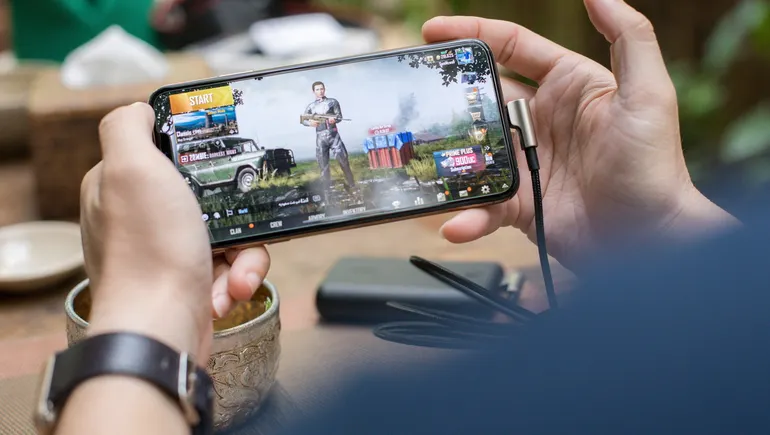
At the Lewisville Independent School District in Texas,video game design and programming coursestypically attract about 200 student applications each year, but can only accommodate around 150. This enthusiasm, along with the resulting waitlists, reflects students' desire for such courses. The program is guided by Adrian Moreno, director of the district's Technology Exploration and Career Center East, along with teachers Billy Carter and Kevin O'Gorman.
Although most of these students may have never designed or programmed a video game, nearly all have touched a game controller or played a game. According toPew Research Centerdata, 90% of children aged 13 to 17 have played video games on a computer, console, or phone.
This fact has not gone unnoticed by teachers in the Lewisville district.
"In the 1960s, everyone wanted to be a filmmaker; in the 70s, people were eager to learn broadcasting; and now, video games are the hottest field," O'Gorman told Education Dive. "Today, all kids grow up with the internet, wireless devices, and streaming video. Here, they get to create that world themselves and want to make or modify games."
For districts looking to incorporate more science, technology, engineering, and math (STEM) content into their curriculum, game design and programming can serve as a direct entry point—by sparking student interest, strengthening their connection to what they learn, and cultivating additional skills that benefit academics and careers.
Students build foundational technical skills
In the Lewisville district, students who successfully enroll use high-end Macs and Alienware PCs—the same equipment used by professional game developers. The course also mirrors the operations of professional game companies in some ways. For example, students must submit partially completed games to reviewers to receive feedback on what works and what doesn't.
In Lewisville, the reviewers come in the form of "little ones"—the district's kindergarten students.
Students design an educational game each year to deliver a lesson in an entertaining way. They are free to choose the theme and the lesson they want to teach, but when kindergarteners get their hands on the games, they aren't just having fun—they're providing feedback, Carter said. This way, the kindergarteners can tell the high schoolers whether the game is too hard or too easy—and whether they actually learned something.
"After the kindergarteners leave, we sit down and discuss their feedback," Carter said. "As for those kindergarteners, the principal says they look forward to this event every year."
Embedding STEM skills in elementary school
The Lewisville district assigns the role of video game reviewers to kindergarteners, but the course itself targets high school students. However, game design and programming can also be taught to very young students—staff at the New York Hall of Science are advancing this effort, exploring ways to engage elementary students in building, creating, and programming video games.
This science museum in Queens, New York, offers summer programs, trains teachers, and conducts student workshops in schools. Typically, they target middle and high school students, but are now "trying to expose younger audiences to these concepts," said Anthony Negron, digital programming manager at NYSCI. During the pandemic, the institution shifted online, and the number of programs decreased.
Courses for younger students often start withScratch, a simple drag-and-drop programming language developed by the MIT Media Lab. Negron said the first project with Scratch is usually building a maze challenge, which not only helps them learn the programming language but also gives them a project or goal rather than a series of mechanical lessons. This approach is more engaging and ultimately produces diverse works.
"We've seen kidsbuild narratives of stories they're reading using Scratch," he said. "We've also seen them build games with Scratch to solve community problems."
Soft skills are not overlooked
Although teachers in Lewisville know not every student will become a video game designer or programmer, they believe the skills students learn can help them succeed in any work environment. These skills includesoft skills, such as how to write a strong resume or create a presentation—abilities that employers say they want young job seekers to have.
"We have business partners, and we've asked them if the courses we're teaching students are the right ones," Carter said. "One of the things they mentioned was the importance of these soft skills."
Sharon Lambert, a teacher at Dunnellon High School in Florida, also helps her game design and programming students develop soft skills. A few years ago, she piloted these courses using free resources online, and now Marion County Public Schools has expanded the program so students can take multiple courses and master programming languages includingPython、Unity, and C-Sharp, as well as other digital tools likeBlender.
"I want to make sure kids know that game design is about much more than just playing games," she said. "They might not realize that."
She wants her students to master these professional tools, but also wants them to leave with soft skills, so they are not only proficient in how to code games but also know how to navigate a professional work environment.
"Games and programs are usually not completed by one person alone," she said. "It takes a team, and learning how to collaborate in a team is an important skill students acquire. From communication, time management, integrity, organizational skills, and so on, soft skills are crucial for them so they can compete and succeed in the job market."
A gateway to broadening computer science diversity
Video games not only spark student interest but can also help build a bridge to computer science classrooms. However, although most teenagers have played video games, most U.S. high schools do not offer computer science in their curriculum, said Jake Baskin, executive director of theComputer Science Teachers Associationin Chicago.
But for schools looking to use video game design and programming as an entry point for new computer science courses, Baskin said they should be clear about what the course will include—both for students who want to enroll and for educators, being explicit about what they want to convey.
"It's important that video game development doesn't mean you can play video games freely," he said. "When video game development is taught in a way that includes rigorous [computer science] education, it's an excellent way to ensure students engage with high-quality content."
Baskin also believes game design and programming courses can provide schools and districts an opportunity to consciously think about equity and inclusion, ensuring all students are welcomed, because female and students of color have historically been "severely underrepresented" in computer science courses, he said.
In districts that are "thoughtful from the start," Baskin said, participation in computer science courses has increased, and the number of young women taking AP computer science exams has also risen.
"I think almost any course has an opportunity to integrate [computer science]," he said. "For principals who say there's no funding, I would ask them to think creatively about where resources exist and where integration can happen."