
U.S. Department of Education's Civil Rights Enforcement Approach Shifts: Faster Investigations and Funding Pressure Become the New Norm
Under the Trump administration, the U.S. Department of Education's Office for Civil Rights has advanced civil rights investigations at a faster pace and with tougher measures, including initiating investigations directly, mandating corrective actions with deadlines, and threatening to cut off federal funding. The Maine transgender athlete policy case has become a landmark example, sparking widespread debate in the education sector over the fairness of enforcement and procedural due process.
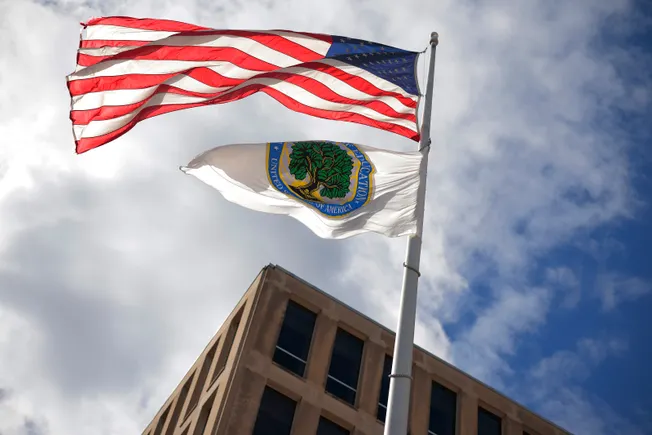
At the start of the year, the Maine Department of Education, like other state education systems, was preparing for potential changes in K-12 policy and practice due to the presidential transition of power. However, within weeks of the inauguration, Maine began receiving warning letters from federal agencies regarding its transgender athlete policy, became the target of multiple federal investigations, and at one point faced the risk of losing millions of dollars in federal funding.
The rapid turn of events in Maine's case may not be an isolated incident. Based on communications from the U.S. Department of Education and recent investigations, the department appears to have adopted a more aggressive new strategy in civil rights enforcement—despite having closed half of its civil rights enforcement offices nationwide.
"To better serve American students and families, the operations of the Office for Civil Rights (OCR) are being adjusted," said Madi Biedermann, Deputy Assistant Secretary for Communications at the Department of Education, in an email sent to K-12 Dive on March 12.
In less than three months since President Donald Trump took office, the Department of Education's Office for Civil Rights has launched targeted investigations into some of the largest school districts across the country, rapidly advancing probes with half its workforce, and moving to cut off federal funding to districts. The accelerated pace of OCR's work and the high stakes of its investigations mark a significant shift in the enforcement environment facing schools. Previously, federal investigations typically took months or even years, schools rarely faced the risk of losing federal funding due to civil rights investigations, and probes rarely moved this quickly.
"I think those days are over... we are definitely in unprecedented times," said Brett Sokolow, president of TNG, an education civil rights consulting firm, and president of the Association of Title IX Administrators. "This is really a mess."
"It feels very targeted"
The precursor to this change was a series of coordinated actions by multiple agencies against the Maine Department of Education over alleged violations of Title IX. In February, President Trump and Maine Governor Janet Mills had a public dispute over the state's transgender athlete policy—Mills responded to Trump with "see you in court"—after which the Department of Education launched an investigation into Maine's education system, while the U.S. Department of Health and Human Services (HHS) also initiated a parallel investigation into the state. The investigation is a "directed" investigation, meaning it was initiated by the government itself, rather than based on public complaints.
"All these actions happening in concert in a very short period of time, along with rapid-fire directed investigations, feels very targeted," said Kelly Baker, a consultant at TNG.
The HHS investigation into the Maine Department of Education concluded on February 25, finding Maine in violation of Title IX just four days after it began. On March 5, the investigation expanded to include the Maine Principals' Association and Greely High School. Less than two weeks later, on March 17, the federal agency found all three entities in violation of Title IX. Two days later, on March 19, the Department of Education concluded its investigation into Maine, which had begun on February 21, also finding Maine in violation of Title IX. The Department of Education hinted at this outcome on the very day the investigation was launched.
"Let me be clear: if Maine wants to continue receiving federal funding from the Department of Education, it must comply with Title IX," said Craig Trainor, Acting Assistant Secretary for Civil Rights at the Department of Education, in a statement on February 21. As of 2023, the Maine Department of Education received over $672 million annually from HHS and the Department of Education. "If Maine wants to forgo federal funding and continue trampling on the rights of young female athletes, that is its choice. OCR will do everything in its power to ensure taxpayer money does not fund blatant violations of civil rights laws," Trainor said. Mills issued a statement that day saying the investigation's outcome was "almost preordained."
Less than a month later, on March 19—following what a spokesperson for the Maine Principals' Association called a "targeted" investigation lacking "interviews or any other investigative measures"—the Department of Education confirmed its findings. "OCR's investigation into the Maine Department of Education confirms that the state's allowance of boys to participate in girls' sports and use female private facilities violates federal anti-discrimination laws," Trainor said in a statement on March 19. The Department of Education bypassed its standard 90-day window for signing a corrective action agreement, sending the Maine Department of Education a draft resolution agreement with a warning: failure to sign within 10 days would result in loss of federal funding.
"This is just the beginning"
The coordinated actions by multiple federal agencies against the Maine Department of Education, the rapid investigations into state education departments, and the resulting high stakes—including referring cases to the Department of Justice (DOJ), a rare practice—have drawn attention in the education civil rights community. "There has been a very noticeable change in enforcement approach," Baker said. Previously, the Department of Education rarely revoked federal funding for noncompliance with civil rights laws. "That stick has always existed... but it was never used." The Biden administration had stated it would not seek to cut school funding because that would ultimately harm students—they would lose services funded by those dollars.
"Under previous administrations, enforcement was a phantom promise," Trainor said in a final warning sent to the Maine Department of Education on March 31. "No longer." Since Trump's inauguration in January, his administration has canceled or threatened to cancel over $9.5 billion in funding to Ivy League institutions over alleged Title VI and Title IX violations related to antisemitism and LGBTQ+ policies, threatened about 60 colleges and a few school districts with further funding loss over antisemitism allegations, and promised "this is just the beginning." "Freezing funds is one of the tools we are using," said Leo Terrell, head of the DOJ's antisemitism task force, in a statement on March 7 regarding the Columbia University antisemitism case. The threat of funding withholding has extended to many other areas of OCR's civil rights enforcement. For example, last Thursday, the administration threatened to withdraw funding from states unless schools demonstrated compliance with Title VI, including eliminating diversity, equity, and inclusion programs. "Federal financial assistance is a privilege, not a right," Trainor said in a memo to states on April 3.
Will there be more Maine cases?
The Department of Education's investigation into Maine's education system was among the first in a series of probes by the new administration. Investigations into large education systems such as the California Department of Education (also a directed investigation) and Chicago Public Schools (initiated after a complaint from a conservative civil rights organization) followed. On March 28, the Department of Education launched a second directed investigation into the Maine Department of Education, this time over its alleged use of gender identity plans, suspected of violating privacy policies under the Family Educational Rights and Privacy Act (FERPA). In these cases and others where funding is at stake, the administration frames the exclusion of transgender students from girls' sports teams as a "women's rights" issue and treats other LGBTQ+ issues, such as the use of preferred pronouns, as suspected violations of privacy laws and parental rights.
"I think we will see more cases exactly like Maine's," Baker said. "We will see directed investigations, findings of noncompliance, brief windows for policy changes, and then enforcement—possibly referral to the DOJ." In the Maine case, the resolution agreement drafted by the Department of Education would require the state education department to apologize to each cisgender girl affected by the state policy allowing transgender athletes to participate on girls' teams, "because her educational experience and school sports participation were harmed due to sex discrimination." The department would also be required to notify public schools and require them to adopt policies defining "female" as "a reproductive system with the biological function of producing eggs (oocytes)" and "male" as "a reproductive system with the biological function of producing sperm." Under the agreement, "sex" would be synonymous with "biological sex."
When the Maine Department of Education refused to sign the agreement, the administration said it was "moving quickly to ensure federal funds no longer support blatantly illegal conduct that harms women and girls." Maine was required to sign the resolution agreement by April 11, or the case would be referred to the DOJ, putting the state's federal education funding at risk. The Maine Department of Education declined to comment on the case, which is now in the hands of the state attorney general. However, Mills has made clear from the start that she will take the case to court.
As of April 3, since Trump took office, the Department of Education's Office for Civil Rights has launched and publicly disclosed at least seven investigations into public school districts or systems—several of them directed investigations involving similar LGBTQ+ issues. All the K-12 institutions under investigation are primarily located in Democratic-leaning areas. In contrast, during a similar period after Biden's 2020 inauguration, OCR had launched investigations into at least 33 K-12 education systems spanning both Democratic- and Republican-leaning areas. Those investigations are still ongoing and were mostly based on public complaints, covering a range of civil rights issues from disability discrimination to racial discrimination.
The Department of Education's investigations align with the Trump administration's broader enforcement approach, said Jackie Gharapour Wernz, a civil rights lawyer and founder of Education Civil Rights Solutions. The administration's message is: "If you are a 'woke' school district, we are coming for you," Gharapour Wernz said, who served as a lawyer in the Department of Education's Office for Civil Rights during the Obama administration and Trump's first term. Sokolow said some of the current administration's decisions are not entirely different from previous administrations. For example, during the Obama administration, OCR head Russlynn Ali used compliance reviews of at least six educational institutions—deemed to have mishandled sexual harassment and assault complaints—to "scare everyone else into line."
Department of Education: "Investigations are proceeding efficiently"
The Department of Education is accelerating the pace of civil rights investigations at a time when half of its OCR regional offices have closed due to departmental layoffs (which cut half its staff). The office closures have affected half the states in the U.S., raising questions about how the agency can continue conducting thorough investigations and overseeing enforcement. In fact, these constraints have led the nation's largest unions—the National Education Association and the American Federation of Teachers—to file lawsuits and prompted letters from Democratic lawmakers. However, the Department of Education stated in a March 12 email to K-12 Dive that "OCR's dedicated staff will fulfill their statutory duties." Biedermann confirmed that "OCR's recently revised Case Processing Manual is designed to ensure investigations proceed efficiently, without imposing excessive evidentiary burdens on recipients and OCR staff." She said OCR will increase the use of mediation and expedited case processing (i.e., "rapid resolution") to handle complaints related to disability and harassment.
Civil rights lawyers familiar with OCR operations speculate that the agency may also rely more on HHS and the DOJ for enforcement. The Department of Education formally initiated this shift last week, announcing that the DOJ will assist in investigations and ultimately enforce policies separating transgender students from girls' sports teams and spaces in schools and universities. "I don't think they are just throwing red meat to the base," Sokolow said of the Trump administration's aggressive approach to education civil rights enforcement. "We are in the middle of a larger experiment about the power of the executive branch."

