
Massive Layoffs in the Education Department: What Impact on Special Education Rights Protection?
The U.S. Department of Education has cut more than half of its staff in the past two months and plans to dissolve the agency, with special education oversight potentially transferred to the Department of Health and Human Services. Parents, advocates, and Democrats worry that protections for students with disabilities may be undermined, while supporters argue this could reduce bureaucracy and expand school choice. This article synthesizes multiple viewpoints to analyze potential impacts.
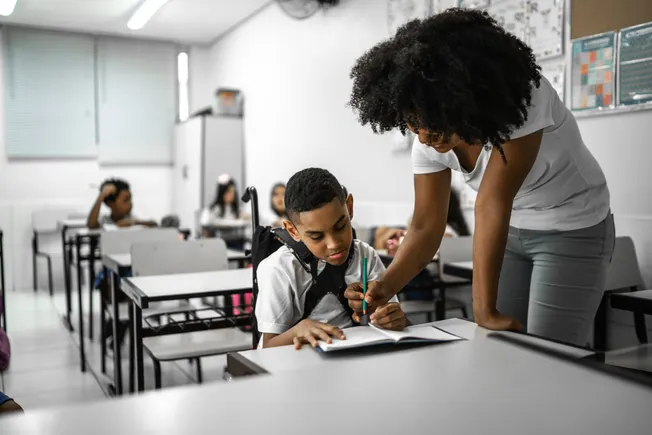
Recently, the U.S. Department of Education's large-scale layoffs and dissolution plan have sparked widespread concern. Parents, advocates, educators, and Democrats have issued warnings that these changes will weaken civil rights protections for students with disabilities and may negatively impact their classroom support.
Over the past two months, the Department of Education under the Trump administration has cut half of its 4,133 employees, suspended federal funding disbursements, eliminated diversity, equity, and inclusion programs, terminated research and teacher training grants, and promoted private school choice initiatives. Last week, President Donald Trump directed Education Secretary Linda McMahon to develop a plan to dismantle the nearly 45-year-old education agency. This move has triggered two lawsuits filed by unions, school districts, and advocates, and requires congressional approval.
During the dissolution process, the Trump administration plans to transfer federal special education oversight responsibilities from the Department of Education to the U.S. Department of Health and Human Services. Currently, specific operational details of this transition have not been announced.
Supporters argue that these changes will reduce federal bureaucracy and give local communities greater decision-making power over spending and student services. At a March 20 White House ceremony signing the executive order to begin closing the Department of Education, Trump stated that funding for students with disabilities would be "fully preserved."
Although some actions have been paused or temporarily reversed due to court intervention, the pressure of overall changes is gradually reaching the local level. Parents, educators, and advocates opposing these measures worry that the support system for students with disabilities will be eroded.
"Parents will have to fight harder for accountability than they have in the past 60 years," said Marcy Lipsitt, a Michigan resident and advocate for students with disabilities.
Protecting student rights
Lipsitt frequently files disability discrimination complaints with the Department of Education's Office for Civil Rights (OCR). She noted that without strong federal enforcement of student rights guaranteed under the Individuals with Disabilities Education Act (IDEA), parents will find it harder to ensure their children's classrooms have qualified special education teachers, or that students receive promised physical, speech, or occupational therapy.
Lipsitt worries that recent cuts to OCR staff will severely slow down the investigation of disability discrimination complaints. Earlier this month, the Department of Education closed 7 of its 12 regional civil rights enforcement offices. On March 14, the National Center for Youth Law, on behalf of the Council of Parent Attorneys and Advocates and two parents with pending OCR complaints, filed a federal lawsuit accusing the Trump administration of "abandoning its responsibilities in handling civil rights investigations." The lawsuit seeks a court order to restore OCR's ability to process complaints and conduct investigations.
Parents of children with disabilities can file civil rights complaints through the Department of Education's OCR complaint process under Section 504 of the Rehabilitation Act or the Americans with Disabilities Act. IDEA gives parents the right to file due process complaints regarding disputes over their child's individualized services. Additionally, anyone—including parents, advocates, organizations, etc.—can file a written state complaint reporting potential IDEA violations at the school, district, or state level.
Filing OCR complaints and written state complaints is time-consuming but typically free for parents. Filing a due process complaint, however, often requires upfront costs for hiring an attorney. Similarly, most school districts also need to hire lawyers for their defense.
According to federal data analyzed by the Center for Appropriate Dispute Resolution in Special Education, the number of written state complaints and due process complaints nationwide has been rising in recent years. Lipsitt predicts that state complaints will increase further as OCR complaint investigations are expected to slow down. She said parents will have to fight harder than they have "since the 1950s," adding, "Without accountability—that will be the battle for parents."
However, José Martin, a lawyer at the Austin, Texas law firm Richards, Lindsay & Martin representing school districts, said that even if the OCR complaint process slows due to staffing constraints, parents can still use the state complaint process. Martin said that depending on the state, this process can be an effective way to address parent grievances. "It's not a rubber stamp. We've seen complaints lead to situations where districts must take clear corrective actions."
Accountability for states and districts
In the 2022-23 school year, students with disabilities made up about 15% of total K-12 enrollment. In fiscal year 2024, the federal government provided $15.4 billion under IDEA to support approximately 8.4 million infants, toddlers, school-age children, and young people with disabilities. However, federal special education funding covers only about 10% of the total cost per student, roughly $1,810.
The federal government is not directly involved in developing students' Individualized Education Programs (IEPs), which are created by teachers and parents and detail the type and frequency of professional support for each student. But the Department of Education is responsible for allocating funds Congress appropriates for such services. The department's Office of Special Education and Rehabilitative Services (OSERS) and Office of Special Education Programs (OSEP) also conduct monitoring, provide technical assistance to states and districts, and ensure states and districts comply with IDEA.
According to a March 14 letter from Hayley Sanon, acting assistant secretary of the Office of Elementary and Secondary Education, to education stakeholders, no OSEP employees lost their jobs in the latest round of Department of Education layoffs. The letter also stated that the dismissed OSERS employees performed policy, operations, and administrative functions that "are either duplicative or can be reassigned to create a more efficient and accountable organizational structure."
Martin said that even if federal monitoring of special education services weakens, it does not necessarily mean school districts will abandon compliance or states will weaken their own oversight. In fact, some states have already gone beyond federal special education accountability requirements.
Valerie C. Williams, who led OSEP under President Joe Biden, said the office not only conducts monitoring activities but also helps states and districts address challenges such as special education teacher shortages and improving the inclusion of special education students in general classrooms. Williams noted that if federal special education staff are reduced, the capacity to support states and districts in overcoming these and other challenges will decline, which will then filter down to districts and schools, leaving them with fewer resources to support best practices in the classroom. "How long it takes is a question mark, but the impact will definitely show," Williams said.
Advocating for educational freedom
Supporters of closing the Department of Education say the move will not only improve efficiency but also empower school systems and families to make decisions based on students' or children's needs. One approach favored by the Trump administration and many conservative lawmakers to give parents more school choice is private school choice programs, which use taxpayer funds to support private school tuition or services such as tutoring and therapy.
According to a paper released this month by EdChoice, a nonprofit advocating for expanded school choice, at least 184,450 students with disabilities nationwide participate in private school choice programs. These students make up about 15% of private school enrollment, roughly proportional to the share of students with disabilities in public schools.

Mike McShane, national research director at EdChoice, said that although private schools are not required to comply with IDEA, parents of children with disabilities are increasingly turning to private school choice due to flexibility and educational support options. McShane noted that frequent special education litigation in public schools—where families must file due process complaints to fight for services and supports they believe their children deserve—has led some families to forgo IDEA protections in public schools in favor of private schools they believe best meet their children's needs. "We hear a lot of fear-mongering about what could go wrong," McShane said, "but thousands of parents are accepting this trade-off. They say, 'Okay, sure, IDEA may not apply to private schools the way it applies to public schools.'"
However, public schools and defenders of disability civil rights warn that private school choice programs could reverse the progress IDEA has made over the past 50 years in ensuring students with disabilities receive equitable public education. They also point out that private schools can choose not to admit students with disabilities, while public schools must educate all learners.
Denise Marshall, CEO of the Council of Parent Attorneys and Advocates, said during a recent webinar with disability civil rights leaders that some families in school choice programs understand that their children's IDEA rights will not follow them into private schools. But she noted that many other families "do not understand that they are giving up their federal right to funding, or that this choice requires them to essentially say 'my student's civil rights don't matter.'" Marshall said advocates "are not interested in any arrangement that changes the status quo—whether it's undermining public education or separating 8 million students with disabilities from their federal rights through federal vouchers or block grants."