
Special Education Advocates Warn: Anti-DEI Actions May Have a 'Chilling Effect' on Inclusive Education
Multiple special education and disability rights advocates say there is currently insufficient evidence that anti-DEI actions are excluding special education students from general education activities, or that such claims have been explicitly made. However, they are increasingly concerned that, under the politicized DEI label, inclusive special education concepts are being misunderstood, potentially triggering a 'chilling effect' and even leading students with disabilities back to old paths of segregation and stigmatization.
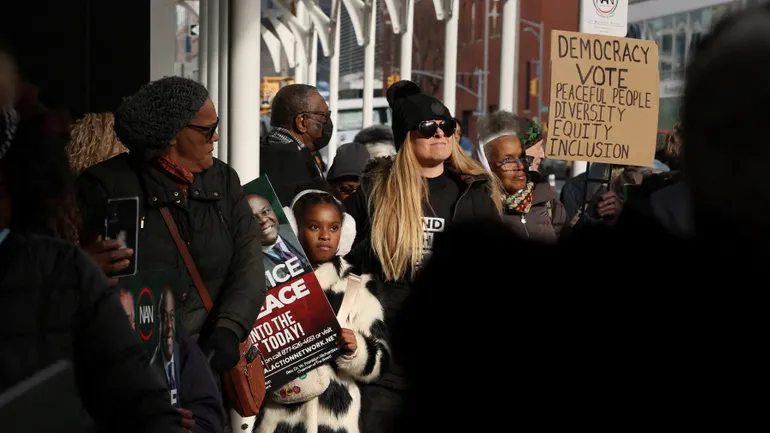
Resistance to diversity, equity, and inclusion (DEI) programs in K-12 schools is growing, and some special education and disability rights advocates warn this could negatively impact special education practices aimed at expanding inclusive opportunities for students with disabilities.
Several advocates say there is currently no clear evidence that anti-DEI actions are excluding special education students from general education activities or explicitly proposing such practices. But they are increasingly concerned that inclusive special education concepts are being misunderstood under the politically charged DEI label.
They cite anecdotal cases, including opposition to co-teaching between general and special education, censorship of special education teacher training materials, and legislative attempts to separate students with disruptive behavior from general education classrooms.
"The overall anti-DEI movement could have a chilling effect or negative impact on how students with disabilities are treated in schools," said Dan Stewart, managing attorney for education and employment at the National Disability Rights Network (NDRN), a nonprofit advocating for the legal rights of people with disabilities.
Another concern is that the anti-DEI movement could lead to the re-stigmatization and segregation of students with disabilities, repeating the situation before the landmark federal civil rights law of 1975, which requires public schools to provide a free and appropriate public education to students with disabilities.
"A very significant concern is that decades of progress could be swallowed up by anti-DEI political maneuvering," Stewart said.
DEI critics, driven mainly by conservative policymakers, demand that schools focus on academic fundamentals and shared American values rather than what they call "divisive" teachings and training about racial differences and gender identity. Although anti-DEI measures are more common in the workplace and higher education, K-12 schools have also become targets for some DEI critics who worry that certain curricula and materials are indoctrinating students and further fueling racial bias.
If everyone understood special education inclusion, then I think we would see higher levels of inclusion than we do now.
— Robyn Linscott, Director of Education and Family Policy at The Arc
A fellow at the Heritage Foundation, a conservative think tank and policy advocacy organization critical of DEI activities, said the disability rights field should not be alarmed by efforts to dismantle DEI initiatives in schools. Instead, he argued that pro-DEI movements may do more harm than good for disability rights advocacy.
"The rollback of DEI is actually good for special education because it allows special education advocates to fight for their own interests and rights without being swept into a broader movement that doesn't actually prioritize their concerns," said Jay Greene, senior research fellow at the Heritage Foundation's Center for Education Policy.
On the defensive
The Individuals with Disabilities Education Act (IDEA) requires schools and families to make individualized decisions about the participation of students with disabilities in general education curricula. The law requires schools to educate students with disabilities alongside their non-disabled peers to the maximum extent appropriate, known as the "least restrictive environment."
Disability rights advocates, special educators, researchers, and the U.S. Department of Education all point to short- and long-term benefits of inclusive education for students with and without disabilities, including high expectations for academic progress.
Although efforts in some Republican-led states to restrict DEI initiatives and classroom discussions on race and gender do not directly target special education programs, they put disability rights advocates on the defensive against what they see as threats to inclusive practices.
"I think the negative attention we see toward DEI efforts really breeds a culture of intolerance, a culture of bullying, and a culture of discrimination," said Robyn Linscott, director of education and family policy at The Arc, a nonprofit advocating for people with intellectual and developmental disabilities.
Most students with disabilities spend 80% or more of their time in general education classrooms
Between 2016 and 2021, the percentage of students with disabilities who spent 80% or more of their school day in general education classes increased slightly.
Over the past few years, the percentage of special education students in general education classrooms has increased. According to U.S. Department of Education data, in fall 2021, 67% of school-age students with disabilities were in general education classes for 80% or more of their school day, the most recent year for which data are available. This is up from 63% in fall 2016.
But in 2021, 55% of preschool children with disabilities receiving special education services in settings separate from non-disabled peers, a figure that has remained largely unchanged over the past four decades.
Additionally, according to federal data, in the 2021-22 school year, non-white students made up the majority of students ages 3-21 receiving IDEA services. However, practitioners entering the fields of special education and early intervention are predominantly white.
Racial disproportionality in special education intensifies
In the 2021-22 school year, only 5.9% of school districts were identified as having significant disproportionality.
Under IDEA, school districts must annually measure racial disparities in special education across 14 categories—including students' disability identification, placement, and discipline—and across seven racial and ethnic groups.
Between the 2018-19 and 2020-21 school years, Department of Education data show that the number of districts identified as having "significant disproportionality" (i.e., overrepresentation of certain racial groups in special education programs) increased by nearly 100%.
There is currently no indication that anti-DEI actions caused the increase in significant disproportionality during this period. But some educators and advocates say that controversial legislation in multiple states restricting teaching and training on racial injustice is having a negative spillover effect on practices in some districts to correct racial inequities.
In Utah, where a new law bans DEI programs in public schools, disability rights advocates are closely monitoring other legislative activities they believe could threaten inclusive education progress and potentially violate practices required by IDEA.
The Disability Law Center, a Utah nonprofit and state affiliate of NDRN, opposed HB 347. The bill, signed by Governor Spencer Cox on March 12, requires school districts to provide a safe and "least disruptive" educational environment for all students. Specifically, the law states that schools must provide education in the least restrictive environment that "does not result in behavior patterns that substantially and materially interfere with the instruction of other students in the classroom."
Some say this wording is troubling because it could lead to the exclusion of students with disabilities whose behavior is affected by their disability.
"Under this bill, what happens to a student with Tourette syndrome? Or a student who exhibits self-stimulatory behaviors like hand-flapping? If their behavior does interfere with other students (which seems likely for these students), where will schools send them?" the Disability Law Center wrote in a March 5 letter to the governor, urging a veto of the bill.
The center also testified against SB 137, a bill that would give teachers the authority to remove students with disruptive behavior from the classroom. The center said this could jeopardize the disciplinary due process protections IDEA provides for students with disabilities. That language was removed from the bill, which more broadly aims to empower and retain teachers.
"We are seeing some concerning movements that are generally opposed to the idea of including students with disabilities," said Nate Crippes, supervising attorney for public affairs at the Disability Law Center. But he added that Utah has also seen positive grassroots efforts and actions by the state board of education to promote awareness and support for inclusive special education practices.
Impact on teacher education programs
Nationally, there is growing concern about how anti-DEI actions are affecting special education teacher preparation programs, as textbooks and syllabi containing the word "inclusion" are being questioned.
In fact, the word "inclusion" frequently appears in teacher preparation course materials, according to Kyena Cornelius, chair of the Teacher Education Division of the Council for Exceptional Children. Cornelius noted that the history of IDEA and the inclusion of students with disabilities in general education programs are core learning areas for future teachers.
"We want special education teachers to help students with disabilities become productive members of society, but if they are not with productive members of society, how can we do that?" Cornelius asked. She is also a professor at the University of Florida's College of Special Education, School Psychology, and Early Childhood Studies.
The Arc's Linscott, a former special education and history teacher, said future teachers must understand special education inclusion and efforts to reduce racial disproportionality among students with disabilities. "If everyone understood special education inclusion, then I think we would see higher levels of inclusion than we do now," Linscott said.
Meanwhile, some DEI opponents are questioning co-teaching—where general education and special education teachers pair up to instruct—as an inclusive practice, Cornelius said.
Building awareness of inclusion
The Heritage Foundation's Greene said using DEI activities to increase student belonging and acceptance of marginalized groups is not what critics fear. "'Inclusion' is a good word, and 'diversity' is a good word. It would be a shame if we gave up the good and legitimate uses of these words just because some people use them for bad purposes," he said.
Greene believes that the origin of DEI, in critics' view, is an ideological foundation that divides people into oppressors or the oppressed, not based on individual merit but on group identity. The oppressed are seen as deserving compensation for historical and collective wrongs, while oppressors are seen as those whose privileges should be stripped. Greene said the problem with this DEI worldview is that it does not treat everyone equally but rather differentiates based on oppressor or oppressed status. People with disabilities can be both oppressed and oppressors. Therefore, supporters of DEI initiatives "do not truly include disability in their intersectional coalition, precisely because people with advantages can also have disabilities."
Greene gave an example questioning how DEI supporters advocate for stripping advantages from wealthy children with disabilities in favor of poor children with disabilities. "If they do that," he said, "then they are helping some students with disabilities while harming others."
Greene said special education inclusion should be a common sense that involves "making reasonable accommodations so that students with special needs can thrive in general education settings." "Once you explain it to people, everyone can understand it without any problem, and it won't be confused with another kind of DEI that divides the world into oppressors and the oppressed."
But disability rights advocates say not everyone will make that connection. More importantly, they do not want one group to feel marginalized because another group has a stronger platform.
"If we allow this very loud group to change the way we talk about and treat other groups, then we are allowing this 'othering' to happen so quickly that we will return to the era when students with disabilities could only stay at home," said CEC's Cornelius.
NDRN's Stewart believes the major problem with anti-DEI actions is their breadth. "It can mean many different things," he said. "If politicians in different states do not have a clear definition of what is good and bad, then the overall concern is that many things could be suppressed."
Overall, disability rights and special education advocates say they strongly support DEI efforts aimed at reducing racial bias in schools. But in aligning with DEI efforts, do they risk making critics further doubt the effectiveness of inclusive special education services? If they take the stance that disability inclusion is separate from race and gender equity programs, are they perpetuating one marginalization while ignoring another cause?
For now, educating people about the benefits of inclusive practices is one way to help skeptics and the uninformed understand its importance, both Stewart and Cornelius said. "This is not a battle. It shouldn't be a battle," Cornelius said. "It should be me telling my story."
For example, if a textbook or syllabus is criticized for containing the word "inclusion," then it should be a teachable moment to explain how university courses are approved, and the purpose of IDEA, the least restrictive environment, and inclusive practices, she said.
Cornelius suggested people share stories of the positive impact of special education inclusion with school board members. "That's where you have the most impact," she said.

