
2023 School Shootings Hit New High: Data and Definition Disputes
The number of school shootings in 2023 reached a new historical high for the third consecutive year. As of December 20, the K-12 School Shooting Database has recorded about 340 incidents. Despite the overall increase, deaths from mass shootings were lower than in 2022. Differences in definitions of school shootings among various organizations have caused data confusion, and experts call for a unified federal definition to improve prevention and response efforts.
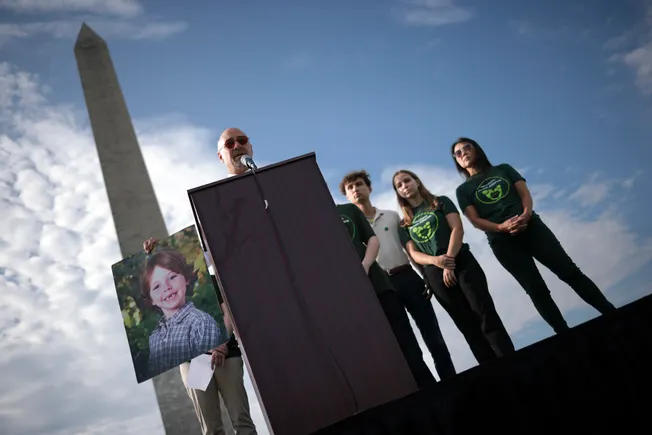
In 2023, the number of school shootings in the United States once again set a new historical record, exceeding the previous year's level for the third consecutive year. According to statistics from the K-12 School Shooting Database as of December 20, approximately 340 school shootings were recorded that year.
The database is one of the main projects tracking gun violence in schools, and its statistical scope includes any incident where a gun is fired on campus, brandished with intent, or a bullet strikes school property, regardless of the number of victims, time, day of the week, or the reasons behind the incident.
Other organizations also track school shootings, but they use different definitions based on factors such as location, time, and whether the incident was intended to cause or actually resulted in casualties. Educators, lawmakers, and school safety experts point out that this inconsistency in data sets and definitions confuses the public, potentially both exacerbating panic and masking trends.
This confusion can also hinder prevention efforts. However, some believe that different data collection methods each have value for stakeholders focused on specific issues of school gun violence. For example, one data set can support in-depth research on shooting triggers, while another can provide more insight into the details of shootings.
This year's total number of school shootings appears to be slightly lower than the prediction of David Riedman, founder of the K-12 School Shooting Database and co-founder of the Homeland Security Advanced Thinking Program. He had estimated that the final number of shootings for all of 2023 would be between 360 and 400.
"Based solely on the characteristics of these incidents—and the fact that numbers have continued to grow over the past few years without any meaningful action taken to address root causes—I think this upward trend was predictable," Riedman said.
Mass shootings
Although school shootings have hit record highs in recent years under Riedman's definition, active shooter and mass shooting incidents in K-12 schools in 2023 accounted for only a small fraction of school gun activity.
School shootings can stem from escalated disputes, while active shooter incidents typically involve large-scale, deliberate targeting of victims. Riedman said that as of October, there had been 7 active shooter incidents on school campuses.
Although the use and definition of the term "mass shooting" vary, the U.S. Federal Bureau of Investigation (FBI) defines it as any single incident in which at least four people are killed by gunfire.
According to Riedman, there were 5 school shootings this year, each resulting in 4 or more victims. As of December 20, the mass shooting at the Covenant School in Nashville, Tennessee, in March remains the deadliest this year, with 6 deaths.
The number of deaths from mass school shootings in 2023 did not reach last year's level. In 2022, 19 children and 2 teachers were killed in a tragic active shooting at Robb Elementary School in Uvalde, Texas.
According to the K-12 School Shooting Database, as of December 20, a total of 227 people have died or been injured in school shootings on campus this year, down from 273 last year.
2023 trends
Even so, many trends in K-12 shootings in 2023 continued previous patterns.
For example, about one-third of shootings in 2023 stemmed from escalated disputes. According to Riedman's analysis, all 831 school shootings recorded since the 1970s began with arguments.
"When there is a dispute, what used to be just an argument or a fight has now turned into a shooting," Riedman said.
According to an analysis by the K-12 School Shooting Database, about 40% of school shootings since the 1970s have been perpetrated by students. In 2023, most shootings were carried out by individuals with a direct connection to the school, such as current students, former students, and people attending school sporting events.
However, Riedman said he also observed a new trend this year: an increase in random shooters with no direct connection to the school.
John McDonald, co-founder and chief operating officer of The Council for School Safety Leadership, said he has noticed that school shootings are becoming more aggressive, more targeted, and more premeditated.
"I've seen more manifestos lately—shooters are putting more thought into this," McDonald said. "It's no longer spontaneous; it's more premeditated."
Tracking school shootings
Although multiple organizations track K-12 shootings, they use different data collection and reporting methods. Most have reporting lags of months or even years, making it difficult to quickly identify trends.
The FBI tracks active shooter incidents, which it defines as one or more individuals actively engaged in killing or attempting to kill people in a populated area using firearms. The data comes from official law enforcement reports and open-source information.
According to an FBI report released in April, of the 50 active shooter incidents recorded in the United States in 2022, 4 occurred in "educational" settings, including public and private K-12 schools, school administrative buildings, and public and private institutions of higher education. These 4 incidents resulted in the deaths of 20 students and 3 staff members, with 29 others injured.
The National Center for Education Statistics (NCES), part of the U.S. Department of Education, also publishes school shooting data, drawing on sources including the School Shooting Safety Compendium from the Center for Homeland Defense and Security and the FBI.
In a September blog post, NCES said that since around 2000, these data show "no consistent trend in school-related violent deaths or active shooter incidents in FBI-defined educational environments."
NCES said that statistics from the government-funded K-12 School Shooting Safety Compendium project (which stopped updating in July 2022) show an increase in school shootings. In fact, a table released by NCES in September 2022 showed 319 school shootings in the 2021-22 school year, with the data sourced from that compendium.
The compendium defines a school shooting as any incident in which a gun is brandished, fired, or a bullet strikes school property for any reason. The same NCES table shows that between the 2000-01 and 2017-18 school years, fewer than 100 schools per year experienced a gun threat or shooting. Starting in the 2018-19 school year, that number climbed into the hundreds, reaching 319 in the 2021-22 school year.
Additionally, Everytown for Gun Safety, an organization advocating for reduced gun violence, tracks every incident in which a firearm discharges live ammunition on or into school grounds, using sources including media reports, its own channels, and the K-12 School Shooting Database. As of December 11, the organization had recorded 131 school shootings this year.
Seeking a federal definition
Legislation introduced in the U.S. House of Representatives and Senate over the past two sessions aims to establish a federal definition of a school shooting, defining it as an incident occurring on school grounds, or while students are traveling to or from school or school-sponsored activities, that results in one or more casualties.
The bill would require the U.S. Department of Education to publish an annual report on school crime and safety, including the number of school shootings, details of the incidents, and safety measures already taken by the schools involved.
"If we are truly going to address this problem, we must have the data, collect the data, and there really is no reason not to do so."
Democratic Rep. Jahana Hayes of Connecticut is a co-sponsor of the bill. On December 14, 2012, when Hayes was a high school history teacher in Waterbury, a gunman killed 26 adults and children at Sandy Hook Elementary School in nearby Newtown. After Hayes entered Congress in 2019, she said she was "shocked" to discover that there was neither a federal definition of school shootings nor a consistent method of data collection and reporting.
"If we are truly going to address this problem, we must have the data, collect the data, and there really is no reason not to do so," Hayes said.
She added: "I can't imagine that 11 years after Sandy Hook, we still haven't taken concrete, tangible national measures to ensure school safety—whether it's elementary schools or college campuses. That should be a safe space."
However, the bill has progressed slowly due to disagreements over gun violence prevention. Hayes said that if the bill fails to pass next year, she and others are prepared to reintroduce it in future sessions.
Understanding student shooters
To prevent future shootings, researchers and school safety experts have studied existing statistics to try to understand why students shoot other students. A 2020 Government Accountability Office (GAO) report found that between the 2009-10 and 2018-19 school years, half of school shootings were perpetrated by current or former students.
Jerry Sparby was an elementary school principal in 2003 when a 15-year-old former student of his shot and killed two students at ROCORI High School in Cold Spring, Minnesota. Sparby had known the student since kindergarten, and shortly after the shooting, at the request of the youth's family, Sparby spoke with him at a detention center. What stood out most to Sparby from that conversation was the shooter saying he felt socially isolated at school and longed for connection.
Over the past two decades, Sparby (now a health and mental wellness consultant) has traveled across the country at the invitation of school systems and families to speak with students identified as at risk of harm or potential shooters. He has found that what all these students have in common is that they feel "invisible" at school.
"Their peers don't see them. Their peers have no interaction with them," Sparby said. He founded a nonprofit called HuddLUp to support students' mental health and positive peer relationships. "They all tell the same story—'No kid in that classroom knew I was there, and no one cared.'"
Sparby said the COVID-19 pandemic has exacerbated students' feelings of isolation and highlighted the need to prioritize student mental health services. "What we want is for there to be no more invisible kids."
Preparation and recovery
McDonald said that although the pandemic has worsened student behavioral issues, school shootings have existed since at least 1996 and have grown exponentially in recent years.
"We have to be very realistic about this problem: what are we going to do?" he said. "Otherwise, 25 years from now, we'll find ourselves in a situation where we say, 'My God, 50 years and we still haven't figured it out.' That's shameful."
McDonald, Riedman, and other school shooting experts point to obstacles to solving the problem: inconsistent school safety and violence prevention measures, constantly changing school discipline policies, and scarce resources. School violence experts and educators agree that the availability of firearms and the overall increase in community violence are exacerbating the issue.
However, George Sells, a spokesperson for St. Louis Public Schools, said that no matter what preparation and prevention measures are taken, it is impossible to be fully prepared for a shooting—including its emotional impact. Sells personally experienced a school shooting in October 2022: a 19-year-old former student opened fire on students and staff, killing 2 and injuring 7.
For example, on the day of the incident, Sells and his team did not anticipate that traffic jams and police barricades would prevent them from reaching the scene at Central Visual Performing Arts High School. As a result, they had to run about a mile to reach the school and the reunification point.
"This is the kind of thing you hope to be prepared for, but you can never truly be ready," Sells said. "It's like being slapped in the face when you're not expecting it—bang, it hits you."
The district's recovery efforts are still ongoing. Sells described it as "more of a journey than a task." More than a year later, Sells added that he and others can still feel the aftermath.
"But I can tell you this: everyone in my office now understands the importance of keeping a comfortable pair of shoes on hand in case something like this happens again."
2024 and future trends
Meanwhile, experts expect more of the same in 2024. Riedman predicts that next year will see more than 300 school shootings, on par with 2022 and 2023.
"Unfortunately, this is becoming more and more common," Sells echoed. Sells and others agree that because schools are a microcosm of the broader community, the increase in school shootings is also a microcosm of the national gun violence problem.
"I think this aligns with the overall picture—there is violent crime, gun crime, and more people carrying guns than at any time in our known history," Riedman said. "This naturally leads to a large number of incidents on school campuses."
School safety expert McDonald agrees.


