
Equity Challenges Under the IDEA Framework: Why Racial Disparities in Special Education Continue to Widen
In recent years, racial disproportionality in K-12 special education in the United States has become increasingly prominent. Federal data indicates that the number of districts identified with "significant disproportionality" grew by nearly 100% between the 2018-19 and 2020-21 school years. Using the case of California's Mt. Diablo Unified School District, this article explores the context of widening racial disparities, the complexity of measurement mechanisms, and the controversies and resistance encountered in policy implementation.
This article is the first part of the "Significant Disproportionality in K-12 Schools" series. For the second part, pleaseclick hereto read.
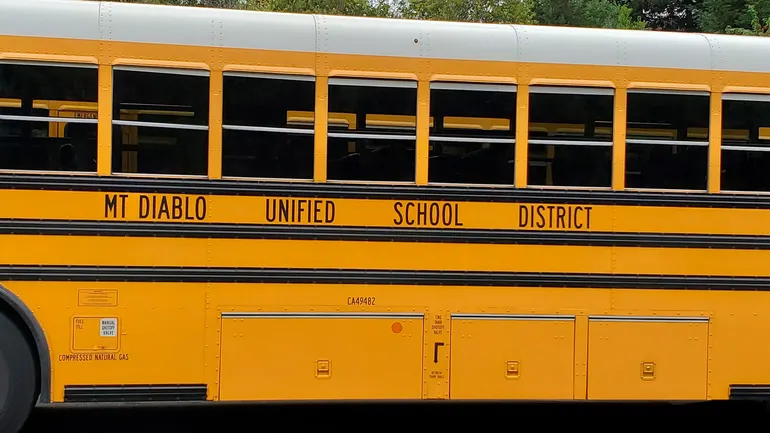
In 2021, California's Mt. Diablo Unified School District was notified by state education authorities that it had a significant overrepresentation of Black students among students with intellectual disabilities. Faced with this finding, the district took an action rare in special education over the past two decades: itpublicly announcedthe disparity.
The district also encouraged parents, educators, and community members to help investigate the causes of the disparity and work together to find solutions. Wendi Aghily, the district's chief officer for student services and special education, said that after months of data research and community input, they learned an important fact: Black students and their families felt unwelcome and disrespected in the school community.
This was the beginning of several years of difficult but important work aimed at ensuring students are not incorrectly classified for special education. Aghily said, "When you are identified with significant disproportionality, you can view it as a problem that must be solved to get rid of the label, or you can see it as something wrong that must be corrected—we set that latter tone from the very beginning."
Over the past few years, more school districts nationwide have been identified for racial over- or underrepresentation in special education. In fact, U.S. Department of Education data shows that the number of districts identified with "significant disproportionality" increased by nearly 100% between the 2018-19 and 2020-21 school years. Although the 825 districts in 39 states in 2020-21 represented only 5% of all districts nationwide, educators and disability rights advocates point out that each identification is proof that students are not receiving an equitable education.
"Whether it involves 4 students or 10 students, they are children affected by the system," said María Hernández, deputy director of New York University's Metropolitan Center for Research on Equity and the Transformation of Schools and author of Dismantling Disproportionality.
"There is a long and deep history regarding the enforcement of the disproportionality provision, and the messages sent have been very mixed."

Dan Losen
Senior Director of the Education Team at the National Center for Youth Law
However, even as federal, state, and local efforts work together to understand causes and find solutions, there remains resistance, skepticism, and ambivalence. Some localities privately worry that, amid heightened discussions of race, efforts to correct special education disproportionality could expose districts to criticism and scrutiny.
There is also confusion surrounding the complex federal requirements for measuring significant disproportionality. Government guidance on this matter has historically been inconsistent. "There is a long and deep history regarding the enforcement of the disproportionality provision, and the messages sent have been very mixed," said Daniel Losen. He has studied the issue for decades as a researcher and is currently Senior Director of the Education Team at the National Center for Youth Law and co-author of Racial Inequity in Special Education.
Number of districts identified with significant disproportionality continues to rise
Why this work matters
Measuring the racial over- or under-identification of students with disabilities is one of the most complex procedures for special education administrators. But many consider it to be among the most important as well.
Racial under-identification in special education can cause students to miss out on intervention and support opportunities, causing them to fall further behind academically or fail to obtain a regular diploma. Meanwhile, students of color are suspended or expelled at disproportionately high rates, which can widen achievement gaps and contribute to the "school-to-prison pipeline."
Advocates point out that a common concern is the disproportionate rate at which Black students with disabilities are suspended or expelled. The data supports these concerns. According to Department of Education statistics from the 2017-18 school year (the most recent comparable data), Black students with disabilities receiving services under the Individuals with Disabilities Education Act (IDEA) made up about 2.3% of all students, yet they received nearly three times that share (6.2%) of in-school suspensions and nearly four times that share (8.8%) of out-of-school suspensions.
According to the Department of Education's annual IDEA report to Congress, in fall 2020, Black students ages 5-21 were more likely than any other single racial or ethnic group to be identified with intellectual disabilities or emotional disturbances. Robyn Linscott, director of education and family policy at The Arc (an advocacy organization for people with intellectual and developmental disabilities), noted another troubling statistic: Black students are under-identified for autism.
The current process for identifying districts with significant disproportionality is built on two decades of evidence showing that students of color are overrepresented in special education. Some advocates and researchers say this history can be traced back to the mid-to-late 20th century, when some educators, policymakers, and community members resisted federal civil rights laws that required schools to desegregate and to educate students with disabilities alongside their non-disabled peers.
However, advocates, researchers, and experts say that efforts to reduce and eliminate significant disproportionality benefit all students, not just those with disabilities. "If teachers are proficient in culturally responsive education, I believe many significant disproportionality issues would decrease, because teachers would be able to teach all students," said Alexandria Harvey, senior program associate for special education policy and practice at the National Center for Systemic Improvement at WestEd.

"Doing this work with a culturally responsive lens has been very successful," said Heather Calomese, who until recently served as California's State Director of Special Education and is now Chief Policy and Advocacy Officer at EdVoice, a nonprofit advocating for children from low-income families. "This is not a numbers game," she said. "Behind these numbers are students and faces."
Why it is so complex
Federal rules require districts to measure racial disparities in special education annually across 14 categories—including disability identification, educational placement, and discipline—and across 7 racial and ethnic groups. This means up to 98 different calculations may be needed to determine whether a district has significant disproportionality.
Furthermore, federal rules and IDEA regulations do not define "significant disproportionality." Although federal measurement standards exist, states can set their own risk ratios, thresholds, and minimum cell sizes. A district's calculations may show significant disproportionality for three consecutive years before it is formally identified. These measurements are only conducted at the district level, but through data, policy, and practice reviews, local officials may find that disproportionality exists only in a particular school or grade span within the district.
Once identified, a district must reserve 15% of its federal IDEA Part B funds for programs to remedy significant disproportionality, including initiatives that support all students and those at risk of needing special education. Districts may also voluntarily reserve these funds to proactively reduce risk, especially when data shows trends approaching the identification threshold. In the 2020-21 school year, 511 districts nationwide (about 3%) voluntarily reserved funds to address significant disproportionality. For example, in Minnesota, 71 of 304 districts (23%) voluntarily reserved IDEA funds that year to support special education equity.
"Another important aspect to measure is how are minority students performing in special education? Are they truly benefiting? And that part is often overlooked."
Candace Cortiella
Founder and Director of the Advocacy Institute
Another complicating factor is that schools are dynamic communities—families frequently move in and out, teachers and administrators turn over, and state policies shift regarding diversity and inclusion. Additionally, while advocates and administrators agree that measuring significant disproportionality is valuable, some say it only tells part of the story.
"Reducing the issue to a mathematical formula diminishes attention to broader societal challenges, including poverty and environmental issues, which must be addressed to give all students the opportunity to succeed in school and in the future," Phyllis Wolfram, executive director of the Council of Administrators of Special Education, said in a May 30 letter to the Department of Education supporting the creation of a new technical assistance center on significant disproportionality.
Meanwhile, some advocates say federal data collection should place greater emphasis on the academic outcomes of students of color with disabilities. "Another important aspect to measure is how are minority students performing in special education? Are they truly benefiting? And that part is often overlooked," said Candace Cortiella, founder and director of the Advocacy Institute.

Growth was anticipated
The increase in the number of districts nationwide identified for racial over- or underrepresentation of students in special education is not surprising. In fact, educators predicted this outcome when the regulations for measuring significant disproportionality were updated in 2016.
The IDEA regulations were designed to adopt a more standardized approach to measuring significant disproportionality at the district level. However, the approach still gives states considerable latitude to develop their own accountability methods—but within guardrails set by federal rules. At the time, educators and advocates said this more standardized measurement would lead to higher identification rates compared to previous methods that resulted in many states having no districts identified.
The measurement requirement was first included in the 1997 reauthorization of IDEA and expanded in the 2004 reauthorization. But nearly a decade later, in 2013, the U.S. Government Accountability Office found that only 2% of districts nationwide were identified, with half of them concentrated in five states: Louisiana, Michigan, Mississippi, New York, and Rhode Island.
This led to the 2016 regulations, which standardized calculations nationwide to some extent. But just as states and districts were preparing to comply with the 2016 regulations by the federal deadline of July 2018, then-U.S. Secretary of Education Betsy DeVos announced the Department woulddelay implementation of the rules, citing concerns that they might encourage districts to set racial quotas in special education to avoid being identified.
Advocates who supported the new regulations sued and won, and by April 2019, the rules were fully back in effect. But then the pandemic hit, and the impact of the murder of George Floyd also reverberated through state and district efforts to eliminate significant disproportionality.