
A wave of lawsuits by U.S. school districts against social media companies is coming, accusing them of exacerbating the teenage mental health crisis
About 40 school districts across the United States have filed lawsuits against social media companies, accusing their apps of being addictive, harming students' mental health, and negatively impacting school and government resources. The cases have been consolidated into a multidistrict litigation in the U.S. District Court for the Northern District of California, with a total of about 235 plaintiffs.
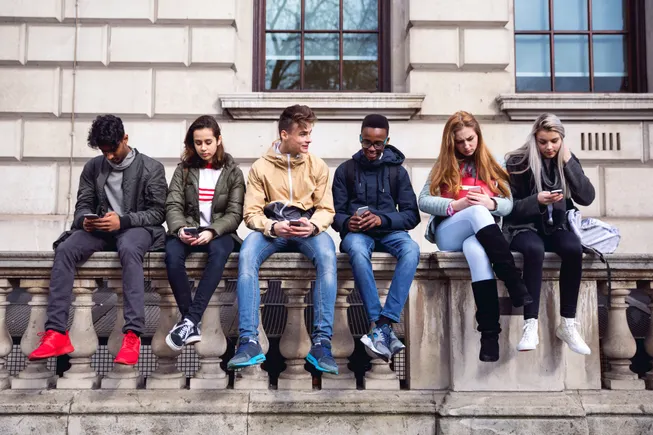
About 40 school districts nationwide, and counting, have filed lawsuits against social media companies, alleging their apps are addictive, harm students' mental health, and adversely affect schools and other government resources.
Most of these lawsuits, initially filed in different court jurisdictions, have been consolidated into a single 281-page multidistrict litigation complaint, filed on March 10 in the U.S. District Court for the Northern District of California. Plaintiffs include school districts, individuals, and local and state governments, totaling about 235 plaintiffs.
The product liability lawsuit seeks unspecified monetary damages and injunctive relief requiring each defendant to fix specific design features on their platforms and to warn teenagers and their parents that their products are "addictive and pose a clear and present danger to unsuspecting minors."
Lawyers representing the plaintiff school districts say the master complaint allows districts to share legal resources and bring similar public nuisance claims against social media companies to recover costs incurred in responding to the youth mental health crisis.
The individual district lawsuits describe actions school systems have taken to address student mental health issues, such as hiring additional counselors, using universal screening tools, and providing resilience-building curricula. The San Mateo County Board of Education in California also stated in its lawsuit that it had to reallocate funds to pay for staff to address bullying and fighting, hire additional security, and investigate vandalism.
"Schools are on the front lines of this crisis," said Lexi Hazam, co-lead counsel for the plaintiffs in the consolidated complaint and a lawyer at Lieff, Cabraser, Heimann & Bernstein LLP. School districts "often have to divert resources, time, and energy away from their educational mission to address the mental health crisis among students." She noted that student mental health issues are largely driven by the design features of social media platforms, which "deliberately make teenagers addicted."
The multidistrict litigation states that these design features "manipulate dopamine release to reinforce use" and use "trophy" mechanisms to reward extreme usage.
School districts "often have to divert resources, time, and energy away from their educational mission to address the mental health crisis among students."
— Lexi Hazam, co-lead counsel for plaintiffs in the consolidated complaint
But legal experts say such major litigation could take years to resolve. The case is in its early stages, and the court will soon consider motions to dismiss. If the case proceeds, it will move into the discovery phase, where both sides can request documents and information that may not yet be public.
One legal expert said participating in the case could actually expose school districts to lawsuits from parents, who might accuse districts of failing to do more to support student mental health. Eric Goldman, a law professor at Santa Clara University School of Law and co-director of its High Tech Law Institute, also said the case overlooks the positive aspects of teen social media use.
"That's why not every district will join — first, I think at least some districts realize that social media may not be the problem. In fact, it may be part of the solution," Goldman said.
Goldman believes a more likely reason districts should not participate is that schools would be "admitting to parents that they have not done a good enough job managing the mental health needs of their student population."
Reducing risks
The lawsuit — titled "Social Media Adolescent Addiction/Personal Injury Products Liability Litigation" — targets Meta Platforms Inc., which operates Facebook and Instagram, as well as the companies behind Snapchat, TikTok, and YouTube.
According to several plaintiff attorneys, school systems incur no costs to join the lawsuit because plaintiff law firms work on a contingency fee basis, meaning they are paid only if they win.
The lawsuit alleges that social media platforms exploit teenagers through "algorithmically generated infinite feeds that keep users scrolling." The complaint states that as a result, teenagers are suffering from anxiety, depression, addiction, eating disorders, self-harm, and suicide risk. The individual district lawsuits consolidated into the case also claim that these social media companies' platforms have led to campus security threats and vandalism.
"The defendants' choices have brought extraordinary corporate profits — and enormous tragedy," the master complaint declares.
"That's why not every district will join — first, I think at least some districts realize that social media may not be the problem. In fact, it may be part of the solution."
— Eric Goldman, law professor at Santa Clara University School of Law and co-director of its High Tech Law Institute
The lawsuit notes the widespread use of social media among teenagers and details troubling statistics showing increases in teen suicide risk, anxiety, and persistent sadness.
In response to interview or statement requests, Meta's head of safety, Antigone Davis, said via email: "We want to reassure every parent that we have always had the interests of young people in mind in our work to provide safe, supportive online experiences for teens." The other defendant companies did not respond to interview or statement requests.
Davis's email said Meta has developed more than 30 tools to support teens and their families, including tools to verify age, tools that allow parents to decide when and how long teens use Instagram, settings that automatically make new Instagram accounts of users under 16 private, and notifications encouraging teens to take regular breaks.
Meta has also invested in technology that can detect and remove content related to suicide, self-harm, or eating disorders before users report it. The company said on its Safety Center webpage that it has never allowed people to celebrate or promote self-harm or suicide. Meta also removes fictional depictions of suicide and self-harm, as well as content that shows methods or materials.
"But we do allow people to discuss suicide and self-harm because we want Facebook and Instagram to be places where people can share their experiences, raise awareness of these issues, and seek support from one another," the webpage reads.
Davis said: "These are complex issues, but we will continue to work with parents, experts, and regulators such as state attorneys general to develop new tools, features, and policies that meet the needs of teens and their families."
At Meta's annual shareholder meeting on May 31, Randi Weingarten, president of the American Federation of Teachers (AFT), sought approval of a resolution calling for an independent audit of the company's risk management practices. In a prerecorded statement, Weingarten said teachers' union members' pensions are "significant shareholders of Meta Platforms." According to an AFT press release on May 4, pension funds involving AFT members hold 30 million shares of Facebook stock, worth $6.3 billion.
In her prerecorded statement, Weingarten said concerns about these pensions have made the AFT "increasingly alert" to the company's business practices, especially the failure to mitigate public safety risks. "Controversies stemming from the 'move fast and break things' business model are particularly concerning to teachers, because they often find themselves on the front lines, dealing with the harms caused by corporate social media products," she said.
 Students at Thurgood Marshall Academic High School in San Francisco talk in a hallway during lunch on October 17, 2019. Credit: Lea Suzuki/San Francisco Chronicle/AP
Federal response
A recent poll of 1,804 registered voters found that an overwhelming majority of respondents believe social media companies and state and federal governments should do more to ensure the online safety of children and teens. The survey was conducted by Hart Research Associates.
Meanwhile, on May 23, the federal government took several steps to draw attention to the issue of teen social media use. The U.S. Surgeon General issued a public health advisory recommending that policymakers, technology companies, researchers, families, and teens take measures to more fully understand the effects of social media use, including how to "maximize benefits and minimize harms."
The same day, the White House announced the creation of an interagency task force to assess and prevent online harms to children and teens, and to take steps to strengthen privacy protections for student data, in response to concerns that companies are monetizing this personal data. "There is now undeniable evidence that social media and other online platforms are contributing to our youth mental health crisis," the White House statement said.
David vs. Goliath
Seattle Public Schools is one of the plaintiffs in the multidistrict litigation. Greg Narver, the district's general counsel, said the district does not file lawsuits lightly. In his four years working for the district, it has been a plaintiff in only one other case (a lawsuit against Juul e-cigarette company, which settled in April).
"From my perspective, there is a problem, and we are looking for solutions," Narver said of the teen mental health crisis. The problem "is not just about the well-being of individual students; it affects how our entire district operates, putting strain on our service providers and counselors and the entire student health department."
The district acknowledges that social media has positive aspects, but Narver said, "The conduct we are complaining about — what we believe constitutes a public nuisance — is conduct that fuels this addiction, exploits the psychology of teens and preteens, and causes terrible consequences and stress, including suicidal ideation, eating disorders, and violence, and we are looking for solutions."
"We are doing our best. You are up against some very powerful and formidable forces. We are talking about the wealthiest companies in the world, and they have very strong financial incentives to maintain the status quo."
— Greg Narver, general counsel for Seattle Public Schools
Dean Kawamoto, a lawyer at Keller Rohrback LLP, which represents Seattle Public Schools and several other districts in the case, said the consolidated lawsuit is unique because many plaintiffs are school districts. "I think it really speaks to the severity of the problem and the lack of ready-made solutions that they are turning to the court system," he said.
"When you look at the need and necessity for these mental health services, and then look at the state of school budgets and funding, you have to take action to try to reduce the number of kids who need help," Kawamoto said. He said school districts are the largest providers of youth mental health services, but if districts tried to fight social media companies alone, it would be a David vs. Goliath battle given the abundant legal resources available to these for-profit companies. "Goliath is likely to put up a fierce fight."
Aelish Marie Baig, a lawyer at Robbins Geller Rudman & Dowd LLP, represents multiple plaintiffs, including Broward County Public Schools in Florida and government organizations such as Bucks County, Pennsylvania. Bucks County was the first government entity to join the multidistrict litigation against social media companies.
Baig predicted a "wave" of lawsuits as more school systems and local and state governments join the litigation. She said these cases represent major litigation on par with lawsuits against tobacco, e-cigarette, and opioid companies. Baig said social media companies "deliberately exploit the psychology and neurophysiology of children, and they do so through the way they design and operate their social media platforms, knowing these methods are harmful to you."
"Just a contributing factor"
There is widespread awareness that teenagers today face greater stress and tension, but some question whether there is sufficient causation to sue social media companies over these issues.
"I cannot understand how we can isolate one factor from a complex society and say it needs to be fixed," said law professor Goldman. "The worst part is, I think school districts will just pat themselves on the back and say, 'We solved the problem.'"
"What we are facing is a systemic and long-term increase in demand for mental health services, and social media is at best just a contributing factor," he said.
NetChoice, a nonprofit advocating for free expression on the internet, wrote in a statement earlier this year that the Seattle Public Schools lawsuit is "moral panic litigation." NetChoice said: "The rise in mental health problems among American teens is an extremely serious issue. But the Seattle school district's complaint, rather than trying to address the root of the problem, wrongly points the finger at American businesses, which ultimately will not benefit Seattle's teens."
Goldman said the claim that social media is inherently toxic and harmful to teens ignores that these platforms are an important part of their lives and that there are benefits to using them. According to Common Sense Media, teens spend about 8.3 hours per day on screen media. A 2021 survey by the organization found that social media use among 8- to 12-year-olds is increasing. The survey report noted that the minimum age for most social media accounts is 13.
Laura Tierney, founder and CEO of The Social Institute, said in a statement earlier this year that for teens, social media use is a way to connect with others. The Social Institute advocates for positive and healthy interactions on social media for teens. Tierney added that through social media, texting, and gaming, students can spend time with friends, build relationships, stay informed about current events, and pursue their interests.
A recent health advisory on teen social media use issued by the American Psychological Association states that these platforms are not inherently beneficial or harmful to teens. The advisory cites research showing that some teens with mental health issues, especially those who experience adversity or isolation offline, may benefit from the social opportunities of social media. The APA also recommends that social media features be adapted to the social and cognitive abilities of teen users and that exposure to harmful content be minimized, reported, and removed. The advisory adds that technology should not steer users toward such content.
"These are complex issues, but we will continue to work with parents, experts, and regulators such as state attorneys general to develop new tools, features, and policies that meet the needs of teens and their families."
— Antigone Davis, head of safety at Meta
Goldman said that if plaintiffs prevail and social media companies have to change design features, it could mean the end of these companies. Goldman said state laws restricting social media use also pose a threat to these businesses. A new law in Utah will require social media companies to obtain parental consent for users under 18 and set default settings that block minors from accessing the platforms at night. According to a statement from the governor's office, the companies will also be prohibited from targeting minors' social media accounts with addictive designs or features.
According to a survey, TikTok is the most favored social media site among teens, but it will be banned in Montana starting January 1, 2024. The state's move is due to concerns that users' private data could be misused by "foreign adversaries," according to a state announcement. ByteDance, which owns TikTok, is a Chinese company.
Plaintiff attorney Hazam said the master complaint does not say all social media is inherently evil. "The problem is that these companies use the vast amounts of data they collect from young users to design very powerful, sophisticated algorithms that get them addicted and keep them staring at screens for as long and as often as possible," Hazam said.
 TikTok CEO Shou Zi Chew testifies before the House Energy and Commerce Committee in Washington, D.C., on March 23, 2023. Credit: Chip Somodevilla via Getty Images
Seeking multiple solutions
A scholar in the field said the defendant companies in the case should ask what school systems are doing to educate teens about healthy social media habits. "If (school) boards want to help reduce the problem, they should intervene early and nip it in the bud," said Charles Russo, Joseph Panzer Chair in Education in the School of Education and Health Sciences and professor of law at the University of Dayton. "But you can't just throw up your hands and say 'It's all social media's fault.' If we know there is a problem, we have to take action to address it."
Seattle's legal counsel Narver said teen mental health issues are so prevalent that the district is trying to address them from multiple different angles, including participating in this lawsuit. The district's complaint, filed in January, states that in response to the youth mental health crisis in Seattle, the district has hired additional staff, developed resources, and conducted professional training on students' mental, emotional, and social well-being. The district has also developed instructional plans to teach the dangers of social media misuse.
"We are doing our best," Narver said. "You are up against some very powerful and formidable forces. We are talking about the wealthiest companies in the world, and they have very strong financial incentives to maintain the status quo."