
Campus mask mandates receive widespread compliance, with litigation challenges being a minority
In most U.S. school districts, teachers, students, and parents show high compliance with campus mask policies, with lawsuits or protests occurring only in a few areas. School districts and the CDC recommend providing alternatives under special circumstances.
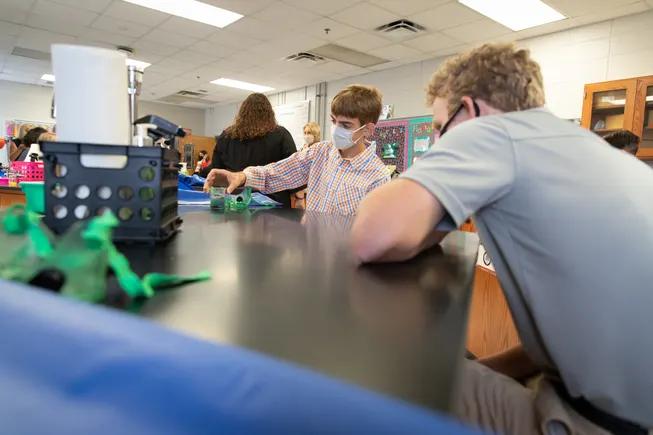
Several months into the new school year, as COVID-19 cases continue to rise nationwide, most school districts requiring masks have found generally high compliance among students, parents, and staff.
"Compliance has been surprisingly high," said Michael Lubelfeld, superintendent of North Shore School District 112 in Highland Park, Illinois. "Many thought it would be controversial, but it really hasn't been." Steve Joel, superintendent of Lincoln Public Schools in Nebraska, also noted that local compliance has been good, and "many of the concerns people had haven't materialized; families and students understand the stakes."
School district leaders say that in areas where mask mandates have been challenged, resistance typically comes from a small number of parents. For example, in Washington County School District in St. George, Utah, parents protested outside the district administrative office in August against the state mask mandate. According to a report first published by the Deseret News and confirmed by district communications director Steven Dunham, later that day, students spoke at a football game urging the community to wear masks.
Policies on mask-wearing in schools vary by state, with recommendations or rules typically set by state or local authorities, and individual districts deciding whether to implement stricter measures. For example, an Indiana governor's order exempts children under age 8 from mask requirements, but the state health department recommends that all school-age children wear masks unless seated at desks that maintain social distancing.
Consequences for violating mask policies also vary. Some districts require students who refuse to wear masks to switch to online learning rather than attend in person. Wake County Public Schools in Cary, North Carolina, takes non-disciplinary measures such as behavior contracts and reward systems. According to health protocols posted on the district's website, only if these non-disciplinary interventions fail does the district consider in-school or out-of-school suspension.
Parents express objections through lawsuits
A review of complaint filings shows that lawsuits challenging school mask policies have emerged in several states or districts, citing reasons including procedural errors and infringement of religious freedom. For example, a Connecticut judge rejected an emergency injunction to stop schools in the state from requiring students to wear masks. The Connecticut Freedom Alliance sued the state board of education, partly arguing that mask-wearing is harmful to children. In his ruling, Superior Court Judge Thomas G. Moukawsher wrote: "In fact, there is little evidence that mask-wearing causes harm, and the medical community broadly agrees it is safe."
Florida attorney Patrick Leduc has filed lawsuits on behalf of parents against five school districts. He claims that students required to participate in online learning for not complying with mask rules are receiving an "isolated and unequal" education. The lawsuits also argue that under the Florida Constitution, students' fundamental right to education is being deprived because mask mandates are not based on a compelling interest, and the mandates themselves are not narrowly tailored to that interest. Leduc added that school board mask requirements interfere with parents' constitutional right to make medical decisions for their children. "My lawsuits aim to empower parents, who love their children more than school boards do," he said.
Jose Martin, an attorney with Richards, Lindsay & Martin in Austin, Texas, who represents school districts, said that as long as districts follow CDC guidelines, they need not worry about lawsuits arising from mask controversies. He further explained that courts tend to defer to authoritative agencies, especially when it involves the safety and well-being of the school community. Martin said: "Students' freedom of speech in schools is different from that of ordinary citizens; their free speech rights must be balanced against the school's privilege to maintain an orderly, safe learning environment." School districts have the authority to set policies they deem appropriate to create a safe learning environment, as long as those policies are not discriminatory.
Reducing risks through best practices
School districts have made exceptions to mask policies for students who cannot safely wear masks due to young age, disability, or activities such as running. CDC guidelines acknowledge these special circumstances and recommend that schools consider adjustments and alternative measures to reduce virus exposure risk. Adjustments may include social distancing and consulting healthcare providers for individual situations.
The U.S. Department of Education's Office for Civil Rights also recognizes special circumstances where mask-wearing is not possible, particularly when enforcement impedes a disabled child's access to a "free appropriate public education." According to a question-and-answer document released on September 28, the Office for Civil Rights recommends that schools make adjustments consistent with the health, safety, and well-being of all students and staff.
Overall, the CDC advocates for mask-wearing in schools and recently released a scientific brief stating that masks generally reduce exposure to the virus for both the wearer and those around them.
Lincoln Public Schools Superintendent Joel said the district follows medical experts' recommendations on safety protocols for in-person learning and adjusts policies as needed. He believes the high compliance with mask-wearing in schools is due to "focused communication" of the rules and teachers continually reminding students to wear masks properly. Some parents have spoken out against mask-wearing at school board meetings, but Joel noted that parents can choose to follow in-person learning rules or have their children switch to online learning. "We're doing the best we can," he said.
North Shore School District attributes the smooth implementation of mask-wearing to thorough communication before in-person classes began and the eagerness of teachers and students to return to school safely. Lubelfeld explained that before school started in September, teachers and principals sent welcome videos to students that included images and tips on mask-wearing and social distancing. Additionally, because parents and students were eagerly anticipating in-person instruction, safety measures received broad support. "Kids are really grateful to be back in school," he said.
In late October, due to an increase in community COVID-19 cases, the district had to switch to fully online instruction again. Lubelfeld expects that when in-person classes resume, the district will strengthen communication about the necessity of mask-wearing and hopes to maintain the same level of compliance. "Thankfully, it really hasn't been an issue," he said.