
U.S. Department of Education: School Mental Health Screenings and Surveys Require Parental Consent
In a letter to school districts, the U.S. Department of Education stated that mental health screenings and student surveys on sensitive topics such as sexual behavior, even if presented as "voluntary," will be considered as "required" by the school district, and parents must be notified in advance and provide written consent. The letter also requires that even if a school district does not classify a student's "gender plan" as an "educational record," it must still be made accessible to parents.
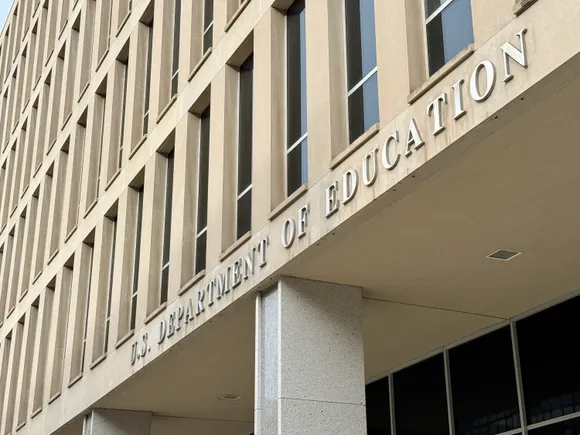
The U.S. Department of Education notified school districts on Wednesday that it will treat all mental health screenings and other student surveys conducted in schools—such as those involving sexual behavior or attitudes—as "required" by districts, even if presented as "voluntary," and subject to parental notification and consent procedures.
The 5-page "Dear Colleague" letter states: "When educators, counselors, or other school officials administer surveys, assessments, or analyses, students typically feel obligated to participate. Because the survey, assessment, or analysis is administered by an authority figure, students rarely ask parents to review or approve it beforehand."
Frank Miller Jr., director of the Student Privacy Policy Office at the Department of Education, noted in the letter that a student's decision to complete a survey on sensitive topics may be influenced by peer pressure, fear of not participating, or a desire to please teachers or authority figures.
Therefore, districts will be required to provide parents with the opportunity to review survey content and obtain written parental consent before allowing students to participate. Miller stated that in such circumstances, merely offering an "opt-out" option does not satisfy the requirement for obtaining parental consent.
This requirement also applies to mental health screenings, such as questionnaires involving emotional well-being, internal distress, social interactions, or other indicators reflecting psychological states.
Additionally, the letter states that even if districts do not classify a student's "gender plan" as an "education record," it must still be made available to parents.
Under the second Trump administration, the Department of Education has interpreted the Family Educational Rights and Privacy Act (FERPA) and the Protection of Pupil Rights Amendment (PPRA) to require schools to share students' LGBTQ+ identities and related information with parents. PPRA aims to protect the rights of parents and students regarding information collection and sharing.
Supporters of policies that prevent parents from viewing such records say this is done out of concern that students may face potential abuse or an unwelcoming environment at home.
However, Miller said in an August 26 statement: "Parents know what is best for their children. Yet, we continually see schools adopt policies that exclude parents from their children's school life."
Surge in Policies and Lawsuits
According to the conservative parental rights organization Defending Education, as of June, more than 1,200 school districts nationwide—affecting over 21,000 schools and a total of 12.4 million students—had policies stating that district personnel "may or should conceal a student's transgender identity from parents."
Many of these districts are in California. A state law that took effect there this year prohibits school employees from disclosing any information related to a student's sexual orientation, gender identity, or gender expression to any other person without the student's consent. The law also prohibits schools from requiring employees to disclose such information to parents and has been the subject of an investigation launched by the Department of Education's Office for Civil Rights in March.
However, lawsuits challenging such laws and policies argue that schools prevent parents from accessing information related to students' mental health.
For example, in Mirabelli v. Bonta, a lawsuit appealed through emergency procedures to the U.S. Supreme Court argues that California's policies are unconstitutional because they prevent parents from making important decisions, including those related to students' mental health.
The Supreme Court sided with the parents in March, stating in an unsigned opinion that policies preventing schools from sharing students' LGBTQ+ identities with parents "cut off parents—the primary protectors of a child's best interests."
The ruling has since had ripple effects on policies and lawsuits, with the Department of Education opening investigations into multiple districts and appellate courts reconsidering related cases.
In a 2024 lawsuit, Stovall v. Jefferson County Board of Education, the Southeastern Legal Foundation sued Jefferson County Public Schools in Kentucky on behalf of a parent. The organization said the parent "was obstructed and denied access to basic information about a student survey the district was implementing."
In that case, a Kentucky high school planned to conduct a mental health survey of students, and a mother, Miranda Stovall, suspected the survey included questions related to sexual behavior and orientation, according to court documents.
The mother requested a copy of the survey under the state's public records law, hoping to distribute it to other parents and journalists. However, although the school allowed her to view the survey under the public records law, it refused to provide a copy, citing copyright issues.
The court ruled against Stovall, and attorneys subsequently appealed to the Supreme Court. The Supreme Court declined to hear the case in June, upholding the Sixth Circuit Court of Appeals' ruling in favor of the district.