
Senate Committee Approves Bill to Block Education Department from Transferring Four Offices to Other Agencies
The U.S. Senate Health, Education, Labor, and Pensions (HELP) Committee approved a bipartisan bill (S. 5046) on Thursday by a vote of 13-9, which would prohibit the U.S. Department of Education from transferring its four offices to other federal agencies. Despite Democrats' attempt to add an amendment blocking the transfer of the Office for Civil Rights, the amendment was rejected by a vote of 12-11. The bill now heads to a full Senate vote.
Key Takeaways
- The U.S. Senate Health, Education, Labor, and Pensions (HELP) Committee voted 13-9 on Thursday to advance a bipartisan bill that would prohibit the U.S. Department of Education from transferring four of its offices to other federal agencies. The bill now heads to a full Senate vote.
- The legislation, numbered S. 5046, would specifically block the Department of Education from outsourcing offices responsible for special education, higher education, elementary and secondary education, and Native American education programs.
- Although Senate Democrats attempted to add an amendment during the committee markup to also block the transfer of the department's civil rights office, the amendment was rejected by a vote of 12-11.
Deep Dive
Since May 2025, the U.S. Department of Education has signed 14 interagency agreements with six other federal agencies to transfer various K-12 and higher education responsibilities. The Department stated that these agreements help break down federal bureaucracy, as the Trump administration aims to dismantle the agency and thereby give states more power over fiscal and policy decisions.
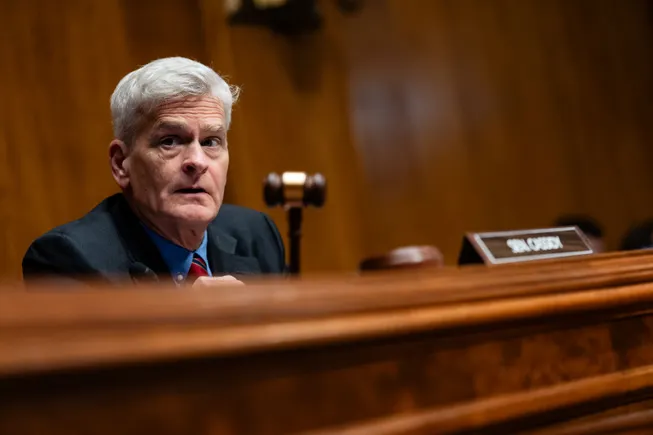
HELP Committee Chairman, Louisiana Republican Senator Bill Cassidy, said during Thursday's markup that he would not vote for S. 5046 because he does not oppose all of the Department of Education's interagency agreements covered by the bill. Cassidy said, "I do believe the administration should be allowed to pilot solutions to inefficiencies and explore the potential for increased efficiency by implementing these interagency agreements."
However, Cassidy emphasized that he opposes the agreement between the U.S. Department of Health and Human Services and the Office of Special Education and Rehabilitative Services. Cassidy had introduced a bill specifically targeting that interagency agreement for this markup, but he said that since that content is already included in S. 5046, the committee will not consider it as a final vote item.
Virginia Democratic Senator Tim Kaine said during the markup that he introduced S. 5046 to "preserve the truly core components of the agency." He added that there are other services and responsibilities within the Department of Education that he would like to include, but they cannot be included yet in order to reach bipartisan consensus as quickly as possible.
Maine Republican Senator Susan Collins, one of the bill's co-sponsors, said S. 5046 would ensure that the implementation of landmark education programs remains within the Department of Education. Collins added that the department's interagency agreements targeted by the bill are "inconsistent with their programmatic purposes." For example, she pointed to the agreement between the Department of Health and Human Services and the Office of Special Education and Rehabilitative Services, which oversees the implementation of the Individuals with Disabilities Education Act. Collins said the agreement "fundamentally misunderstands the history and intent of the special education program, which was created in 1975 to ensure that children with disabilities receive a free and appropriate public education."
The committee also approved an amendment to S. 5046 requiring the Department of Education to report on the costs of its interagency agreements. U.S. Secretary of Education Linda McMahon has stated that these agreements aim to improve government efficiency. Washington State Democratic Senator Patty Murray, who introduced the amendment, said the Department of Education should demonstrate whether that goal is being achieved. Murray said the Department has paid over one million dollars to implement an interagency agreement with the Department of Labor. "Show us the receipts," Murray said, "There are now 13 more such agreements, and Congress has received no information about their costs."
In a letter to congressional leaders on Thursday, McMahon asked the House and Senate to support the Department of Education's 14 interagency agreements because "misunderstandings have circulated." She said the agreements "have already shown measurable results by driving more competitive grant awards, streamlining government operations, and delivering better outcomes for Americans."
In recent weeks, House Republicans have introduced 10 bills aimed at codifying most of the Department of Education's interagency agreements into law. However, these bills do not include provisions to transfer certain special education programs and some civil rights activities to the U.S. Department of Health and Human Services and the U.S. Department of Justice, respectively. The legislative package was announced by House Education and Workforce Committee Chairman, Michigan Republican Representative Tim Walberg. Unlike the interagency agreements, the House proposal goes further by transferring the statutory responsibilities for these activities from the Department of Education to other federal agencies.
Other K-12 bills passed during Thursday's Senate committee markup include:
- S. 4689, the Read to Lead Act, which would make changes to state literacy development grant programs and combine the science of reading with federal accountability and investments in research, teacher training, and evidence-based instruction.
- S. 3010, the 21st Century Dyslexia Act, which aims to amend the Individuals with Disabilities Education Act to promote early screening of children with dyslexia.