
U.S. Department of Education Terminates Funding for Deaf-Blind Student Programs, Sparking Urgent Appeals from Families and Advocates
The U.S. Department of Education recently terminated funding for deaf-blind student programs in Washington State, Oregon, Wisconsin, and a multi-state consortium in New England. These programs were slated to receive approximately $1 million in funding for the next fiscal year, serving about 1,365 children. The termination notice has prompted urgent responses from families, educators, and advocates, who describe the funding as a "lifeline" for student development.
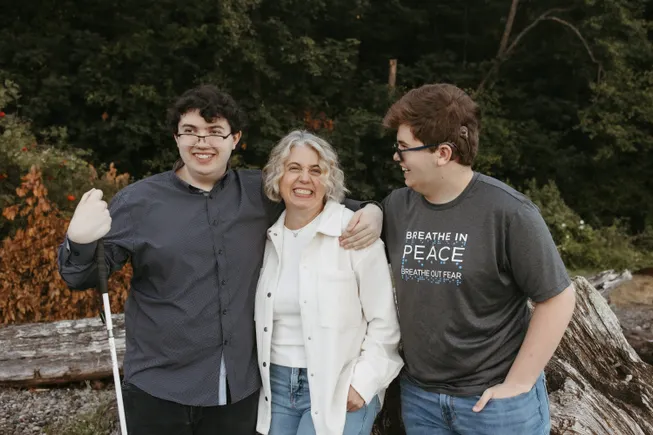
Families, educators, and advocates of children and youth with combined vision and hearing loss are urgently seeking the restoration of suddenly canceled federal funding. They say these funds are a "lifeline" for students' educational and developmental progress.
The U.S. Department of Education recently issued "notice of non-continuation" to four deaf-blind projects in Washington state, Oregon, Wisconsin, and a New England multi-state consortium including Connecticut, Maine, Massachusetts, New Hampshire, and Vermont. Advocates say the notices were sent on September 5, but a letter reviewed by K-12 Dive is dated August 27.
The notice to the fiscal agent of Oregon's deaf-blind project, for example, states that continuing the project "would conflict with the agency's policies and priorities, and therefore would not be in the best interest of the federal government." The notice also cited language from the project's 2023 grant application, which stated that project partners are "committed to improving strategies, interventions, and processes to address inequities, racism, bias, and systemic marginalization faced by cultural, linguistic, or disability groups."
According to data provided by deaf-blind advocates, the grants for these four projects total approximately $1 million in the next fiscal year and serve about 1,365 children and their families. These projects are in the third year of a five-year grant period. Federal funds support deaf-blind youth attending public, private, charter schools, or receiving home-based education, for teacher training and professional development, family resources and training, educational materials and technology, and other activities.
In the notice to the fiscal agent of Oregon's deaf-blind project, the Department of Education gave project administrators seven days to request reconsideration. The Trump administration has been eliminating programs that promote diversity, equity, and inclusion (DEI) at the K-12 and higher education levels and across the government. As a result, the disability rights community has been concerned that these initiatives would also target efforts supporting students and individuals with disabilities.
Additionally, under President Donald Trump, the Department of Education has singled out education programs by pushing to reduce federal red tape and bureaucracy by giving states more control over federal funding.

Deaf-blind and DEI controversy
According tothe National Center on Deaf-Blindnessdata from a national child count conducted on December 1, 2023, 10,692 children and young people from birth to age 26 were eligible for state deaf-blind project services. Deaf-blindness is a low-incidence disability, meaning it is not common. According tothe Individuals with Disabilities Education Act (IDEA), the combination of hearing and vision loss "causes such severe communication and other developmental and educational needs that they cannot be accommodated in special education programs solely for children who are deaf or children who are blind."
Deaf-blindness is one of the disability categories eligible for services under IDEA. The recent notices of non-continuation for IDEA Part D grants to state deaf-blind projects do not affect IDEA Part B and Part C services that provide developmental and educational support to infants, toddlers, children, and young people with disabilities. According to the National Center on Deaf-Blindness, a federally funded technical assistance center, most states have their own deaf-blind projects that receive federal funds through IDEA, but some states join together in multi-state consortia.
"Make no mistake, losing these funds will directly impact our ability to serve some of our most vulnerable children."

Jill Underly
Wisconsin State Superintendent
Oregon's deaf-blind project was expecting to receive $133,543 in funding for the new fiscal year starting October 1. The state serves about 114 deaf-blind children and youth. Project director Lisa McConachie said the decision not to continue funding "makes no sense," especially since her annual report submitted earlier this year did not mention DEI. She said that in 2023, when the project applied under the Biden administration, grantees were required to include DEI-related language in their applications.
McConachie is employed by Portland Public Schools, which is the fiscal agent for the grant. She said Tuesday that she plans to submit a reconsideration request to restore the funding. "We're just a little overwhelmed right now," McConachie said. Although project funding continues through September, she worries that children could be affected if the grant is not continued. "The disruption of stopping support and services during the school year is too damaging. Lost time will never be made up."
Portland Public Schools only became the fiscal grant manager for the state's deaf-blind project in the past two years, although the project has existed for decades. McConachie said that during this time, the school system and its partners have been building connections and developing more support for educators, students, and families. "We've built all these connections and started really making a difference for people, and now we're being told to stop," she said.
In Wisconsin, State Superintendent Jill Underly criticized the grant termination. "Make no mistake, losing these funds will directly impact our ability to serve some of our most vulnerable children," Underly said in a statement Tuesday. "Wisconsin planned to use these funds for work including direct support for deaf-blind learners and their families, as well as efforts to recruit and retain new special education teachers. We are requesting reconsideration to protect these valuable programs." Underly said the state's five-year grant totals more than $550,000 and helps serve 170 children and youth from birth to age 21.
Savannah Newhouse, press secretary for the U.S. Department of Education, said in a statement to K-12 Dive that the department re-awarded more than 500 IDEA Part D grants and did not continue fewer than 35 grants that did not align with the Trump administration's priorities. According to Newhouse, examples of grant applications not continued include:
- An early childhood technical assistance center whose framework must "address systemic racism that permeates all aspects of society" by "enhancing equity content in early childhood preparation programs."
- A school for the blind that said it "must embed the values of diversity, equity, and inclusion into every aspect of our work."
- Making "cultural humility" an essential aspect of all training provided to federally funded agencies that support adults with disabilities.
"Many of these used obvious racial preferences or perpetuated divisive concepts and stereotypes that no student should be exposed to," Newhouse said. "The funds from non-continued grants were not cut; they were immediately reinvested in high-quality programs that better serve students with special needs."

Educational and family support
Parent Candice Elliott said that when she adopted her daughter Serenity seven years ago, the close network of deaf-blind families, educators, and experts in Oregon was "life-changing." Serenity, now 12, has deaf-blindness and other medical challenges and is the only deaf-blind student in her school district. "Our deaf-blind kids have so many issues, and you don't meet other people with similar issues," Elliott said. She said her family benefited from experts helping her communicate with her daughter and connecting her with other families in similar situations. These parents rely on each other for expertise and emotional support.
Now, Elliott is mentoring new families. She co-organized the annual family weekend in October, which brings together families from across the state to hear from national experts, learn about high school transition services, and receive advice and support from other parents. Due to the funding termination, the project canceled the parent weekend event. However, Elliott said parents are organizing on their own.
"The important thing is that we learn," Elliott said of the family weekend. "We get education. We learn how to support our children. We learn how to help each other."
Audra Lydon lives in rural Dallas, Oregon. Twenty years ago, when she brought her daughter Aingelise home from the hospital, she was a police and fire dispatcher and a single mother. In addition to deaf-blindness, Aingelise has quadriplegia and multiple complex medical needs. "I really had no experience with her medical needs or her communication needs, especially deaf-blindness," Lydon said.
After contacting the state deaf-blind project, she learned strategies for communicating with Aingelise and which supports were best for her daughter. The project also helped her connect with other families who could understand and empathize with the joys and challenges of raising Aingelise. Lydon worries that the sudden stop in funding will cause Aingelise's teachers to leave. Teachers of the deaf-blind are highly specialized and work with deaf-blind students who need communication, access, and literacy support.
Lydon said the loss of funding will harm the development of many children. "You can't just pull services away from a child for two years. I don't think people understand that developmentally, if a child loses two years at a very important developmental stage, it's hard for any child to recover," but it is especially challenging for deaf-blind students, she said. Lydon added: "Pulling services without notice or planning is completely unethical and, frankly, reflects a profound lack of understanding of the deaf-blind community."
"The funds from non-continued grants were not cut; they were immediately reinvested in high-quality programs that better serve students with special needs."
Savannah Newhouse
U.S. Department of Education Press Secretary
In Washington state, parent Lanya Elsa said IDEA Part D grants are crucial because deaf-blind children have complex and individualized needs. "School districts cannot possibly have the qualified personnel and knowledge needed for such a rare condition because they may only have one deaf-blind child," she said.
Elsa, mother of two deaf-blind sons (ages 26 and 17), is a special education researcher and former director of the Idaho Project for Children and Youth with Deaf-Blindness. Because of the support her sons and family received, she said, her older son Conner is employed by a major company, and her younger son Dalton is a high school student preparing for college. "I look at my children and what they have achieved," Elsa said, worrying about families who are just adjusting to a deaf-blind diagnosis. "What if these families don't have the same opportunities that my family had? I can't imagine, because we didn't have anything else. This is a lifeline for many families."