
New York Office Building Shooting Highlights Access Control Shortcomings: Technology in Place, Execution Questioned
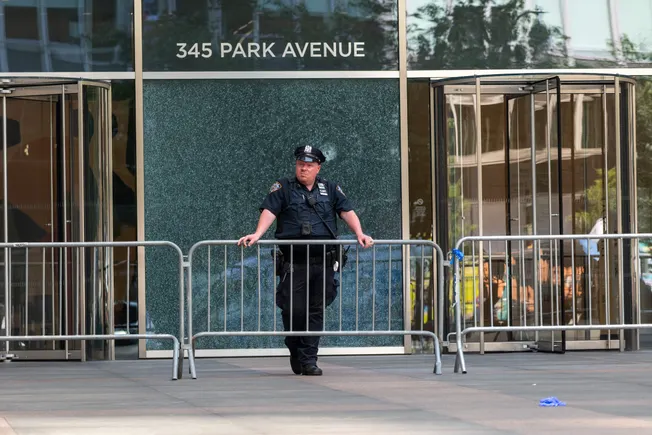
Last month's office building shooting in Midtown Manhattan, New York, which killed four people including a police officer, has once again put commercial facility security in the spotlight. Although cameras at 345 Park Avenue flagged the gunman before the attack, the warning failed to effectively trigger a response. Security experts note that access control is the core of protection, but currently 90% of systems still rely on easily cloned card-swipe technology, and tailgating attacks are frequent. The OSHA General Duty Clause requires employers to address foreseeable hazards, and active shootings have become the third leading cause of workplace fatalities, ranking first in healthcare and education sectors. Facility managers need to elevate active threat response to the same level of importance as fire drills.
The mass shooting in New York City last month, like every such incident before it, has again sounded an alarm for education administrators and campus safety experts: how to better protect building facilities, and in turn, the students and staff within them. This article, from our sister publication Facilities Dive, explores how commercial facility operators are responding and offers lessons for the education sector.
The mass shooting in Midtown Manhattan last month, which leftone police officer and three others dead, has thrust the question of how building operators can protect occupants from an armed attacker into the spotlight. Security experts say the incident clearly demonstrates that access control is a decisive factor, but not all access control systems are equally effective.
According toReuters, surveillance cameras at 345 Park Avenue flagged the approaching gunman as a potential threat before the attacker entered the office building's lobby and began his assault.
A freeze-frame from closed-circuit television footage obtained by Reuters shows a man carrying an assault rifle at his side, with a timestamp about one minute before police received the first call reporting the shooting. In the image, a yellow box generated by the building's security system frames the figure—a system that identifies threats requiring immediate action by analyzing live video streams. A former federal official told Reuters the system was supposed to alert front-desk security personnel.
Josh Sullivan, chief operating officer of the ALIVE Active Shooter Survival Training program, said protecting building occupants in an emergency begins with access control, especially when facing an active shooter. The programshares best practices for responding to threats with organizations。
"Access control and the physical security measures in place can prevent many things from happening from the start," Sullivan said. "There are multiple avenues. First, there are systems like the one deployed at 345 Park Avenue, but they just aren't being used correctly."
Sullivan said existing software can connect to cameras, identify threats, and lock doors, gates, and other systems. The software can also notify local law enforcement or call 911.
"These features can save precious time," he said. In some cases, the software automatically provides security system login credentials to emergency dispatchers, who can pass them on to first responders, giving them "live camera views, additional protocols, and location information within the building."
However, technology is only one piece of the puzzle. Matthew Dumpert, global head of corporate security risk management at financial and risk consulting firm Kroll, told Reuters: "This requires significant resources, alert systems to notify personnel, and training to recognize threats."
Sullivan noted that given the current frequency of active threats, it is becoming increasingly important for facility managers to invest in these resources and develop response plans.
The U.S. Occupational Safety and Health Administration's (OSHA)General Duty Clauserequires employers to take reasonable steps to protect employees or visitors from recognizable hazards that "could cause death or serious physical harm."
"Unfortunately, in today's world, the active shooter has become a common hazard," Sullivan said. "Across all workplaces, it ranks third among causes of workplace injury or death. In healthcare and education, it ranks first."
Stagnant technology leaves security gaps
Tina D'Agostin, CEO of Alcatraz AI, a company providing facial authentication hardware and software solutions for corporate clients, said many organizations use access control technology that is either outdated, improperly configured, or inherently insecure.
"Look at the systems deployed today—90% are still access cards and proximity cards," D'Agostin said. She noted that first-generation access card technology debuted in 1983 and has seen almost no innovation since. "Imagine still using a TV or phone from the 1980s. That's essentially where we are with access control. In any other area of life, this wouldn't be tolerated."
She said one of the weaknesses of these cards is how easily they can be cloned.
D'Agostin suggested facility managers consider other technologies, including mobile-based and biometric systems. She noted each option has its pros and cons.
She mentioned that the downside of mobile devices is that, like access cards, they are carried by people and can therefore be lost; using biometrics, meanwhile, requires a trade-off between convenience and friction.
Compounding these issues is the problem of "tailgating"—where unidentified individuals follow authorized employees or building occupants into restricted areas, bypassing access control.
D'Agostin said tailgating is the leading cause of security breaches and is often unsophisticated. "It's often a polite person holding the door for an unauthorized individual, who then enters and becomes the perpetrator," she said. "All other technology can't prevent this. If there's a technological device at the door but someone holds the door open, the entire system is rendered useless."
Looking ahead, Sullivan said building operators should elevate the active shooter threat to the same level of importance as fire evacuation and other safety matters.
"Even when they touch on active threat scenarios, they often only scratch the surface," he said. "Most companies haven't fully engaged with the active threat domain. Workplace violence is an issue that truly needs to be taken seriously."