
U.S. Department of Education's New Rule Proposes Loosening Conditions for Terminating Federal Grants
The U.S. Department of Education plans to amend federal grant management regulations, adding provisions to terminate discretionary grants for 'convenience,' require grantees to comply with executive orders, and allow phased or delayed fund disbursement. Experts believe this would make grant termination almost free of substantive restrictions and potentially bypass existing legal challenges. The proposal is set to be published in the Federal Register on August 24, followed by a 30-day public comment period.
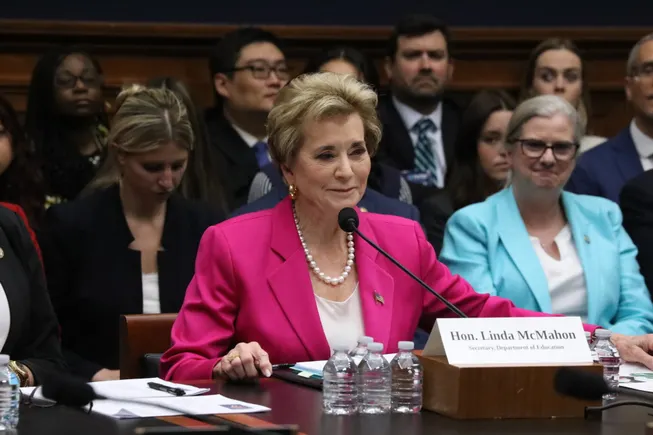
The U.S. Department of Education is seeking greater discretion over how and why it terminates federal grants. Under a proposed rule scheduled to be published in the Federal Register on Monday (August 24), the department would formally codify a series of controversial grant termination practices—practices that have embroiled the agency in legal disputes over the past year, during which multiple grants were abruptly terminated for allegedly not aligning with the Trump administration's priorities.
Key elements of the proposed changes include allowing the department to terminate discretionary grants "for convenience." Grant practice and education policy experts note that this language is broad, vague, and uncommon for discretionary grants. The proposed text states: "The proposed changes would ensure the department retains ongoing programmatic discretion after grants are awarded and, consistent with law, may terminate discretionary grants for 'convenience.'" Additionally, the new rules would require grantees to comply with executive orders, grant the department authority to review "grant applications and information about grantees' past activities," and allow it to "release partial grant awards, provide funding in installments, or delay the release of funds."
However, grant experts warn these changes would allow the department to abruptly terminate, interrupt, or withhold discretionary grants based on retroactive reviews of applications—and whether those applications align with an administration's evolving policies. Josie Eskow Skinner, founding partner of Sligo Law Group, a federal education law firm, said: "Essentially, this means they can terminate a grant years later because they don't like the policies the grant program advocates. So, in effect, it allows termination for almost any reason." Skinner, a former attorney in the Office of the General Counsel's Elementary, Secondary, and Adult Education division at the U.S. Department of Education, also participated in the department's 2024 revision of the Education Department General Administrative Regulations—upon which this new proposed rule builds.
"Circumventing the legal issues"
After employing these practices for over a year and becoming entangled in multiple lawsuits as a result, the department is now proposing to formally codify these grant management approaches into regulation. Grant experts note that before the second Trump administration, the department rarely terminated discretionary grants except for compliance issues, such as whether grantees met all financial requirements or achieved performance goals.
However, under the second Trump administration, the Education Department has withheld, and in some cases terminated or interrupted, multiple grants citing their connection to diversity, equity, and inclusion (DEI) or their misalignment with administration priorities. For example, in 2025, the department withheld up to $1 billion in mental health discretionary grants, leaving school programs in at least 16 states that relied on these funds in uncertainty, and reportedly affecting the stability of school staff hired under these programs. These grants were awarded under the School-Based Mental Health and Mental Health Services Professional Demonstration Grant program, established by Congress to improve student mental health following major school shootings.
When awarding these multi-year grants, the Biden administration partly considered whether applicants would increase "the diversity and cultural and linguistic competence of school-based mental health services providers, including the capacity to provide identity-safe services to students." However, when sending termination notices to grantees who received awards during the Biden administration, the Trump administration stated these grants "reflect the priorities and policy preferences of the previous administration, which conflict with the current administration." Such abrupt changes to discretionary grants have also affected teacher training programs, services for deaf-blind students, and full-service community school grants.
In the case of the canceled mental health grants, states successfully filed lawsuits. The U.S. District Court for the Western District of Washington ruled last year that these terminations were unlawful and ordered the department to make new renewal decisions. District Judge Kymberly Evanson stated in that case: "Nothing in the existing regulatory framework supports the department's view that multi-year grants can be interrupted whenever political winds shift." Judge Evanson had issued both temporary and permanent injunctions against the department.
In response, the department issued new renewal decisions. But Maryland Attorney General Anthony Brown said the department only funded grants through the end of July, after which it stated it would review the grants again and make additional funding decisions. Maryland is one of 15 states that filed another lawsuit in early summer. According to court documents, the department informed states and the court in June that it planned to terminate "some or all" of the grants, rather than provide grantees with the full amount of awarded funds. The states again took the department to court, arguing that "although the specific mechanism by which the department plans to terminate the protected grants may have changed, the illegality has not." The case is still pending, but preliminary progress has been made.
In lawsuits challenging grant terminations, plaintiffs have sued under the Administrative Procedure Act, claiming the agency's method of terminating funds is inconsistent with its own regulations—for example, in some mental health grant cases, funds were terminated even before grantee performance reviews had been conducted. Last Friday, the department proposed amending these regulations to better align with the practices it has been sued over. Skinner noted: "Now, the regulations will explicitly state that grants can be terminated due to priority changes—essentially policy changes. They are effectively circumventing the legal issues raised in the lawsuits."
Grant experts warn that if this proposed rule takes effect, it could leave years of future funding uncertain. Kelly Christiansen, director of legislative affairs at The Bruman Group, an education law firm focused on federal grants, said: "If they receive funding for the first year, what do we need to do to ensure eligibility for second- or third-year renewal funding? And this rule simply adds language that allows the department significant discretion in terminating these grants."
In response to K-12 Dive's request for comment on whether the new practices would create instability for grantees, the U.S. Department of Education stated it prioritizes performance, incentivizes higher-quality outcomes for students and families, and better protects taxpayer funds. The proposal estimates these revisions would reduce expenditures by $186,363 annually over the next 10 years. The proposal will be open for a 30-day public comment period after publication in the Federal Register.