
How Will Trump's FY2026 Budget Plan Reshape Special Education?
The White House's FY2026 budget proposal aims to consolidate multiple special education grant programs under the Individuals with Disabilities Education Act (IDEA), sparking controversy. Critics worry that specific programs may lose funding guarantees, while supporters argue consolidation could enhance funding flexibility. The proposal maintains IDEA's total funding at $15.5 billion unchanged but merges preschool grants ($677.6 million) into the school-age Part B program, while also proposing a 67% budget cut to the Institute of Education Sciences.
The White House's proposal in its fiscal year 2026 budget plan to consolidate fragmented special education funding streams has raised concerns among critics that key programs could be cut or loosely folded into the remaining special education funding.
Supporters, however, argue that this budget restructuring is not only an opportunity to maintain federal special education funding levels but also simplifies the funding allocation process, allowing the funds used to educate and support the nation's 8.4 million infants, toddlers, children, and youth with disabilities to be used more effectively.
Overall, this fiscal year 2026 budget proposal, released in phases in April and May, provides $15.5 billion for the Individuals with Disabilities Education Act (IDEA), the same level as the previous year.
However, the Trump administration has stated it wants to consolidate some grant programs with different purposes to give states and school districts greater spending flexibility. Opponents of the plan point out that this design would eliminate funding guarantees for specific programs, as whether to fund them would be left to each state's discretion.
Specifically, the budget plan would fold the smaller IDEA Part B state preschool grants and IDEA Part D funds for technical assistance and teacher training into the larger Part B school-age children's program. The proposal allocates a total of $677.6 million for preschool grants and Part D programs, which exactly matches the increase proposed for the overall Part B program in the budget proposal.
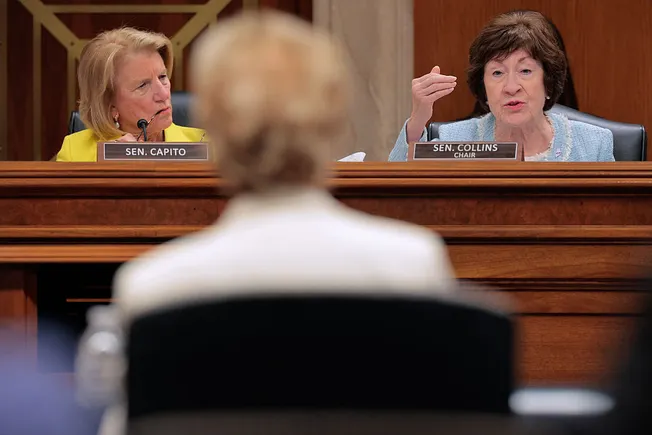
U.S. Secretary of Education Linda McMahon said before a Senate Appropriations subcommittee in Washington, D.C., on June 3: "We are not cutting any IDEA funding; it remains intact, and the President is committed to ensuring that these funds reach the states."
But critics argue that the budget plan would actually reduce rather than increase special education funding. They also condemn the consolidation of multiple grant programs. The Council of Administrators of Special Education, a professional organization of special education directors, stated that the various grant programs under IDEA are meant to work together as a continuum of supports and services.
In an email to K-12 Dive, the Council said: "Reducing the components of the law into a single block grant without guaranteeing funding for each part is a serious disservice to children and youth with disabilities, their families, and the educators who serve them."
Programs slated to be folded into the Part B overall program include Parent Training and Information Centers, which received $33 million in fiscal year 2025. These centers have met or exceeded performance targets in each of the past five fiscal years.
Under the proposal, the Part B state grant for school-age children ages 3 through 21 would provide an average of $1,944 per student with a disability, covering about 10.9% of the national average per-pupil expenditure for the additional costs of special education and related services. Funding for students with disabilities also comes from other federal, state, and local sources.
The budget for IDEA Part C, which serves infants and toddlers with disabilities, proposed to remain at $540 million, would continue as a separate formula grant program.
Reforms already underway
The Trump administration has not waited for the annual appropriations process to push forward federal government reforms, including changes to the U.S. Department of Education and the Office of Special Education Programs.
The White House and U.S. Secretary of Education Linda McMahon have pledged to cut what they call federal waste and fraud and give local school communities and parents more decision-making power. To that end, the Department of Education has reduced its workforce by about half, canceled over $1 billion in grant funding, and issued executive orders to begin dismantling the department, although legal challenges have slowed these plans.
The administration has also stated its desire to move special education programs from the Department of Education to the U.S. Department of Health and Human Services.
In an April 28 letter to Delaware Democratic Senator Lisa Blunt Rochester, the Department of Education said no employees from the Office of Special Education Programs or the Rehabilitation Services Administration were affected by the agency's March 11 reduction in force.
Employees cut from the Office of Special Education and Rehabilitative Services, which oversees both offices, were in policy and administrative functions. According to the letter signed by Sarah Urschprung, Acting Assistant Secretary for Legislation and Congressional Affairs, these positions could be reassigned or eliminated to establish a "more efficient, cost-effective, and accountable organizational structure."
The letter added that the Office of Special Education Programs continues to oversee state compliance with IDEA and that no changes have been made to the "significant disproportionality" procedures. "Significant disproportionality" is an IDEA requirement used to determine whether schools or districts have racial overrepresentation or underrepresentation in special education identification, placement, or discipline. During Trump's first term, the Department of Education attempted to repeal the "IDEA Equity Regulations" but lost in court challenges.
Nevertheless, some disability rights advocates and special education administrative groups remain concerned that the federal government's efforts to reduce its role in education will harm civil rights protections for students and families and leave schools with fewer resources.
Since January, the Office of Special Education and Rehabilitative Services or the Office of Special Education Programs has not issued any policy guidance letters, and the Department of Education's website shows that the last congressionally required annual IDEA report was released in March 2024. However, the Office of Special Education and Rehabilitative Services has issued several notices of funding opportunities for special education grants in recent months. The Office of Special Education Programs also released state determinations on IDEA implementation in June as scheduled.
This crossroads comes as more students qualify for special education services, while the expansion of private school choice options puts greater pressure on public schools to serve students with disabilities who may not be able to attend their preferred school.
However, a poll found that parents have mixed feelings about dismantling the Department of Education. When the nonprofit Understood.org, which provides resources for people with learning and thinking differences, asked parents with school-age children eligible for IDEA services or Section 504 services and accommodations under the Rehabilitation Act, 30% said they felt hopeful, 27% excited, 30% scared, 31% angry, and 32% anxious.
Additionally, 90% of parents in the same group said they worry that dismantling the Department of Education would affect the quality of their children's education.
Support and opposition
Since the beginning of this year, several Republican-leaning states have sought greater fiscal flexibility for federal education funds through consolidated grants or block grants with fewer federal restrictions and requirements. Beyond IDEA funding, the fiscal year 2026 budget proposal for the entire Department of Education suggests merging 18 existing competitive formula grant programs into one $2 billion formula grant program.
Supporters of this move say states and local school districts are best positioned to allocate federal funds because they understand state and local needs and can use funds more effectively without burdensome federal rules.
Jeanne Allen, founder and CEO of the Center for Education Reform, which supports private school choice, said in an email to K-12 Dive that the Department of Education's fiscal year 2026 budget proposal "reduces federal spending on duplicative and burdensome programs, protects key programs like special education and Title I, and gives states and communities more flexibility and freedom to drive innovation. It also respects the role of parents and promotes parent choice programs."
But the Council for Exceptional Children, a professional organization for special and gifted education professionals, said in an email to K-12 Dive that the fiscal year 2026 spending plan, rather than inspiring flexibility, "removes critical national support for special education" because it eliminates dedicated grants used to address teacher shortages, provide training, and help families.
The Council stated that the budget "makes deep cuts that will negatively impact infants, toddlers, children, and youth with disabilities and the professionals who support them."
At a forum held by Democratic senators in Washington, D.C., on May 6, several members and witnesses spoke about concerns regarding the restructuring of IDEA grant programs.
Maryland Democratic Senator Chris Van Hollen said: "I just hope IDEA doesn't become a political football, giving the Trump administration an excuse to further cut a program that is already underfunded." He introduced a bill calling for IDEA funding to reach 40% of average per-pupil expenditure, or $69.6 billion by fiscal year 2035.
Kristin Scott is a high school paraprofessional in Elk River Area School District 728 in Minnesota, where she has worked for 20 years. She worries about the impact of federal spending cuts on her school and says special education programs need more, not less, funding.
She is concerned not only about cuts to annual appropriations but also about potential reductions in Medicaid benefits. Schools that provide health services to students eligible for IDEA services can be reimbursed for related costs under the program. Scott's job includes helping students with disabilities use medical equipment, eat, and use the restroom.
Scott said that if Medicaid or IDEA funding is cut or eliminated, schools would still be legally obligated to provide the services required by students' individualized education programs, but that would mean squeezing budgets for other educational programs. She is also a member of AFSCME Local 65.
Scott said: "It would just make us more reactive, make it harder to provide the services needed, and harder to keep kids healthy, happy, and safe."

