
Immigration enforcement policy adjustments trigger ripple effects on campuses: declining attendance and spreading anxiety
After immigration enforcement policy adjustments, multiple U.S. states and school districts issued response guidelines, but teachers and advocacy groups point to declining student attendance and rising fear among families, with new rules in some states sparking legal disputes.
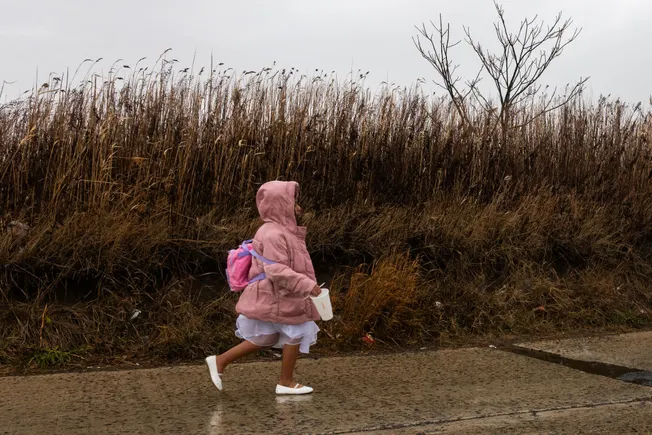
At a press call hosted by the Century Foundation on Thursday, January 23, teachers and civil rights advocates said that increased immigration enforcement is leading to declining student attendance and rising levels of fear and stress among educators and families.
“This is a terrifying time, and I am doing everything I can to keep a smile on my face and stay strong for my students and my local community,” said Diana Herrera, a high school teacher from California’s Central Valley. She added, “These are human beings”—many of whom “I teach and love as if they were my own children. So, threats against them break my heart.”
Similarly, Alejandra Vázquez Baur, co-founder and director of the National Newcomer Network, said, “The fear is heavy.” The network is a project of the Century Foundation, a progressive think tank.
Vázquez Baur noted that this fear “can prevent people from accessing critical social services they are entitled to under multiple state and federal laws, regardless of their status. This is intentional. It is not about protecting families or improving their lives. It is about exclusion, racism, and power.”
These comments came after the Trump administration made a policy change last week (January 21) that removed the “sensitive areas” status of schools in immigration enforcement activities. Educators and immigration advocates said this action has sparked anxiety and uncertainty not only among immigrant families but also across the broader school community.
“As we do best in times of crisis, we will continue to keep kids learning.”

Cheruba Chavez
English teacher in New Orleans
In response, many local and state education systems have developed or reissued guidelines for school staff to follow when Immigration and Customs Enforcement (ICE) or Customs and Border Protection (CBP) personnel visit.
For example, the San Diego Unified School District issued statements in English and Spanish on January 22, saying the district is “committed to ensuring that everyone in our school community feels safe, valued, and supported.” On January 29, the Connecticut State Department of Education issued guidance urging districts to use protocols for third-party access to information, including directing immigration officers to designated school officials.
In the Los Angeles Unified School District, the nation’s second-largest, officials are sharing a “Know Your Rights” document with the community. The document explains people’s constitutional rights when approached by immigration authorities and includes a family preparedness checklist.
Much of the state and local guidance reminds school administrators that under the Family Educational Rights and Privacy Act (FERPA), districts must keep all personally identifiable information in student education records confidential. The guidance also emphasizes the legal documents school officials need to see when immigration officers conduct enforcement activities on campus.
Questioning immigration status
However, while some states and districts are sharing practices to protect and support immigrant families, the Oklahoma State Board of Education on Tuesday (January 28) approved administrative rules that the Oklahoma State Department of Education says will strengthen accountability and enforce “state values.”
The rules, which require approval from the state legislature and governor, would require teachers to take a test based on the U.S. naturalization exam (covering U.S. government and civics knowledge and English assessment) and require parents to show proof of U.S. citizenship or legal immigration status when enrolling their children in school.
The department’s statement said that proof of citizenship “will help educators better understand and meet the needs of their student population and provide important insights into how to best budget and allocate critical resources.”
Nicholas Espíritu, deputy legal director of the National Immigration Law Center, said in a statement that Oklahoma’s proof-of-citizenship rule is “clearly an attempt to instill terror in communities.”
Espíritu said, “Requiring school districts to prove parental citizenship unlawfully impedes access to that opportunity and interferes with schools’ ability to focus on their core mission: educating children and empowering all students to grow, thrive, and fully participate in our democracy.”
Immigration advocates also remind school systems and families that any action hindering school attendance violates the right to free public education established by the U.S. Supreme Court’s 1982 Plyler v. Doe ruling. That ruling stated that states cannot unconstitutionally deny students free public education based on immigration status.

Additional trauma
As educators and civil rights advocates seek resources, Cheruba Chavez, an English teacher in New Orleans, advises fellow teachers and school administrators to ensure student contact information is up to date and that districts collaborate in case students transfer.
Chavez said, “Then we call students who are absent and tell them we miss them and hope to see them tomorrow. As we do best in times of crisis, we will continue to keep kids learning.”
Viridiana Carrizales, founder of ImmSchools, a grassroots organization that helps immigrants understand their legal rights, said some districts are not distributing immigrant family resources due to concerns about drawing unwanted attention to their communities.
Carrizales said, “Districts are struggling with this growing tension between pressures at the national and state levels and their ability to maintain policies that protect and support all students.”
Since the Trump administration’s change on sensitive areas last week, ICE has not immediately responded to inquiries about whether it has conducted immigration enforcement actions at preschools, K-12 schools, or college campuses. The change ended the practice of immigration officers avoiding “sensitive” areas.
The administration said it made the change to ensure that “criminals will no longer be able to hide in America’s schools and churches to avoid arrest,” according to a Department of Homeland Security statement on January 21. In addition to schools and universities, the policy also removed the sensitive-area status of hospitals and churches.
Since then, ICE has arrested alleged undocumented criminals in Baltimore, Boston, San Francisco, and other cities, but none appear to have occurred on school campuses.
In San Diego, Afira DeVries, president and CEO of the Monarch School Project, said the school is trying to balance the reality of immigration enforcement with ensuring a safe environment for students.
DeVries said, “For us, the key is what is a safe environment—where families feel safe and students can learn. It’s a very big challenge and a very big issue.”
Monarch School is the only K-12 public school in the nation dedicated to students experiencing homelessness. DeVries said the combination of students’ housing instability, the threat of wildfires in the region, and increased immigration enforcement is taking an emotional toll on the school’s students, families, and staff.
DeVries said, “Any of us who are U.S. citizens should take a moment to think about what it would feel like to know that your child might not come home from school, or might face some terrible separation measure simply because they are trying to access an educational environment.”

She added that Monarch School has strong partnerships with the San Diego County Office of Education and community groups that are providing guidance on how to respond to immigration officers at schools.
These organizations are clarifying what schools are entitled to do and obligated to do during enforcement actions, so that schools can “ensure we meet those expectations while centering the needs of students and their families,” DeVries said.
Instructions for staff and families from states and districts
The National Newcomer Network expects that immigration policy changes will increase the likelihood of armed ICE officers conducting raids at or near schools, childcare centers, playgrounds, and other spaces where youth gather. This will have a “chilling effect” on immigrant communities, potentially preventing them from accessing critical social services they are entitled to under multiple state and federal laws, the organization said in a January 22 statement.
The organization has about 300 members, including teachers, district administrators, and state education officials. In apolicy guideto help school administrators protect immigrant students and families, the organization emphasizes early preparation—including training and communication protocols for responding to immigration officers on campus.
The network’s Vázquez Baur said the organization is tracking policy changes and practices at the local level and will continue to publish best practices.
Other school-centered resources have been shared by districts, state agencies, and local, state, and national advocacy organizations. These resources provide procedural recommendations for what to do if immigration authorities visit schools, as well as social-emotional support and considerations for school communities. Groups and agencies providing such resources include: