
U.S. School Districts Actively Respond to Immigration Enforcement Threats, Strengthening Student Protection Measures
As the Trump administration threatens mass deportation of undocumented immigrants, U.S. school districts are taking proactive measures to protect immigrant students. Policies include restricting ICE access to campuses, training staff to handle enforcement requests, providing 'Know Your Rights' guidance, and working to reduce bullying and foster a sense of belonging. Experts emphasize that educators must be aware of undocumented students' right to education, while schools should cultivate an inclusive environment.
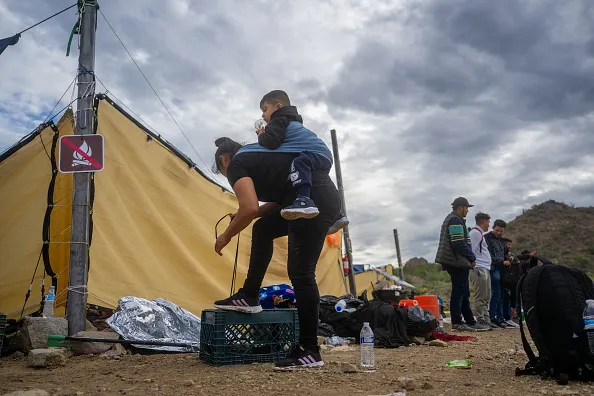
Facing the threat of mass deportation of undocumented immigrants from the incoming Trump administration, most school districts in the United States are updating their policies and response procedures. Immigration experts point out that school district leaders are intensifying efforts to reduce student fear and bullying and to enhance a sense of belonging in the school community.
"We hear concerns from many people across the country, not only from red states, but also from large urban school districts, blue states, and large blue cities. They are worried about enforcement actions and are trying to find solutions," said Alejandra Vásquez Baur, co-founder and director of the National Newcomer Network under The Century Foundation. The network is dedicated to sharing best practices for supporting immigrant students.
Some district-level policies and communications aim to assure staff, families, and students that non-local law enforcement—including U.S. Immigration and Customs Enforcement (ICE) personnel—may not enter schools unless required by law or granted specific permission.
Take the policy of New York City public schools as an example. The district instructs principals not to share personal information about students, family members, or district employees with non-local law enforcement agencies under any circumstances. The guidance also advises principals to collect any documents presented by officers (such as subpoenas, search warrants, or arrest warrants) and to contact the district's legal department while officers wait outside the school.
Schools as 'Protected Areas'
Vásquez Baur noted that school leaders are increasingly concerned about mass deportations and immigration enforcement activities near schools. One approach districts are taking is informing the school community about the policy of the U.S. Department of Homeland Security (DHS), which designates schools as 'protected areas.' This means that DHS, including ICE, should 'to the extent possible' avoid enforcement actions in protected areas. According to the policy, protected areas also include places where children gather, such as playgrounds, recreation centers, childcare centers, and school bus stops.
However, according to a report last week by NBC News citing three anonymous sources familiar with the matter, this policy could be rescinded after President-elect Donald Trump takes office on January 20. Trump and many of his Republican supporters blame undocumented immigrants for 'overwhelming school systems.' But some research shows that immigrant students actually bring financial and academic benefits to school systems.
In response to the NBC report, the National Immigration Law Center said in a statement on Wednesday: 'Regardless of what Donald Trump chooses to do, each of us has a role to play in understanding and exercising our rights to protect our schools, churches, and hospitals from his cruel actions. We will continue to work with administrators, teachers, and healthcare workers in the coming weeks and months to explore how to protect our community members, regardless of their immigration status.'
Although the exact number of undocumented children and families is currently unknown, the Migration Policy Institute states that as of 2019, approximately 5.5 million children under age 18 lived with undocumented immigrant parents, a figure representing about 7% of the U.S. child population. Of these, the majority (about 86%) are U.S. citizens, another 13% are undocumented, and 1% are lawfully present (including lawful permanent residents and those with temporary visas).
Furthermore, the population of children with immigrant parents has been growing. In 2021, approximately 18 million children under age 18 in the United States lived with at least one immigrant parent, accounting for 26% of the 69.7 million children in the country, up from 19% in 2000 and 13% in 1990.
Supportive Policies and Practices
Vásquez Baur said that in addition to the DHS 'protected areas' guidance, school leaders, staff, and families need to understand that students have a constitutional right to education. 'You would be surprised how few people working in education know that undocumented individuals have the right to education. Much of this information is not shared with educators,' she said.
She added that protocol training is crucial not only for teachers and administrators but also for all staff—including front office personnel and bus drivers. Some best practices districts are adopting include collaborating with local governments and organizations to develop policies and training.
In the landmark 1982 ruling in 'Plyler v. Doe,' the U.S. Supreme Court held that states cannot deny students free public education based on immigration status. The conservative nonprofit Heritage Foundation earlier this year suggested the Supreme Court reconsider the Plyler decision. The Heritage Foundation is the publisher of 'Project 2025,' a conservative policy blueprint prepared for a Republican administration during the presidential campaign.
As a precaution against potential immigration policy changes, school districts are sharing legal and policy protocols with staff and providing 'know your rights' guidance to immigrant families—including those with U.S.-born children and at least one immigrant parent.
The Chicago Board of Education reaffirmed in November its 'sanctuary' status and related policies, including training school employees on how to properly respond to ICE personnel requesting entry to campuses and proactive measures employees can take to assist students and families with immigration matters.
Oakland Unified School District in California has trained school employees on how to respond to ICE personnel arriving at schools to seek undocumented immigrants. The district also has a 'sanctuary task force' lead at the district office to respond to reports of family members being detained and reports of ICE personnel in the area. Additionally, schools in Oakland Unified may have their own tailored protocols to supplement district-wide practices.
The California Attorney General's Office this month issued guidance to schools about students' legal and constitutional rights and provided steps schools can take to prevent unnecessary collection of immigration status information about students and their families.
California Governor Gavin Newsom wrote in a letter to school leaders on November 27: 'We must work together to ensure that all children have access to a quality education, are safe and secure on campus, receive healthy meals and mental health care, and have the freedom to read books and learn history, while ensuring their parents have the right to actively participate in their children's education.' The letter was sent before the above guidance was issued.
Reducing Bullying, Fostering Belonging
A growing number of organizations are supporting immigrant students and providing resources for schools. For example, ImmSchools offers an educator resource guide that emphasizes knowledge-building on legislative, policy, and legal information, as well as emotional and cultural best practices for supporting immigrant students and families.
Adam Strom, executive director of 'Re-Imagining Migration,' said his nonprofit aims to help immigrant youth thrive by creating school environments that welcome and value students' backgrounds and experiences. However, schools are facing difficulties due to the politicized national discourse around undocumented immigrants. 'What I'm hearing now from educators and our nonprofit partners is that schools feel fear and exhaustion,' Strom said, attributing this to an increase in bullying incidents and anti-immigrant rhetoric among some students and staff.
This also stems from high levels of fear and uncertainty. 'People are worried about what policies will look like in the coming months, and no one can be sure,' Strom said. 'So, if you're a school teacher, when a child asks whether their parents will be deported, how do you answer? You don't want to give false assurances, but you also don't want to create additional anxiety.'
Strom noted that educators often lack training to support the specific needs of immigrant students. He called this a 'huge failure' because 27% of students in the United States are children of immigrants.
Strom suggested the following proactive measures schools can take:
- Shift mindsets.When new immigrant students enroll, some educators perceive these students as harder to teach. While addressing students' academic needs is crucial, schools should focus on the assets and strengths these students bring and value each student's background and native language skills.
- Assess and improve school belonging.Schools should determine which practices are effective or ineffective in fostering a sense of belonging for different student groups and the entire school community.
- Create welcoming physical, academic, and activity spaces.Student diversity should be a source of pride for schools, which can be reflected in the curriculum, artwork displayed in hallways, and school events such as cultural celebrations.
- Keep school leadership visible.As the head of the school, principals can play a significant role in creating a welcoming environment and building trusting relationships, including welcoming students to campus in the morning.
- Encourage peer relationships.Student buddy programs are often an effective way to help new immigrant students connect with peers and adjust to the school environment. Providing opportunities for new immigrant students to connect with each other also helps them build relationships and adapt to the new school together.
- Take bullying incidents seriously.All students need to feel safe at school. 'It starts with students knowing that educators will respond,' Strom said.
