
'Tripledemic' Disrupts School Operations, Forcing Administrators to Adapt Flexibly
Since the start of the fall semester, many U.S. schools have faced severe staff and student absenteeism due to the 'tripledemic' of flu, COVID-19, and respiratory syncytial virus (RSV). School administrators have had to reinstate pandemic-era prevention measures and adjust operational strategies to maintain in-person learning. This article explores, through multiple case studies, how schools are staying open amid the outbreak and drawing lessons from the pandemic experience.
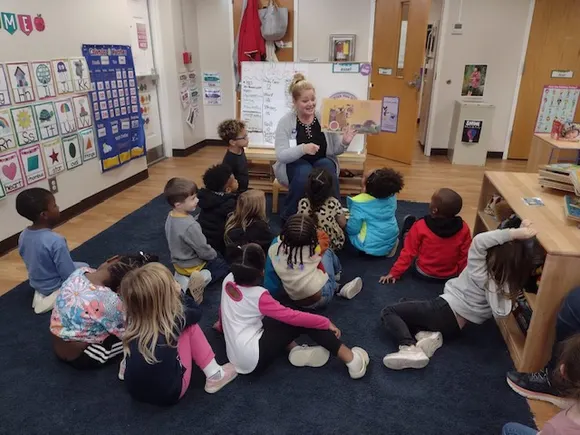
Since the start of the school year at Thornwell Child Development Center in South Carolina, absences due to illness among staff or students have never ceased. In fact, at certain points in the fall, center director Jenn Adams worried that the center might have to temporarily close because so many staff members were sick.
The center ultimately remained open, but daily operations were challenging. On one occasion, a class that normally had 20 young children saw 16 students and two teachers absent at the same time.
"This was definitely a very difficult period," said Adams, who herself stepped in to substitute teach when teachers were absent.
With the "tripledemic" of flu, COVID-19, and respiratory syncytial virus (RSV), along with high rates of other illnesses like strep throat, and repeated or lingering colds, early education centers and K-12 schools have been under immense strain. Administrators have had to continuously adjust school operations to maintain in-person learning.
"Our philosophy is, if the building can be open, we will be open," said Nathaniel "Natty" Messick, principal of Fertile-Beltrami Schools in Minnesota, a pre-K through 12th grade school with 550 students.
This fall, schools across the country made adjustments due to surges in illness. They reinstated COVID-19-era safety and cleaning protocols, strengthened communication between schools and families about when to send children to school and when not to, reassigned staff, and preparedonline learningplans in case the building or even the entire district needed totemporarily closeto control outbreaks.
USD 420 closes school due to illness
— USD420 Osage City Schools (@USD420SCHOOLS) December 13, 2022
Osage City Schools will be closed from Wednesday, December 14th, until the end of the semester due to high absenteeism. Today, over 40% of students were absent due to illness. See you on January 3rd.pic.twitter.com/XYHuFeMq2X
In many cases, whether to adjust operations depended on weighing the pros and cons of each option. For example, although Thornwell continued its pandemic-era practice this year of limiting contact between different classes to reduce disease spread, the school still remained open to parent visitors.
"For us, the benefit of doing this is being able to reconnect and bond with families again," Adams said.
Keeping school doors open
Brian Fleischman, principal of Overton Public Schools in Nebraska, said the school did not experience a major outbreak of flu, RSV, or COVID-19 this fall, but there was an increase in students having multiple colds and colds lasting longer than usual. Fleischman is the2022 Nebraska Principal of the Year。
However, a neighboring school district was just beginning to see an increase in flu cases. "Our time is coming," Fleischman said. Although he expects a potential increase in local COVID-19 cases to occur during the winter break for students and staff, he still expressed disappointment that illness could disrupt family gatherings.

Throughout the fall, the school's strategy was to make small adjustments to proactively prevent the spread of germs, thereby ensuring that this school with 280 pre-K through 12th grade students could remain open.
The school increased cleaning and disinfection efforts, removed all drinking fountains with spouts, and provided each student with a reusable water bottle. The district also distributed winter coats to students in need and reminded others to dress warmly in cold weather.
"I think as a smaller district, we have some advantages in doing these things," Fleischman said.
At Fertile-Beltrami Schools, Messick said student illness was mainly due to the flu. The school has not been forced to close, but before the Thanksgiving break, when more than 5% of students were absent for several days due to the flu, the school had to report to the Minnesota Department of Health.
Messick is the2022 Minnesota Principal of the Year, and he said the school is fortunate to have 11 certified substitute teachers who can step in when teachers are absent. Several of them work at the school almost every day, helping ensure continuity of instruction.
School administrators said keeping schools open for in-person learning is crucial because educators are working to close academic and developmental gaps caused by the pandemic.
For Thornwell Early Childhood Center, which serves 130 children from infants to age 5, too many staff absences could cause the school to violate operating regulations. To retain and recruit early childhood educators, the center pays $5 to $7 more per hour than other local businesses. But Adams said a new gas station being built in town will intensify competition for staff.
The early childhood center also faces sharply rising costs for cleaning supplies. For example, a case of disposable gloves that used to cost $25 now costs $100. Adams said these costs cannot be passed on to parents because the school serves children from low-income communities.
Communication with staff and families
Schools typically have policies that clearly state when students should stay home (e.g., a certain fever level or certain symptoms) and when they can return to school (after fever subsides or symptoms resolve).
But communication can become difficult if school policies conflict with doctor's advice or parental opinions.
"It's a balance: you don't want a child with a fever who is contagious to come to school, but you also don't want a child to stay home too long because if they're better, they'll miss out on instruction," Fleischman said.
"With the high rates of illness right now, to get kids back to school or keep them in school, I think communication with people is even more important, and it has to be very transparent and direct," he said.
Fleischman said he allows students who are well enough to come to school but may still be tired from a cold to lie down in the nurse's office or his office. "If the fever is gone and they feel well enough to come to school, then come. We do our best," he said.
"Overall, I think we as a country have realized that kids do better when they're in school. So, the more we can keep kids healthy and keep school doors open, the better."

Nathaniel "Natty" Messick
Principal of Fertile-Beltrami Schools in Minnesota
Hedy Chang, founder and executive director of Attendance Works, said preliminary data shows that this school year'schronic absenteeism rateremains high.
Chang said schools should be intentional about helping students re-engage with school life when they are not sick. If students need to stay home due to illness, there should be ways for them to keep up with assignments and maintain social connections with the school.
"How do they access learning resources? How do they ensure they don't fall so far behind that they can't catch up? How do they stay connected with classmates and their homeroom teacher? I think that's what we learned during the pandemic," she said.
One health protocol implemented at Thornwell has faced some opposition from parents. When a sick student is sent home, if that student's siblings also attend Thornwell, they must also stay home until everyone has recovered.
In such cases, Adams communicates with parents, telling them: "We're just trying to keep the center as germ-free as possible because we know you need us to stay open."
Applying lessons from the pandemic
School administrators said many of the coping skills learned during the pandemic have helped them navigate this chaotic illness season. For example, school leaders stayed in contact with local health departments and educators in neighboring districts, keeping an eye on public health concerns.
They also found more ways to keep staff and students healthy. At Thornwell, a newly purchased refrigerator-sized ozone disinfection machine can disinfect soft materials, crayons, markers, and other items in about 30 minutes. Adams said that while it requires teachers to collect items for cleaning a few times a week, it helps make classrooms safer for young children.
"Kids are cute, but they are basically walking germ balls."
Despite the challenging fall, administrators said having a more normal rhythm of life compared to the COVID-19 lockdown period has brought much joy.

"COVID was full of isolation—isolation, when kids should be interacting with each other and with teachers," Adams said.
Messick also said that knowledge gained during the pandemic about virus transmission and mitigating illness helped his school stay proactive this fall.
"Overall, I think we as a country have realized that kids do better when they're in school," Messick said. "So, the more we can keep kids healthy and keep school doors open, the better."