
School shootings in 2022 hit a four-decade high
As of December 20, 2022, there were 300 shootings at K-12 schools across the United States, far exceeding the 250 in 2021 and 114 in 2020. Data indicates that most shootings stem from escalated conflicts among students, with students being the primary shooters. Experts urge that school safety strategies should place greater emphasis on human factors rather than relying solely on physical facilities.
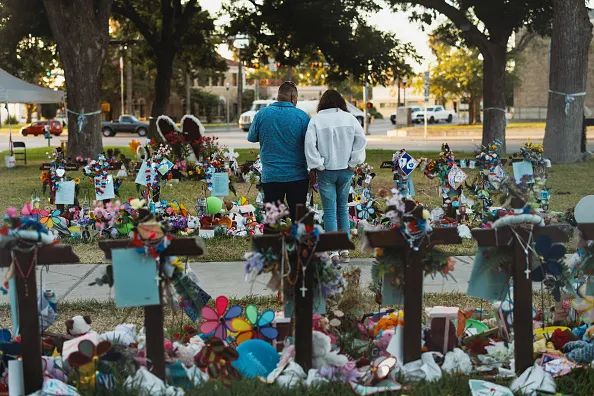
The 2022 calendar year broke the record for the highest number of school shootings in more than four decades and made it one of the worst years for gun violence among 12- to 17-year-olds. This conclusion is based on multiple unofficial statistical sources.
According to publicly availableK-12 School Shooting Database, as of December 20, 2022, there were 300 shootings on school campuses nationwide, compared to 250 in 2021 and 114 in 2020. A decade ago, in 2010, that number was only 15.
These statistics cover all gun violence on K-12 public, private, and charter school campuses, including mass shootings, gang shootings, domestic violence, shootings at sporting events and after-school activities, suicides, and other incidents.
"Unfortunately, this year—especially this fall—there has been a shooting on nearly every school day," said David Riedman, founder of the K-12 School Shooting Database, which he updates daily. "In the past five years, I have never seen anything like this fall."
This year, school shootings surpassed the total for all of 2021 in October, when Riedman recorded 257 K-12 school shootings.
Highest number of K-12 school shootings in 2022
Since 2020, school shootings have increased by 163%, and since 2010, by 1900%.
As school administrators, education advocates, parents, and politicians debate how to address this crisis, data collected by Riedman and other sources can provide important information about why school shootings occur and how to prevent them.
Most shootings stem from escalating conflicts
For example, Riedman's data shows that the vast majority of school shootings this year involved student shooters. In fact, statistics indicate that more shootings by children and teenagers aged 10 to 18 on school grounds occurred this year than in previous years, he said.
Data from the past fifty years shows that most school shootings occur when conflicts escalate. According to the database, since 1970 there have been 761 shootings stemming from physical or verbal altercations, or prior disputes. So far this year, Riedman attributes 80 of the 300 school shootings to such situations.
"So, someone has a gun. They had no plan to shoot that day, but an argument with someone occurred, which led to a fight," Riedman said. "For some reason, they decided to pull out the gun they habitually bring to campus, and then shot someone."
This aligns with the trend of increased firearms confiscated and used that Kenneth Trump has tracked this year. Trump is the president of the national consulting firm "National School Safety and Security Services."
"Historically, the guns we confiscated in schools were usually unloaded," Trump said in an email. "In the past two years, we have not only seen loaded guns, but also seen them pulled out and used in fights on and off school grounds."
This year also set a record for the most casualties from intentional or accidental shootings in K-12 schools since 2018—332 people as of December 20, according to the K-12 School Shooting Database.
Gun casualties have risen since 2018
Over the past five years, a total of 1,056 people have been injured or killed by gunfire on K-12 campuses.
Riedman said this reflects an increase in the number of people carrying guns on campus.
Following shootings caused by escalating conflicts, the second largest category is accidental shootings, totaling 220.
This year, there have been multiple accidental discharges of firearms carried by students, parents, school resource officers, and educators. Regarding accidental shootings by students, Riedman said they typically occur when a student brings a gun to school to show classmates, and the gun accidentally fires. Earlier this month, a gun brought to school by a 12-year-old student accidentally discharged, injuring a classmate.
Many school shooters are students
According to the K-12 School Shooting Database, when considering the shooter's role in the school or relationship to the school, students account for the highest proportion of school shooters at 43%.
Kenneth Trump, president of the consulting firm "National School Safety and Security Services," has warned school districts that students returning after school closures and remote learning due to the COVID-19 pandemic would face "unprecedented social and emotional stress, anxiety, and increased aggression."
"While educators expected aggression to rise, I am not sure they anticipated the severity of violence and weapon use in schools nationwide," Trump said. He added that both large and small school districts face similar challenges among students, sometimes even affecting family members and other adults.
The K-12 School Shooting Database also records incidents involving former students, police or school resource officers, staff, individuals with unknown relationships, and others.
People unaffiliated with the school account for only a "relatively small proportion" of school shooters, Riedman said. From 1970 to the present, in active school shooting situations, about 80% of attackers were students or former students.
Riedman said that as school systems consider security measures to deter dangerous intruders, these data indicate that it is equally important to develop protocols for responding to violence involving familiar faces on campus.
"I think Uvalde showed that sitting under a desk is not a good strategy. In that situation, it would have been much better if the children had run out of the building."
— David Riedman, founder of the K-12 School Shooting Database
The statistics also reveal what happens after a shooting occurs and how schools react. About 71% of school shootings end with the shooter fleeing and either escaping or being arrested off campus. Once shots are fired, "shooters rarely stay at school," Riedman said.
But even knowing this, school responses to shootings often include lockdowns lasting hours, causing trauma to those hiding, he said.
Riedman said a one-size-fits-all approach to school safety is not effective.
"Now, 20 years after Columbine, we really need to seriously examine whether lockdowns are still the appropriate method, because incidents are more numerous and more deadly than before Columbine. So whatever is being done is clearly not effective," Riedman said.
"I think Uvalde showed that sitting under a desk is not a good strategy," he said. "In that situation, it would have been much better if the children had run out of the building."
The police response to the shooting at Robb Elementary School in Uvalde, Texas, has been accused of being "indecisive, dysfunctional, and harmful," as the school was under lockdown for over an hour. A$27 billion class-action lawsuitfiled by victims' families and survivors makes such allegations. In the May 24 incident, two teachers and 19 students died.
Trump said the Uvalde tragedy exacerbated the immense ambiguity and uncertainty surrounding school safety and prompted more parents to demand that school leaders reassess their safety and emergency preparedness.
"School leaders need to adopt a more in-depth approach to training teachers and support staff, with greater emphasis on the human factor and less reliance on 'security theater' quick fixes of more security hardware, products, and technology," Trump said. In working with schools, he emphasizes training staff in situational awareness, rapid identification of changes in behavioral patterns, and decision-making skills under pressure.
"A culture must be established where school safety is everyone's daily job."
National leaders divided
School leaders have been calling for policy changes to address the increase in gun violence on campuses. These calls grew louder after the May 24 mass shooting in Uvalde that killed 19 children and two adults. That incident became the deadliest K-12 school shooting since the Sandy Hook Elementary School tragedy, which killed 26 children and educators nearly a decade earlier.
"In this decade—between the two murders of our children—no substantive gun safety legislation was signed," said Rep. Lucy McBath, a Georgia Democrat whose 17-year-old son died from gun violence in 2012. "We cannot wait another decade," she said at a congressional hearing last week on the Uvalde shooting.
The Bipartisan Safer Communities Act, signed into law in June, provides federal funding for schools to expand mental health support, improve learning conditions, and enhance campus safety.
However, lawmakers remain deeply divided on gun control measures long advocated by educators, namely raising the age limit for purchasing firearms and banning AR-15-style weapons—a weapon often used by mass school shooters.
This issue will be left to the new Congress, which convenes on January 3.
School shootings reflect national trends
According to the nonprofit organization tracking gun violence in the United States,Gun Violence Archive, the number of teenagers and children killed or injured by firearms has risen steadily over the past few years, with a slight dip in 2018. In 2022, the number of 12- to 17-year-olds killed or injured by firearms reached a new high, slightly exceeding 5,000.
These trends align with recent data from the Centers for Disease Control and Prevention for 2020. That data, analyzed by theKaiser Family Foundation, shows that firearms have become the leading cause of death for American children, surpassing motor vehicle accidents.
"We found that the United States stands alone among comparable nations in terms of child gun deaths," Kaiser researchers wrote. "In no other country of similar size or wealth are gun deaths among the top four causes of child mortality, let alone the leading cause."
