
Special Education Lawsuits During Pandemic Lower Than Expected
At the onset of the pandemic, many predicted that remote learning would trigger a wave of special education lawsuits, but two years later, the actual number of lawsuits was lower than expected. This article interviews multiple lawyers, advocates, and education administrators to analyze why lawsuits did not surge and to explore the current status and obstacles in implementing compensatory education services.
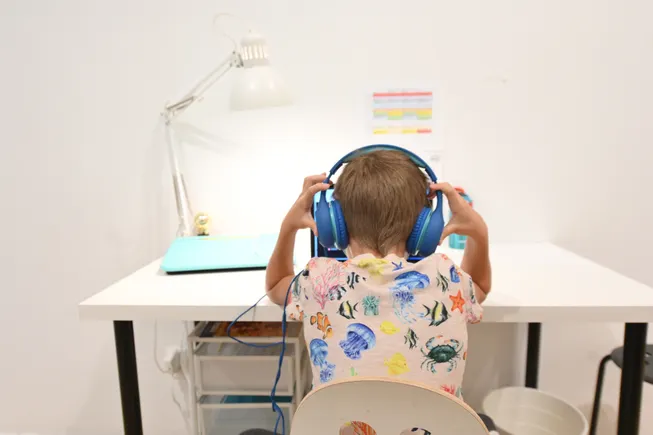
Two years after the global health crisis began, the number of special education-related lawsuits filed against school systems due to prolonged pandemic-related school closures is lower than expected. Although the pandemic continues to disrupt in-person instruction and the statute of limitations for lawsuits over missed services for students with disabilities has not yet expired in some regions, school administrators, lawyers, and disability rights advocates say that based on their own experiences or anecdotal reports, the anticipated wave of litigation has not materialized so far.
"I had anticipated that remote instruction and the period of remote schooling would trigger a large number of lawsuits, and I must admit I was wrong," said Jose Martín, a lawyer at the Austin, Texas law firm Richards, Lindsay & Martín, which represents school districts. He added, "I thought it would come like a wave, but that has not been the case."
Julie Weatherly, a special education lawyer serving school districts in Alabama, Georgia, and Florida, said that traditional special education litigation increased slightly during the pandemic, but the complaints do not seem to stem primarily from widespread disputes over missed special education services during remote learning. Weatherly is the founder of Resolutions in Special Education, a consulting and law firm that helps school systems resolve special education legal issues. She said the special education community "has not seen what we might have expected."
Similarly, Selene Almazan, legal director of the Council of Parent Attorneys and Advocates (COPAA), a nonprofit organization dedicated to protecting the civil rights of children with disabilities, said the organization has not heard of an increase in lawsuits over missed special education services due to school closures.
But the lack of lawsuits does not mean there are no concerns about the negative impact of school closures on students with disabilities and their access tocompensatory education servicesCompensatory services are a non-legal remedy that can be provided additionally to make up for evaluations or services missed due to pandemic-related closures or other reasons.
"I have mentioned this to some families, and their reaction is: 'What do you mean by compensatory? I can't even get what I'm entitled to now, let alone make up for a year ago.'"
—Dustin Rynders, supervising attorney at Disability Rights Texas
A survey conducted by COPAA from October to November 2021 showed that only 25% of parents said their school districts informed them of the opportunity to receivecompensatory servicesThe survey included 254 responses from more than 200 school districts across 36 states. Almazan said, "We found a disconnect between what the federal government says and the local processes for determining compensatory education claims."
Difficulties with learning at home
The sudden shift to remote instruction in spring 2020 led to shortened, delayed, or even missed services for some students eligible for individualized services under the Individuals with Disabilities Education Act (IDEA) or Section 504 of the Rehabilitation Act. Although many school systems tried to quickly adapt by providing the same special education supports (such as speech therapy) virtually, some students and families had greater difficultyaccessing or participating inthese online classes. Parents, advocates, and educators say that students whose individualized education programs require intensive services and supports found it especially difficult to learn at home. Some school systems tried to meet these students' needs by offering dedicated in-person learning options before welcoming other students back.
The sudden shift to remote instruction in 2020 raised concerns among school administrators about potential lawsuits from parents over interrupted special education services. In a survey conducted that year by the Association of Educational Service Agencies, one-third of such agencies predicted thatspecial education litigationwould dominate their time and resources during the 2020-21 school year. But that has not been the case. Now, many special education advocates and educators are focusing on helping students recover from pandemic-related learning setbacks. Almazan said, "How do we get these children to where they should be—if not for the pandemic? I'm not quite sure how schools will achieve that."
Making up for lost time
Guidance issued by the U.S. Department of Education in March 2020, early in the pandemic, made clear that schools must fulfill special education obligations whether instruction is remote or in person. Even after the 2020 presidential election, this core message remained consistent. Additionally, over the past two years, multiple guidance letters from the Department of Education have emphasized using compensatory services to address missed services. In a January letter to the Council of Administrators of Special Education (CASE), the Department reiterated its longstanding position that schools and families need tocollaborate to provide compensatory serviceswhen special education services are interrupted. Educators and disability advocates say these compensatory services are determined by a student's IEP team and, ideally, can be provided without resorting to litigation.
Phyllis Wolfram, executive director of CASE, said, "The issues and concerns being raised are being addressed, and that's important because I think parents and school personnel are sitting down at the table, communicating effectively, collaborating, and ultimately coming out with the best interests of the student in mind." Wolfram said CASE recommends that IEP teams review student progress and performance data to determine whether compensatory services are needed. "Students may need more now, more than before, but some students may not need more," Wolfram said.
Ultimately, it may still be unknown how many special education students needed or received compensatory services due to pandemic-related closures. The federal government does not collect these data, although some school districts and states may track such activities.
Early dispute resolution methods
Parents of students with disabilities do not necessarily have to sue school systems to obtain missed special education services. In fact, in addition to non-litigation compensatory service agreements, parents and school systems are encouraged to use other early dispute resolution methods before involving lawyers. These early conflict resolution activities are often more cost-effective and faster than legal avenues such as due process complaints and hearings. They also promote a collaborative relationship between families and schools, according to the Center for Appropriate Dispute Resolution in Special Education (CADRE), a technical assistance center funded by the U.S. Department of Education.
CADRE recommends that when conflicts arise, families and schools should usemethods such as mediation or facilitated meetingsto resolve differences before taking more adversarial routes like litigation. CADRE established its dispute resolution process and practice recommendations before the pandemic and did not develop pandemic-specific approaches. CADRE does not provide legal advice, and its resources do not necessarily reflect the position of the Department of Education. The organization has not tracked dispute resolution activities related solely to the pandemic. However, Noëlla Bernal, deputy director and internal evaluator at CADRE, said in an email that there has been an increase in requests for resources emphasizing practices such as cultural and linguistic competence, trauma, and managing high emotions in facilitated meetings.
National data collected by CADRE for the 2019-20 school year show that early dispute resolution activities remained stable compared with previous years. However, between the 2018-19 and 2019-20 school years, the number ofdue process complaints(i.e., individual student lawsuits) filed against school systems increased by 4.8%. Some say the resolution of pandemic-related special education disputes may depend on how school districts and states promote resolution activities to parents and educators.
In Texas, a 2021 state law requires IEP teams (locally known as "admission, review, and dismissal committees") to add a written statement to each student's IEP documenting whether the student's special education services wereinterrupted, reduced, delayed, suspended, or terminatedand whether compensatory services are needed. Dustin Rynders, supervising attorney at Disability Rights Texas (an advocacy organization for people with disabilities), said the law may have helped reduce the number of pandemic-related special education lawsuits in the state. Rynders added that Texas schools also reopened for in-person instruction earlier than several other states. "In Texas, I haven't really seen a strong desire among many families to litigate to secure compensatory service amounts," he said. Disability Rights Texas did create asample letter for familiesto send to their child's school to request compensatory services.
Although the push to make up for missed special education services during remote learning has not been significant, Rynders said families are now facing current service delays due to staffing shortages. "The workforce issue is affecting our clients more than anything else," he said. "I have mentioned this to some families, and their reaction is: 'What do you mean by compensatory? I can't even get what I'm entitled to now, let alone make up for a year ago.'" Rynders and Weatherly also discussed the difficulty of scheduling make-up sessions during regular school hours or before and after school. Weatherly said, "I think the concern people have—and by people I mean school staff, and possibly parents—is determining where the child is right now, rather than trying to add more burden to them."
Analysis of reasons for low litigation
Martín pointed to several reasons why pandemic-related special education litigation has not been as high as expected. First, not every region has lawyers who specialize in IDEA litigation. Additionally, many families cannot afford to hire an attorney. A 2019 report by the U.S. Government Accountability Office (GAO) found that the proportion of school districts with at least onespecial education disputewas 44.2 percentage points higher in very high-income districts than in very low-income districts. Although local and state education agencies, parent information centers, and disability rights advocates provide resources to help parents understand their rights under IDEA and dispute resolution options, the GAO report noted that parents may feel at a disadvantage due to the knowledge and financial resources of school districts. According to GAO, parents may also be unable to take time off work to attend due process hearings.
Another theory raised by school administrators and lawyers is that schools worked with families during and after remote learning to provide the services required in students' IEPs. Federal relief funds also supported local budgets, enabling them to offer additional services for all students, including those with disabilities, such as one-on-one tutoring and summer school.
"The issues and concerns being raised are being addressed, and that's important because I think parents and school personnel are sitting down at the table, communicating effectively, collaborating, and ultimately coming out with the best interests of the student in mind."
—Phyllis Wolfram, executive director of the Council of Administrators of Special Education
Still, others say it is too early to fully analyze the legal implications of missed special education services because the pandemic is ongoing. Although almost all schools have fully reopened for in-person instruction, some students with disabilities, especially those with compromised health conditions, are still struggling to meaningfully participate in their special education supports and services, disability rights advocates say. Almazan said, "For those students who are still on virtual platforms, I have big questions about how their needs are being met."
IDEA provides atwo-year statute of limitationsfrom the date the parent knew or should have known of the alleged acts that form the basis of a due process complaint. However, states can extend this period as needed. For example, New Jersey lawmakers passed a law in March extending the deadline to September 1, 2023.
Rynders said he hopes the pandemic can provide lessons for both sides: that compensatory services are no longer seen as an adversarial tactic by parents or as intentional harm to students by school systems. "As adults, we should be able to put the child's needs first without feeling like it's a difficult topic to discuss," he said.
