
As Public Trust in Teachers Declines, How Can School Districts Turn the Tide?
An Ipsos survey from October 2021 shows that public trust in teachers in the United States fell from 63% in 2019 to 57%, a decline of 6 percentage points. Politicized controversies (such as discussions on critical race theory) and pandemic policies are major contributing factors. Education experts suggest that school districts proactively build deep home-school connections rather than avoiding the issue. Some teachers have successfully maintained high trust through daily communication, culturally responsive teaching, and community engagement.
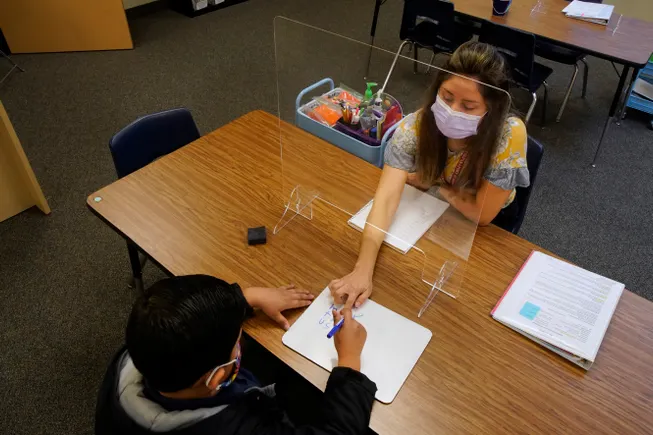
At Kearsarge Regional Middle School in North Sutton, New Hampshire, Principal Stephen Paterson admits that teachers increasingly feel concerned when contacting students' parents. He says some staff members who have taught for decades especially notice a decline in parental support for public education, which is frustrating. When schools need families to cooperate in helping students, parents sometimes instead blame the school for creating problems.
"We get blamed, and it puts us in a very difficult position," Paterson said. "The current political climate is 'schools are terrible.'"
In fact, an Ipsos survey in October 2021 found that public trust in teachers in the United Statesdropped by 6 percentage points since 2019. Overall, teachers are the fourth most trusted profession in the U.S., but public trust fell from 63% in 2019 to 57% in 2021.
The 2021 survey data also showed that Republicans' trust in teachers (56%) was lower than Democrats' (71%).
Public trust in teachers in the U.S. generally declined during the pandemic
According to Ipsos reports comparing 2019 to 2021, Democrats were more inclined to trust teachers.
Chris Jackson, senior vice president and head of polling at Ipsos, pointed out that there are two key factors driving the decline in public trust in teachers. First, school pandemic protocols around mask and vaccine mandates have become a "cultural flashpoint"; second, the politicized controversy over critical race theory being discussed in classrooms has also intensified distrust.
Jackson mentioned that Republican activist Christopher Rufo publicly expressed concerns in 2020 about the influence of critical race theory—a university academic framework developed in the 1970s that argues the U.S. has a history of institutionalized racism and persistent racial inequality—as a wedge issue in education and politics. The term was subsequently widely cited by the media and eventually made its way into divisive school board meetings.
"When it enters the classroom, teachers ultimately bear the brunt because they are on the front lines," Jackson said.
Jackson said that when a profession becomes politicized, public trust in practitioners in that field tends to decline. "What we are mainly seeing is a side of how politics and partisan bias permeate the classroom. When that happens, basically everyone loses."
Micro-management policies targeting teachers emerge
Jackson said principals, superintendents, and policymakers sometimes respond to this growing distrust by micro-managing teachers and implementing more rules and guidelines. While restrictive policies can limit the damage from controversy, they may also stifle innovation and teachers' freedom in the classroom.
According to the free speech advocacy nonprofitPEN America's report, between January and September of this year, eight states passed nine "gag order" bills restricting discussions of gender, race, or divisive topics in K-12 schools, including Arizona, Idaho, Iowa, New Hampshire, Oklahoma, South Carolina, Tennessee, and Texas.
Status of state bills restricting classroom discussions of gender, race, or divisive topics as of October 1
Of the 48 state bills introduced in 2021 in response to concerns about critical race theory, nearly 19% have become law.
The issue even became a focal point in the recent election cycle, with Virginia Governor-elect Glenn Youngkin (Republican) heavily promoting his campaign to combat critical race theory in schools. According toWDBJ reports, the Virginia Department of Education said the academic framework was not part of the state's learning standards.
According tothe Associated Press, on November 17, Youngkin said at the Republican Governors Association annual meeting that his victory in a Democratic-leaning state showed there is a path to victory for Republicans focusing on education issues. During the campaign, Youngkin also emphasized the need to increase parents' rights in their children's education.
This call for parent-controlled education linked to concerns about critical race theory has risen to the national policy level. On November 16, Missouri Republican Senator Josh Hawley introduced theParents' Bill of Rights. The bill would give parents the right to sue federally funded schools that fail to disclose what their children are being taught. Hawley said in a statement that schools that persistently violate the rights listed in the bill would face "significant cuts" in funding.
At a time when some teachers face increasing policies monitoring what they teach, they also have to deal with burnout from remote and hybrid teaching during the pandemic. In addition,ongoing teacher shortagesadd extra pressure. According to a survey of 1,203 state and local government employees conducted by MissionSquare Research Institute in May, K-12 staffwere more likely than any other government employees to report burnout。
School districts must "confront this issue head-on"
Rebecca Winthrop, senior fellow and co-director of the Center for Universal Education at the Brookings Institution, said schools cannot solve growing public distrust by ignoring it. Winthrop said the debate over reopening schools may have contributed to the decline in public trust, and the key to addressing this issue lies in building valuable connections between schools and families.
Winthrop added that educators should not manage and handle family engagement alone. Teachers bear most of the responsibility for family relationships, but school leadership needs to provide teachers with the space and time to develop these connections.
In September, Winthrop co-authored a Brookings Institution report outlining guidelines for family-school engagement. The report noted that schools with successful family engagement are 10 times more likely to see improved student outcomes. Winthrop also found that districts that take time to build meaningful relationships with families and communities are less likely to face public distrust issues. Winthrop said where trust and ongoing dialogue already exist, it helps calm friction over issues like school mask mandates and reopening protocols.
"If you don't have that deep relationship with families and the community, people feel dissatisfied. Certain specific things won't be heard," she said.
Winthrop noted that when schools interact with families, there is a key difference between "engagement" and "involvement." Involvement is less effective and usually means the school speaks unilaterally without listening. For example, schools sending newsletters, sharing information, and inviting people in to listen is involvement. But engagement-style interaction means the school leads with listening, inviting parents into open dialogue with diverse groups that reflect the school community.
"An engagement approach truly builds these relationships and maintains enough dialogue and safe space for debate," Winthrop said.
Winthrop said there is no quick fix for developing family engagement, but now is the best time to start building relationships. "You have to confront this issue head-on. Building higher walls around schools won't make the problem go away; it will only make people angrier," Winthrop said. "Despite the difficulties and trials... school districts need to truly assess and think about a range of strategies available."
Learning from educators who feel trusted
While some schools struggle with family engagement, other teachers thrive in community relationships. The success of two teachers echoes Winthrop's message about building valuable connections with families and students.
In fact, this growing public distrust is not reflected in the daily life of Ross Hamilton, a 12th-grade government and civics teacher at Building 21 High School in Philadelphia. Hamilton credits building relationships with students and the community for a strong sense of trust. He said the daily advisory sessions embedded in the school's framework help build these relationships.
"We build trust, and once it's built, it carries through your entire journey at school and in the classroom," Hamilton said.
Part of relationship-building at his school also involves considering local community issues and broader problems that affect students. Hamilton mentioned that students face gun violence in Philadelphia. "Things have gotten really bad here. It's affecting our community and also causing trauma for students," Hamilton said.
As a project-based school, Hamilton said he and his colleagues turned to a "change model" to address how students handle these community and national issues. Over the next few months, Hamilton asked his 12th-grade students to identify a marginalized group at the local, national, or global level, research the issues leading to that group's marginalization, and learn how existing organizations are responding. At the end of the school year, students will develop and present action plans to help the marginalized communities they studied.
"This activity aims to cultivate the next generation of leaders," Hamilton said. "At the same time, as they engage, relationship-building is happening. Trust is being generated because we guide them through the entire process."
Hamilton said school leadership has also been supportive of teachers. Two years ago, the leadership at Building 21 High School formed a committee to address trauma-informed care, restorative practices, and cultural competency. Hamilton is a member of the committee and said he discusses issues with staff and attends meetings to better understand how to implement these three practices in the school.
Hamilton said that to build community trust, it is also important to actively participate in civic activities and invite local and state political leaders into the classroom. So far, he has invited a city council member and a state representative to speak with teachers and students. He said this is another good way for political leaders to better understand the needs of teachers and schools, including the issues they face, which in turn creates opportunities to solve problems.
Introducing culturally responsive teaching
Angela Burley, a sixth-grade teacher at Sarah Zumwalt Middle School in Dallas, Texas, has also built strong relationships with students and their families. Burley mentioned that there is a close connection among staff, and she maintains communication with parents and provides weekly updates.
Despite the recent overall decline in public trust in educators, Burley emphasized that as an African American teacher teaching in a predominantly Black community, she has not faced trust and relationship-building issues because she shares cultural understanding with students and parents. Burley said if teachers can build relationships with parents, trust will follow.
Burley said culturally responsive teaching is an excellent way for teachers to build relationships with students and parents, and it is not only applicable to communities of color. Part of culturally responsive teaching is understanding the belief systems and behaviors of the community. "You use that for open dialogue," Burley said.
Meanwhile, Burley teaches a world cultures course in a state where alaw went into effect on December 2that prohibits teaching certain concepts about race. The law also prohibits teaching discussions around any "broadly debated and currently controversial public policy or social affairs issue." If teachers discuss current events, they must do so without political bias, as the law stipulates.
Burley believes this law and other policies stemming from concerns about critical race theory in schools will not affect her or other teachers in the state. She added that critical race theory is not taught in her classroom. But Burley said she feels 100% safe in her school to have conversations about race.
"When I teach my content, I just focus on culturally responsive teaching," Burley said. "Open discussions about race—where you intentionally address racial issues—can help bridge gaps we didn't even know existed."