
Imbalance in the Number of Special Education Students: The Dual Concerns of Over-Identification and Under-Identification
After the pandemic, the identification of special education students has drawn attention. Experts point out that both over-identification and under-identification can harm students and pose challenges to district resources and equity. This article explores identification criteria, data monitoring, and best practices.
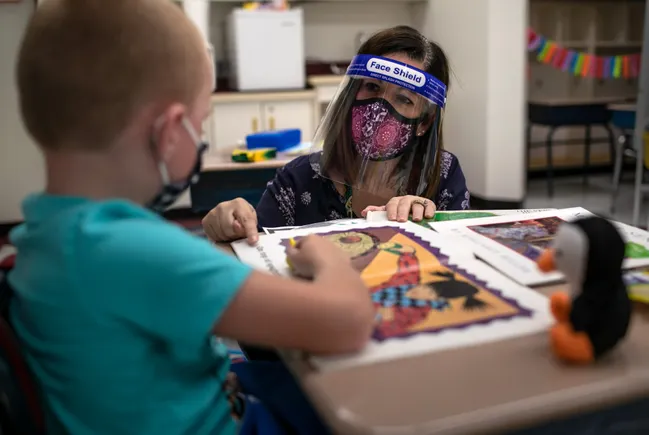
Even before the pandemic, Lauren Katzman and many educators were concerned about the improper identification of students for special education. Now, after a year in which millions of students experienced collective instructional time loss, frequent shifts in learning formats, social isolation, and trauma, those concerns about misidentification for special education have deepened. Katzman is the executive director of the Urban Collaborative, a network of school districts dedicated to improving educational outcomes for students with disabilities.
"I am really concerned about it," she said. "I think returning to school after the pandemic could exacerbate this issue, but it's not a new problem."
In fact, special education — more precisely, the Individuals with Disabilities Education Act (IDEA), the federal law ensuring that students with disabilities receive a free and appropriate public education — includes safeguards against improper identification, including requirements to monitor racial,disproportionate classifications of students。
But Katzman noted that the system is not perfect, and some practices for determining whether a student needs special education are subjective. Additionally, a common misconception is that receiving special education status allows students to get more individualized support. However, if the identification itself is flawed, the special education label can actually do more harm than good, she said.
"Let me tell you, more is not better," Katzman said.
Improper identification for special education services also has ripple effects on a district's curriculum planning, staffing, and finances. Pandemic-related misidentification of students with disabilities also worries school administrators, including district special education directors, said Phyllis Wolfram, executive director of the Council of Administrators of Special Education.
Both Wolfram and Katzman agree that as students return to classrooms, school administrators should ensure that robust multi-tiered systems of support (MTSS) are in place to provide general education interventions for all students and be prepared to intensify these supports for students who need additional help.
Wolfram also noted that school and district administrators should monitor special education referrals and identifications, and when categorical data do not align with historical trends or appear unusual, they should conduct a thorough investigation of the data.
"You have to dig into the information and see what the data is telling you," she said.
Avoid artificial caps
School systems must serve all students who qualify for IDEA services, regardless of cost or staffing. According to the U.S. Department of Education, the number of students nationwide eligible for special education services since 2009 hasslowly but steadily increased, from 5.8 million students ages 6-21 to 6.3 million in 2018, representing 9.5% of the total school-age population.
The percentage of students eligible under IDEA varies by state and district. For example, according to 2018 data, 9% of students in Arizonaqualified for IDEA services, while in Massachusetts, that figure was 12%.
There is no ideal local, state, or federal percentage or number of students eligible for special education services. In fact, districts cannot set arbitrary limits on the number of students they serve.
Districts, states, and federal education agencies do monitor data, and when numbers look problematic, the root causes of the discrepancies should be further investigated, said Sue Gamm, an attorney and independent consultant who works with districts to review their special education practices.
A recent and prominent example is the Texas Education Agency, which in 2018entered into corrective actionafter a U.S. Department of Education investigation found that the decline in the number of special education students statewide was disproportionate to overall student population growth. Special education enrollment fell from 11.6% in 2004 to 8.6% in 2016, a decline attributed to a state indicator that districts perceived as an 8.5% cap on special education enrollment.
Determining educational disability
Teachers, administrators, and parents can make a referral when they suspect a student needs special education services. That referral starts a timeline toevaluate the student's educational needsand determine whether the child qualifies for services. To qualify, a student must have a disability that adversely affects their ability to learn.
According to Department of Education data for the 2018-19 school year, special education students with specific learning disabilities made up thelargest shareof IDEA-eligible students nationwide, at 33%.
"There is debate about whether trauma is a disability, and I would argue that this year, the entire world has experienced trauma."
— Lauren Katzman, Executive Director, Urban Collaborative
IDEA also stipulates that a lack of appropriate reading or math instruction, or being an English learner, cannot be factors in determining a student eligible for special education.
The post-pandemic concern is that well-meaning educators may rush to qualify students for special education in an attempt to help them catch up academically, said Kelly Vaillancourt Strobach, director of policy and advocacy at the National Association of School Psychologists (NASP).
NASP has issued guidance emphasizing the need to distinguish students'COVID-19-related learning disruptionsfrom educational disabilities.
While some students will certainly qualify for IDEA services for the first time, that is not the case for most students who are behind academically or have behavioral challenges, Vaillancourt Strobach said.
At the same time, school systems should not delay special education evaluations for students who struggled academically before and during the pandemic and who genuinely qualify for IDEA services.
"We just want to make sure we are making the right identifications," Vaillancourt Strobach said. "Special education can be wonderful and beneficial for many kids, but for those who don't need it and are labeled, it can be very harmful, especially ... for those kids with emotional and behavioral disorders."

Children ages 3-21 served under IDEA Part B in 2018-19.
Source: Kara Arundel/K-12 Dive, data from the National Center for Education Statistics.
Disproportionality concerns
Emotional disturbance (ED), like specific learning disabilities, is one of the 13 recognized disability categories under IDEA. According to the Department of Education's most recentannual IDEA report to Congress, about5% of IDEA-eligible studentshave ED as their primary special education classification. Black or African American students are the second-largest racial subgroup of students with ED, behind students identified as two or more races.
Black students with or without disabilities experience exclusionary discipline at higher rates than other student subgroups. For example, according to the Department of Education's Civil Rights Data Collection (CRDC), although Black male students made up 8% of the student population in 2015-16, they accounted for25% of total out-of-school suspensions。
CRDC data also show that although students with disabilities made up 12% of the student population, they accounted for 26% of total out-of-school suspensions.
Vaillancourt Strobach said there are concerns that when students return to classrooms after extended remote learning, adjusting to school routines and rules could be difficult for students whose time at home was less structured.
"What we don't want to see is these kids being inappropriately labeled with emotional disturbance because what they really need is just a little transition time and a little support from a school counselor or school psychologist — or, you know, anyone — to ease them in," she said.
The economic and emotional hardships students experienced during the pandemic could also lead to challenging behaviors, special education experts said.
"There is debate about whether trauma is a disability, and I would argue that this year, the entire world has experienced trauma," Katzman said. "Kids are coming back with all kinds of behaviors, and I think we need to assume that rather than treating it as a disability."
Recommended practices
School systems should consider a number of best practices to prevent students from being incorrectly identified for special education services, Gamm and other special education experts said. These practices include:
- Strengthen multi-tiered systems of support.MTSS is one of the best ways to prevent improper special education identification, special education experts said. Having strong general education practices that provide evidence-based instructional support and increase intensity based on individual student needs can help schools address academic regression. Similarly, positive behavioral interventions and supports are a multi-tiered framework that first prevents challenging behavior through a schoolwide approach and meets a range of student needs through more individualized interventions.
- Understand the IDEA referral and identification process.If a district lacks a strong MTSS framework, then special education services may seem like the best way to help struggling students, but that is not always the solution, Katzman said. The special education referral and identification process is designed to distinguish students who truly need services from those who do not. According to recent research published by the Brookings Institution, strong special education referral and identification systems canhelp prevent misclassificationand harmful disproportionality practices. Although any educator or parent can refer a student for special education services, the process for determining whether a student qualifies for IDEA supports involves reviewing multiple indicators of the student's past and current educational performance and applying criteria to identify students with one or more of the 13 disabilities recognized under IDEA.
- Monitor data to identify areas of concern.Districts can proactively initiate data deep dives, Gamm said, who worked with Detroit Public Schools Community District and the Council of the Great City Schools to review the school system's special education practices, includingdisability prevalence rates. That review, which concluded in 2018, showed the proportion of IDEA-eligible students was higher than state, urban district, and national averages. As a result, one of the review's recommendations was for multidisciplinary educational teams to provide more specific guidance for special education referrals, evaluations, and eligibility determinations. Wolfram said special education directors should monitor referral and identification rates and disaggregate data by class, grade, school, race, gender, and other factors.
- Support teachers.Katzman recommends that school administrators identify teachers who are struggling and provide those teachers with additional support and training. Gamm added that all teachers should be trained in the MTSS framework. However, teachers should not bear all the burden of MTSS or pre-referral monitoring alone, they said. For example, school psychologists and other instructional support staff can assist teachers in designing and monitoring whole-class interventions, Vaillancourt Strobach said. "Teachers are the key people in the classroom, but there needs to be a team to support that work, and principals and school leaders need to take a hard look at the resources they have available and make sure those resources are being used most effectively," she said.