
Integrating Anti-Bias and Equity Education into the Curriculum: Starting with Teacher Self-Reflection
Makai Kellogg, lead teacher and equity and diversity coordinator at School for Friends, an early childhood education institution in Washington, D.C., believes that if teachers have not addressed their own biases, it is difficult for them to effectively intervene in biased behaviors exhibited by students. Experts suggest that teachers should first clarify their educational vision and, through self-reflection, professional development, and examination of teaching materials, truly integrate anti-bias, social justice, and equity education into their daily curriculum.
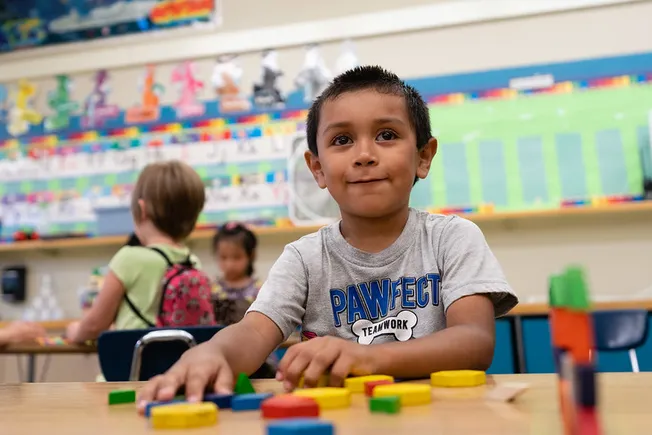
For classroom teachers, it is difficult to effectively intervene in the bias expressed in students' speech without first examining themselves. Makai Kellogg, lead teacher and equity and diversity coordinator at School for Friends, a preschool in Washington, D.C., points out that from two students arguing over who can play "mom" during recess to another student telling a classmate that short hair belongs only to boys, these expressions of bias can only be truly addressed or dissolved after educators examine the ideas they have long absorbed.
"To do anti-bias work—intervening in the biases that 2-, 3-, or 4-year-olds are acquiring—is difficult if you haven't dealt with your own issues first," Kellogg says. He also provides support in equity and diversity for teachers, administrators, and families. "The real work starts here."
For teachers eager to bring anti-bias, social justice, equity, and culturally responsive education into their classrooms with simple tools and steps, experts say such approaches may remain superficial or even cause harm. They believe the first step should be to ask oneself what goals you hope to achieve with students, then roll up your sleeves and personally carry out these steps.
"It's okay that everyone is at a different stage," Kellogg says, "but the hope is that everyone is on their own anti-bias journey."
Self-Reflection
Kellogg lists multiple resources on his personal blog, encouraging educators eager to build equity in their classrooms to read and reflect. They can incorporate these into their individual professional development plans.
Takiema Bunche Smith, executive director of the Center on Culture, Race & Equity at Bank Street College of Education in New York, similarly believes that educators need to walk this path—completing the necessary self-work and reflection to be responsive to the students they teach. However, this does not necessarily mean they cannot work with students while simultaneously undertaking this work.
"It's not 'either/or,' it's 'both/and,'" Bunche Smith says. "You can absolutely do both in parallel, and you must set clear checkpoints along the way."
For her, this means educators must self-study or engage in professional development to understand their own assumptions and discover gaps in their own learning. They also need to clarify how they see themselves, including their own privileges.
"Everyone has identities that both privilege us and make us vulnerable to marginalization," she says. "We must explore all identities and how they show up in society, because this affects how we show up in the classroom and how we respond together with our students."
Focusing on the Fullness of People
Bunche Smith says it is crucial to examine the images, stories, and information educators introduce to students about social justice and equity. For example, if students first encounter Asian American and Pacific Islander topics through the racism and violence they faced during the COVID-19 pandemic, or if discussions about Black people first mention George Floyd, then educators are only focusing on people as victims of racism and bias.
"That's why we need to talk about race and provide a full, 360-degree view of people, communities, and their diversity," Bunche Smith says. "The struggle against injustice should be part of the conversation, but it should not be the first or only conversation."
Educators should also ask themselves: What videos are they showing students, what field trips are they taking the class on, what language is used in the classroom, and what books can students access. Materials should reflect full lives—from children in gay and transgender families to children of color in everyday experiences.
Bunche Smith specifically mentions Denise Lewis Patrick's book "Red Dancing Shoes," which tells the story of a young African American girl who falls while wearing new shiny red shoes and thinks they are ruined, until her aunt helps repair them, bringing a smile back to the child's face.
"This book depicts a happy, healthy child and their family life," Bunche Smith says. "We need more stories like this to reflect the full reality of Black children's and other children of color's lives."
Weaving Through the Curriculum
Anti-bias and equity can be woven through various subjects, from literature to science classes.
Emily Adah Miller, associate researcher at the Wisconsin Center for Education Research at the University of Wisconsin-Madison and one of the lead writers of the diversity and equity team for the Next Generation Science Standards (NGSS), believes science classes can also incorporate social justice issues. For example, students can study the chemistry of taste while examining food deserts—areas where access to affordable, healthy food may be limited.
"Everything can be viewed through the lens of social justice and equity, and how science can be used to advance these social justice issues," Adah Miller says.
Okhee Lee, professor of childhood education at NYU Steinhardt School of Culture, Education, and Human Development and leader of the NGSS diversity and equity team, emphasizes that science can also respond to equity issues.
Lee points out that scientific understanding can be expressed not only through language but also through gestures and symbols. By using and encouraging such expressions in the classroom, educators can enhance pathways for learning and understanding among students—such as English learners, peers, and teachers.
For example, when studying the effect of time on the decomposition of a banana in a jar, students observe a closed system. One student might say the banana is decomposing but the weight stays the same; another student might express it with single words like "closed" or "same," or even draw an arrow to convey the same idea, Lee says.
In this way, regardless of how students share their understanding, they can feel heard and respected by teachers and peers. Lee notes that science work can also serve as a good starting point for helping students develop language.
"If you do this a few times, you'll see students' confidence rise," she says. "That's equity."
Ultimately, when creating an educational atmosphere centered on social justice, anti-racism, and equity, Bunche Smith believes some educators might be looking for a single activity or unit to bring into the classroom. But she says teachers should step back and think about what they truly hope to see—not only in the classroom, but through the curriculum they bring to students, and ultimately in the world around them—and start from there.
"Ask yourself: 'What would my ideal society look like?'" she says. "Once you have that vision, it becomes a signpost for learning about yourself and for learning how to support all students in thriving."