
The pandemic may give rise to four long-term changes in course teaching
The pandemic has prompted schools to rethink course delivery, learning time, campus environment, and family support. Educators believe that the flexibility and technology applications brought by remote learning may be retained in the long term.
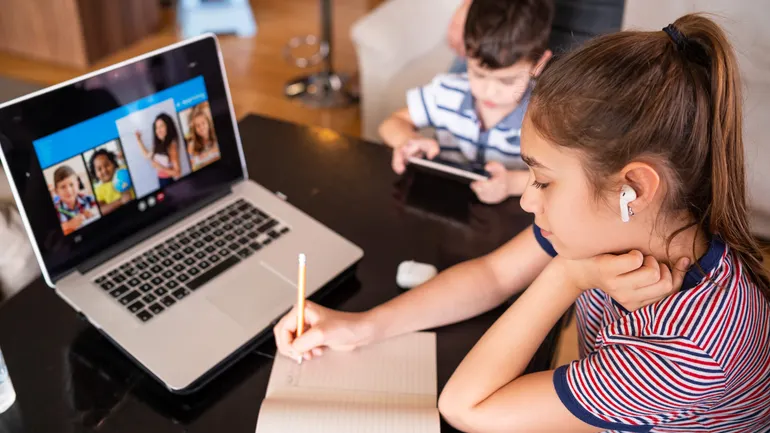
When Palacios Independent School District in Texas resumed classes this fall, the largest group of students choosing to continue remote learning were upperclassmen. This phenomenon caught the attention of Superintendent Bill Chapman. He learned that many twelfth graders had jobs, some even full-time, and were sometimes the primary breadwinners for their families. Chapman realized that allowing them to remain in remote learning also enabled them to continue their studies. He said these students were the most successful among all remote learners.
"This could change the way we educate students," Chapman told Education Dive. "If the goal of schools is to provide students with the opportunity to become productive members of society, is keeping them in classrooms all day really what's best for children?"
This fall, some districts have resumed in-person instruction or adopted hybrid models—students attend school a few days a week and learn remotely the rest of the time. Others, like some students in Chapman's district, chose to go fully remote. Many district leaders say the administrative and academic adjustments made over the past few months to accommodate various options are likely to persist after the pandemic subsides, and that these changes are positive.
Technology adoption drives shift in course delivery methods
Chapman said that previously, many of his teachers did not use technological tools in the classroom. But now, the district is committed to ensuring every student has a device, and teachers are less cautious about issuing them—perhaps because they know students can use them responsibly. The remote upperclassmen in Palacios are a case in point, handling their academic responsibilities with ease, including completing online learning and its requirements.
"They take their academics seriously, log in every day, and submit assignments on time," he said. "It's been eye-opening."
Remote learning could even change when and where learning happens during the day. Robert Dillon, director of innovative learning at the School District of University City in Missouri, said research, such as reports from the American Academy of Pediatrics, shows that students tend to need more sleep as they get older. Yet most schools start around 7:30 a.m., requiring students to get up even earlier to arrive on time. Virtual learning changes this pattern—students might begin their morning classes from home or log in at their convenience through asynchronous options. This way, learners can sleep a bit longer while maintaining a full schedule and arriving at school later in the day.
"We have to get back to more flexible arrangements, including students being able to start and end their day at different times," Dillon told Education Dive. "We do see significant effects in schools that start at 9 or 10 a.m. We've known this for a long time. Now we have a wealth of data showing that school start times can't just depend on bus schedules, which have always been a major factor."
Online learning sparks a 'pedagogical shift'
Shari Camhi, superintendent of the Baldwin Union Free School District in New York, also said technology will change how her district teaches. In particular, these tools will be used not just to measure productivity, but to break down barriers and foster the new ways of learning she sees in both students and teachers.
"When we stop standing in front of a row of students and our expectations of students change, technology changes too," Camhi said. "Technology that supports self-directed learning, creativity, and collaborative learning suddenly becomes important. So the way technology is used will definitely stick."
Camhi, whose doctoral dissertation focused on learning and technology, is especially looking forward to the expansion of student-led learning activities, particularly among upperclassmen who enter Google and Zoom rooms to organize their own learning. "Teachers see students responding positively, and students taking ownership of their learning—I think that will continue," Camhi said. "It's a pedagogical shift."
Learning environments continue to evolve
Dillon said changes to physical classrooms could include the design of school buildings. As facilities age and need updating, he believes educators will reconsider what learning spaces should look like—rather than continuing to build classrooms with desks. "There's a deep desire for compassionate spaces that care for both students and staff," he said. "I think schools will transform spaces into places where people gather to learn, not just classrooms of the future."
Camhi said even the concept of traditional activities within schools is being redefined. Take lunch, for example—students typically crowded into large single-room spaces. Due to COVID-19, some districts now have students eating in classrooms, while others still use the cafeteria but with seats six feet apart. Camhi said that while social distancing is indeed safer, children also appreciate it. For instance, upperclassmen can eat in the cafeteria, but in the socially distanced setting, they often use the time to listen to music and podcasts, "enjoying quiet time." Younger students eating in classrooms also reduces chaos. "The kids get along well, and there are fewer distractions," she said. "It maintains a family-like atmosphere."
Family support readiness strengthened
Over the past eight months, family involvement in student education has also received new attention. Susan Enfield, superintendent of Highline Public Schools in Burien, Washington, has seen how families have actively supported their children's education during the pandemic. She said she is determined to maintain that connection. At the district level, this means weekly communication with families, emphasizing translation and interpretation services, and focusing on support for home internet access. Enfield also wants to encourage parents to reach out regularly to teachers and principals, or even the district's ombudsman, when they need help.
"Families realize they need to work with their children's teachers, and teachers need to work with families," Enfield said. "I hope both sides continue this collaboration. I feel we are interacting with families in a more genuine, informal way. I don't want to lose that after the pandemic."
Chapman also wants to maintain the connection between families and schools. For example, he has noticed how video conferencing helps bring people together. He has even seen attendance rise at certain school team meetings because members no longer need to drive to meetings—they can join online. Educators say options like video conferencing may help parents communicate more frequently with teachers, whether for informal updates or formal parent-teacher conferences. For parents, attending a meeting from the office or at home with young children is easier than finding a babysitter, leaving work early, and driving to school.
For Chapman, these changes happened quickly because they had to. But now they may stick because they are better options. "There are things we had to do the same way because that's how it's always been," he said. "We're creatures of habit, and maybe we resisted. But the pandemic forced us to do things differently."