
Three Paths for the Evolution of K-12 Schools After the Pandemic
The pandemic forced rapid changes in K-12 schools, and educators are now planning long-term improvements for the post-pandemic era, including flexible learning formats, restructuring schedules, and strengthening collaboration.
The impact of the pandemic on the K-12 education system is opening doors to major reforms that were once seen as nearly impossible, reforms that promise to break with traditions and practices that have lasted for decades or even centuries.
Although school administrators are still dealing with the immediate public health crisis, they have begun to set aside time for long-term planning, thinking about how to make schools after the pandemic better than they were before.
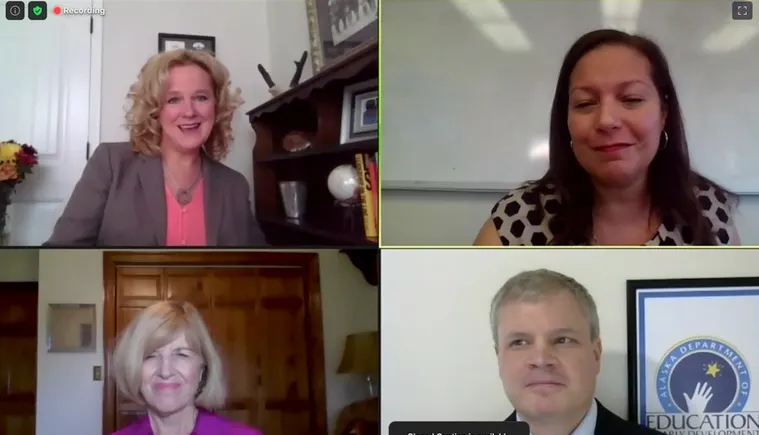
"I am incredibly excited about the modernization of public education that is coming," said Michael Johnson, Alaska's Commissioner of Education and Early Development, at a virtual forum of the Council of Chief State School Officers held on November 10. "The shift from old models to new ones, we hope these shifts will be effective."
Nationwide discussions on how to reform education based on lessons learned during the pandemic are just beginning. But in some cases, educators realize that pandemic-era experiences may lead to the widespread adoption of existing tools and strategies.
"We are just scratching the surface," said Michael Lubelfeld, superintendent of North Shore School District 112 in Highland Park, Illinois. "A system that has been criticized for being resistant to change changed overnight."
Here are several aspects of education that educators and education stakeholders are rethinking.
Flexibility in learning formats
Traditionally, K-12 public education has had only one format—face-to-face learning. Until March of this year, when stay-at-home orders forced students, teachers, and families to close schools.
Now that school communities are more familiar with video conferencing and asynchronous learning, some school administrators predict that students will demand choices between face-to-face and online learning, as well as other flexibilities, especially older students who need to balance work and other commitments.
"By 2025, I think preparing students for their future will require skills-based learning more than ever before," Johnson said. "The quality of teaching will still matter. However, how we deliver instruction and how students access learning content will be different. The choice and personalization they have experienced outside of school—actually over the past six months—will need to be reflected to a greater degree in schooling to keep them engaged."
Online learning needs to improve to ensure students receive personalized, engaging, and high-quality instruction, said Kayla Solinsky, principal and director of strategic partnerships at Macbeth Academy, an online school that partners with several traditional public school systems to offer virtual courses.
Rethinking school schedules
Robert Avossa, founder of K-12 Leadership Matters and a former teacher, principal, and superintendent, predicts that online learning options will increase, and high school students will also gain flexibility to attend classes at times that best fit their schedules—similar to college course schedules.
"High school is ripe for innovation," he said.
Educators are also discussing adjustments to the school year and daily schedules. "Everyone is afraid of change because our society has become accustomed to the nine-month school year," Avossa said.
"Five years from now, I hope schools look completely different, that we are more flexible. Instruction is truly centered on students. It doesn't have to be class times from 9 a.m. to 3 p.m. or 2 p.m.; we have broken down those barriers," said Rhode Island Education Commissioner Angélica Infante-Green at the CCSSO forum.
"We used to run schools to meet our needs or what we felt comfortable with, but that has changed now," Infante-Green added.
Extending the school day through a community schools model, which may provide health, education, and other wraparound services, could also be a post-pandemic possibility, said Miriam Rollin, director of the Education Civil Rights Alliance convened by the National Youth Law Center. When discussing school reform, prioritizing what best serves students should be at the forefront, Rollin said.
"There are promising signs that we can transform schools into more effective, engaging, and equitable institutions," Rollin said.
Building stronger partnerships
Education experts say the proliferation and familiarity of video conferencing will continue to grow and help strengthen partnerships that benefit students and school communities. For example, professional development training will be more accessible if offered online without the need for travel.
Districts will also have more opportunities to collaborate and share best practices, such as efficient and effective learning platforms, said Ron Hager, managing attorney for education and employment at the National Disability Rights Network.
School systems report increased parent engagement since the start of the pandemic, likely due to the need for enhanced communication around pandemic-related changes. According to several educators, the use of video conferencing has also made parent participation in school meetings and individualized education program team meetings for students with disabilities more widespread and in-depth.
In Minnesota, Governor Tim Walz (a former teacher) convened a 22-member education roundtable that began discussions in September on improving educational equity, according to emails sent to Education Dive by governor's spokesperson Teddy Tschann and special advisor for education reform in Walz's office, Stephanie Graff.
Angela Jerabek, founder and executive director of the BARR Center in Minnesota and a roundtable member, said the group has discussed a range of possibilities for improving education—some of which would rely on schools partnering with other agencies or organizations.
For example, distributing meals to students from low-income families during the pandemic has been a joint effort between schools and community organizations. Jerabek said the roundtable is discussing how this might evolve after the pandemic, especially if students have the option of hybrid learning.
The group is also discussing equitable educational approaches and their impact on student attendance, earning course credits, school funding, curriculum, professional development, and more.
"In many ways, we are asking how we can be better after the pandemic than before, especially when focusing on these equity issues, because we know the pre-pandemic system needed revision. But in some ways, this has given us permission to say those guardrails that people said could never be talked about... We recognize there are other ways to do it because we were forced to look at it," Jerabek said.
"What seemed impossible a year ago is not impossible now," she added.