
Supreme Court Ruling Lowers Burden of Proof in Disability Discrimination Lawsuits, School Districts Face Potentially Limited Increase in Litigation Risk
In June, the U.S. Supreme Court issued a unanimous ruling in A.J.T. v. Osseo Area Schools, clarifying that disability discrimination claims apply the 'deliberate indifference' standard, replacing the higher threshold of 'bad faith or gross misjudgment' adopted by some circuit courts. Legal experts anticipate a limited long-term increase in litigation against school districts but recommend that districts mitigate risks through training and timely responses.
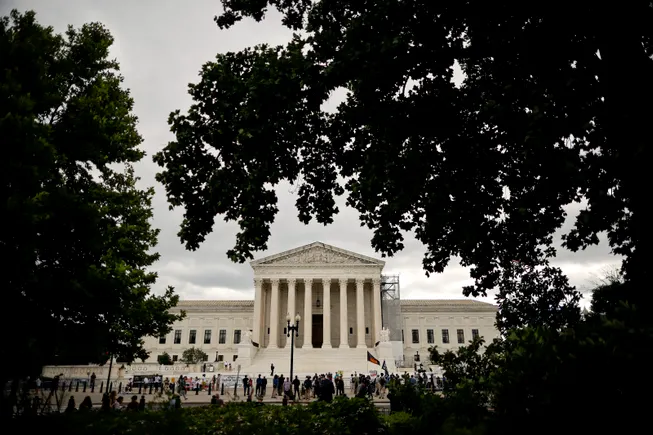
Legal experts say a U.S. Supreme Court ruling in June lowered the bar of proof for disability discrimination claims, but school districts may not face a significant increase in lawsuits over the long term.
"For school districts, frankly, I think the general impression will be exaggerated," said Perry Zirkel, a special education legal expert. "I don't think it will have a major long-term impact on school district staff or parents."
However, Zirkel and other education attorneys point out that school districts need to take multiple steps to avoid becoming vulnerable to civil rights claims involving support and services for students with disabilities. These steps include preventing discriminatory practices through training and addressing issues promptly once they arise.
First, school district leaders should anticipate situations where problems may arise and work to avoid them, said Jose Martín, an attorney with the Austin, Texas-based law firm Richards, Lindsay & Martín, which represents school districts. Then, "if a problem occurs and staff members act inappropriately, you need to respond."
High Bar
The Supreme Court's unanimous ruling in June in A.J.T. v. Osseo Area Schools clarified that the "deliberate indifference" standard should apply generally to disability discrimination cases in education, replacing the higher standard of "bad faith or gross misjudgment" used by the Eighth U.S. Circuit Court of Appeals, Martín said.
The case involved a Minnesota student with epilepsy whose request to start school later in the day and extend into the evening was denied by Osseo Area Schools. The student and family filed a complaint under the Individuals with Disabilities Education Act (IDEA), claiming the student was denied a free appropriate public education.
An administrative law judge found the district violated the IDEA and awarded the student additional services. A federal district court also ruled in favor of the student.
The student and family then sued the district under the Americans with Disabilities Act (ADA) and Section 504 of the Rehabilitation Act of 1973, seeking a permanent guarantee of the student's right to complete the full school day on the adjusted schedule, as well as "compensatory damages." The same federal district court ruled for the district, finding the district's conduct did not meet the "bad faith or gross misjudgment" standard. The Eighth Circuit upheld that ruling.
"A good legal question for people like me is, 'What's the difference between a serious IDEA violation and deliberate indifference?' Obviously, deliberate indifference is more serious. It's a higher bar, meaning you know you messed up and you didn't fix it."
— Jose Martín, attorney, Richards, Lindsay & Martín
Before the Supreme Court ruling, students and families in the Eighth Circuit and four other circuits that used the higher standard who filed education discrimination claims under the ADA and Section 504 had to prove schools acted with bad faith or gross misjudgment.
In other circuits and outside education, students and families seeking money damages for disability discrimination under the ADA and Section 504 only had to prove "deliberate indifference" by schools, workplaces, or other entities.
The Supreme Court defined "deliberate indifference" as requiring plaintiffs to show that defendants disregarded a "strong likelihood" that was "substantially certain" to result in a violation of "federally protected rights."
Disability rights advocates celebrated the Supreme Court ruling at the time, calling it a victory.
"Students with disabilities and their families will no longer have to meet the unique and burdensome high standard of proving that school officials acted with bad faith or gross misjudgment when bringing civil rights claims of disability discrimination against school districts," said Selene Almazan, legal director of the Council of Parent Attorneys and Advocates (COPAA), in a July 28 email.
COPAA, which supports the legal rights of students with disabilities, had filed an amicus brief in A.J.T. v. Osseo in support of the student's family.
Zirkel and Martín both said the "deliberate indifference" standard is also difficult to meet. Martín argued that the "deliberate indifference" standard requires proving that a school system intentionally discriminated against a student through "an entirely unreasonable response to a problem or complete disregard."
"I like to explain 'deliberate indifference' to people this way: 'Here's a serious legal problem, a child is being harmed, and my way of handling it is to look the other way,'" Martín said.
He added: "A good legal question for people like me is, 'What's the difference between a serious IDEA violation and deliberate indifference?' Obviously, deliberate indifference is more serious. It's a higher bar, meaning you know you messed up and you didn't fix it."
Zirkel noted that under the "deliberate indifference" standard, parent plaintiffs have not prevailed in most court rulings. "The odds are still not great for parents bringing these kinds of money damage cases," Zirkel said.
Both Zirkel and Martín predicted that school systems may initially see an increase in disability discrimination claims after the Supreme Court ruling, as parents test the new standard. Zirkel said some may think removing the "bad faith or gross misjudgment" standard "will open the floodgates of litigation," but "it won't open the floodgates because the gate is still high, just a different threshold or standard."
Julie Weatherly, founder of Resolutions in Special Education, a special education consulting and legal services company, said she has received many inquiries from school district leaders asking whether the A.J.T. v. Osseo ruling means they need to accommodate every reasonable request from students or parents. Weatherly is cautious about the ruling's impact on school district litigation nationwide, but she noted the Supreme Court ruled only on a narrow and specific issue, did not award money damages to the plaintiff, and did not rule that the plaintiff proved the district violated Section 504.
"The Court did not say that parents can now more easily sue school districts or obtain money damages for IDEA violations by using Section 504 as a litigation gateway," Weatherly said. She added that many questions remain unresolved regarding the interplay between IDEA and Section 504 in schools' provision of support and services to students with disabilities.
Awareness of Section 504
When disputes arise under IDEA, prevailing parties can recover attorney fees, and school systems can compensate students and families by providing additional services or even private school tuition. But IDEA claims do not provide money damages. Claims that prevail under the ADA and Section 504 can.
That is why A.J.T. v. Osseo is being closely watched by school officials and attorneys. Section 504 and ADA claims can be brought by families of IDEA-eligible students as well as non-IDEA students, including those with only 504 plans. Zirkel noted that major money damage disability discrimination cases brought by students with only 504 plans involve bullying, suicide, and physical abuse by staff.
According to the latest Civil Rights Data Collection (CRDC), about 14% of K-12 students nationwide were eligible for IDEA services in the 2020-21 school year. To be eligible for IDEA services, a student must have a disability that impairs educational progress. Another 3% of students received services under Section 504 only. Students with only 504 plans may have disabilities requiring reasonable accommodations, such as extended test time or diabetes management support. Some students may be eligible for services under both IDEA and Section 504.
Research by Zirkel and Gina Gullo, assistant director of educational services at the Pennsylvania State Education Association, published in July 2025 in Education Law Report, shows that the proportion of students with only 504 plans continued to rise across states from 2020-21 to 2021-22. According to the latest U.S. Department of Education data, states with the highest proportions of students with only 504 plans in 2021-22 included New Hampshire (7.8%), Texas (7.6%), and Connecticut (7%). District-level data for 2021-22, analyzed by Zirkel and scheduled for publication in Education Law Report in August, show some districts with higher proportions, such as Pottsboro Independent School District in Texas (17.4%), Gatesville Independent School District in Texas (16.9%), and Westport School District in Connecticut (16.8%). Zirkel said districts and states with higher proportions of students with only 504 plans may be more vulnerable to disability discrimination claims.
Martín emphasized the importance of school systems providing training on Section 504 awareness and implementation. These trainings and resources are especially critical now, as school systems face shortages of special education teachers, related service providers, counselors, and psychologists, he said. However, Martín, who provides Section 504 professional development training for education administrators, said he has not changed his training content because of A.J.T. v. Osseo. "The idea that this will expand federal lawsuits for money damages for educational harm against schools—I don't think so."
