
How will the 'grand and beautiful' school choice plan affect public schools?
Over the past three years, state-level private school choice programs have expanded rapidly, and with the addition of new federal tax incentive policies, public school advocates have expressed concerns about the traditional public school model. Supporters, however, view it as an opportunity to expand educational options. This article outlines the policy background, positions of various parties, implementation details, and the impact on public school funding and enrollment.
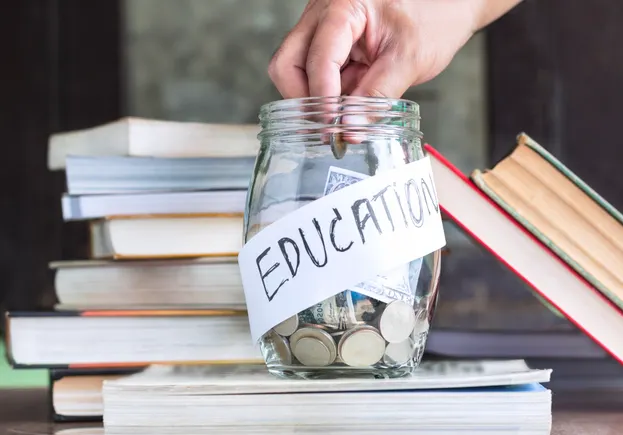
Over the past three years, state-level private school choice programs have expanded rapidly, and new federal tax incentives are expected to boost access to private schools, leaving many public school advocates concerned about the future of the traditional public school model.
Their main concerns are reduced funding and declining enrollment for public schools, as well as worries about equity and accountability in private education.
"Public funds should belong to public schools, which are open to all and educate 90% of America's students," Americans United for Separation of Church and State said in a July 3 statement. The statement came after Congress passed the Republican-led "One Big Beautiful Bill," which includes the first federally funded private school choice program available nationwide.
The organization said, "Private school vouchers not only trample on our religious freedom—they don't work, breed fraud, fuel discrimination, and benefit the wealthy."
On the other hand, school choice supporters are encouraged by the expansion of publicly funded private school options, saying that public frustration over poor academic performance of public school students and limited educational choices for all has been building for decades.
"I hope and expect that people can see the will of these communities, who want something. What they are asking for is not excessive or improper. They are simply seeking justice and fairness in education," said Darius Jones, founder and executive director of the National Black Empowerment Council and senior advisor to the National Black Empowerment Action Fund, which supports private school choice and is an advocacy organization promoting economic, social, and educational progress for the Black community.
Publicly funded private school choice programs have existed in many states for decades, traditionally targeting specific populations such as students with disabilities and students from low-income families. That is changing.
A growing number of states are offering private school choice options open to all students. In fact, just three years ago, only two states—Arizona and West Virginia—offered universal private school choice. Now, according to a recent report by FutureEd, an independent think tank at Georgetown University, ten states do so.
States such as Texas and West Virginia are also expected to launch universal private school choice programs in the 2026-27 school year. By then, according to FutureEd, about half of the nation's students will be eligible to use public funds to attend the school of their choice.
The number of students using universal private school choice options surged by 40% in one year—from 584,000 in the 2023-24 school year to 805,000 in 2024-25. And before that, only 64,022 students participated in the 2022-23 school year, FutureEd said.
Data from EdChoice, a school choice advocacy organization, shows that 35 states have some type of private school choice program. According to EdChoice, these programs collectively serve about 1.3 million students.
Universal choice participation expands rapidly
Federal school choice: the next frontier
The "One Big Beautiful Bill," enacted on July 4, provides a permanent federal tax incentive program to raise funds for families' K-12 education expenses. These expenses may include:
- Private school tuition for secular and religious schools.
- Homeschooling supplies, such as curriculum and other materials.
- Fees, tutoring, educational therapy, transportation, technology, and other charges at public or private schools.
A spokesperson for the U.S. Department of Education referred questions about any regulations or guidance for the federal private school choice program, known as the Educational Choice for Children Act, to the U.S. Department of the Treasury. Given that the program is designed as a tax credit incentive, that agency may play a leading role in its implementation.
The Treasury Department did not respond to multiple requests for more information about the process.
The House has passed the One Big Beautiful Bill, which includes my Educational Choice for Children Act! My provision helps families who feel trapped in failing schools afford to send their children to schools that fit them. It's about giving parents choice and children a... pic.twitter.com/4ZuEzQ6bSG
— U.S. Senator Bill Cassidy (@SenBillCassidy)July 3, 2025
Under the ECCA, any taxpayer who donates up to $1,700 annually to a scholarship granting organization (a 501(c)(3) charitable organization) is eligible for a 100% federal income tax credit for their contribution.
The scholarship granting organization will then independently verify students' scholarship eligibility, determine award amounts, and distribute funds to private schools, public schools, suppliers, and providers of related programs and services.
Taxpayers can begin donating to scholarship granting organizations in 2027. Donating parents cannot use their contributions for their own children's educational expenses.
While the program is open nationwide, states need to opt in for scholarship granting organizations and students to participate.
It is unclear how many states will choose to opt in or decide not to participate. The federal government has not yet provided guidance on how to join or not join.
Norton Rainey, CEO of ACE Scholarships, a Denver-based nonprofit scholarship granting organization, said his organization will begin focusing on encouraging governors to opt in.

Over the past 25 years, ACE Scholarships has managed more than 110,000 scholarships across 13 states, totaling $330 million. The organization offers scholarships of up to $4,000 per year and expects parents to also bear part of the educational costs, Rainey said. The average annual tuition at private schools that ACE partners with is about $10,000.
"We want every child, no matter who they are, to achieve the American dream," Rainey said. "Education is a great equalizer."
Other supporters are also lobbying governors to join the program, including Florida Republican Senator Rick Scott, who wrote to all 50 governors on July 18, calling this "life-changing program a win-win for governors, state budgets, and—most importantly—families."
Some states may find that opting in or out is not so simple if their state constitutions explicitly prohibit using taxpayer money for private school tuition.
"We want every child, no matter who they are, to achieve the American dream."

Norton Rainey
CEO of ACE Scholarships
In addition to seeking governors' support, ACE will also contact potential donors to encourage their participation. According to the Institute on Taxation and Economic Policy, no other charitable giving structure in the United States allows such a one-to-one tax incentive.
An ITEP analysis of IRS data predicts that more than 138 million people could donate to scholarship granting organizations in 2027, although the institute said not all of them will do so.
Meanwhile, voucher opponents are trying to strengthen support for public schools. The Southern Poverty Law Center has released six resources explaining why supporting public schools is important.
At a forum supporting public education held in Washington, D.C., on July 24, Denise Forte, president and CEO of The Education Trust, said: "We are witnessing a coordinated dismantling of public education. The goal is to make American society less diverse and without equal access to quality education."
Even some private school organizations that generally support new tax incentives, such as the National Catholic Educational Association, have noted that the bill does not provide religious freedom protections or guarantee the autonomy and independence of participating private schools.

How school choice affects public schools
A FutureEd analysis of how state-level private school choice programs affect public school systems found both benefits and challenges.
In the first year of state-level universal private school choice programs, public charter schools and traditional schools did not report significant funding or enrollment losses. This is because most scholarship recipients were already enrolled in private schools.
But as more students use taxpayer-funded scholarships to transfer from public schools to private schools, public school districts lose per-student funding. Some states, such as Iowa, have anticipated this and provide a $1,200 stipend to public school systems for each student attending a private school. But most states with universal choice programs do not do this, FutureEd said.
FutureEd noted that local fiscal and enrollment impacts vary depending on how much districts rely on state funding and their enrollment trends. For example, Arizona's Mesa Unified School District now has 1,600 fewer students than in 2017 due to participation in the state-sponsored education savings account program, according to FutureEd. About 400 of those students transferred out in the past year alone.
Gilbert Public Schools, also in Arizona, has lost more than 700 students since 2017 due to school choice, with nearly 200 of those in the last year, FutureEd reported.
"We are witnessing a coordinated dismantling of public education."
Denise Forte
President and CEO of The Education Trust
But the report also notes that some school districts are being proactive, offering fee-based courses, extracurricular activities, and other programs eligible for reimbursement under school choice programs.
State-level growth combined with the new federal tax incentive supporting school choice means that publicly funded private school choice is likely to continue expanding. However, opponents promise to continue resisting.
One way is through the courts.
In April, a Utah district court judge ruled that the state's universal private school choice program is unconstitutional because it "is neither a social services program nor a program limited to supporting children with disabilities."
Just last month, a Franklin County judge ruled that Ohio's EdChoice private school voucher program is unconstitutional. According to multiple news outlets, state Republicans will appeal the decision.
These cases are being closely watched by public school advocates.
"Ohio joins a growing number of state courts across the country that have struck down harmful and discriminatory private school voucher programs," said Patrick Cremin, staff attorney at the Education Law Center, in a statement after the July 17 ruling.
The decision "reaffirms the primacy of Ohio's public schools," added Mark Wallach, attorney for the plaintiffs at the law firm McCarthy, Lebit, Crystal & Liffman, noting that 85% of Ohio students attend public schools. Wallach said the "rapidly expanding EdChoice voucher program" has led to underfunding of the state's schools.