The Future of Gifted Education: Toward Diversity, Inclusion, and Accessibility
Over the past sixty years, gifted education in the United States has relied on a single IQ test, leading to racial disparities. Now, educators are promoting multiple data points, local norms, and inclusive identification to cover students from diverse backgrounds. Although reforms have made progress, they face challenges such as teacher training and policy conflicts.
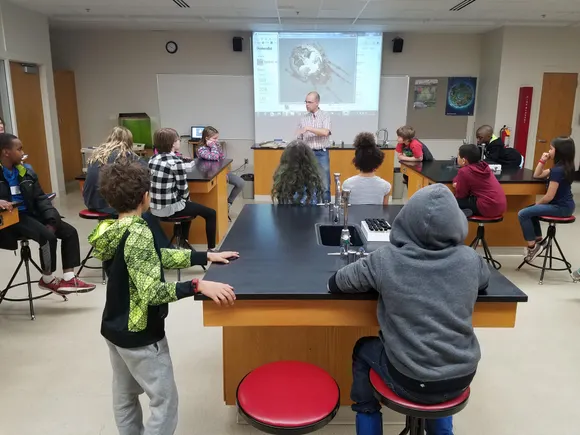
When Melanie Lichtenstein was young, her mother, an educator, took her to a gifted aptitude test on a Saturday morning. She scored well, earned the "gifted" label, and was pulled out of her regular classroom several times a week for more advanced tasks, including problem-solving exercises and experiments.
This has largely been the mainstream approach to identifying and nurturing gifted students in the United States over the past sixty years, with roots tracing back to the space race with the Soviet Union, which spurred an emphasis on science and engineering education. However, relying on a single IQ or aptitude test to determine potential talent, and isolating students who receive accelerated coursework, has led to widespread racial disparities in the composition of gifted programs.
Today, Lichtenstein serves as a talent development specialist for Albemarle County School District in Virginia (serving about 13,500 students), and she is part of an educational movement aimed at making gifted and talented programs more accessible and equitable.
Educators across the country are moving away from relying on arbitrary test scores at a single point in time, instead incorporating multiple data points at different stages of a student's schooling to determine their potential, and expanding the definition of giftedness to include performing arts, leadership, and career and technical education.
School systems are also using local norms (even down to the school building level) to determine who is gifted, rather than using national or state comparisons. Additionally, schools are bringing students into talent development programs so educators can provide individualized support, helping students succeed in accelerated coursework later on.
Experts say expanding access to gifted programs for diverse learners is not just about identifying more Black and brown students. Schools are also working to include students from low-income families, students with disabilities, English learners, and others from underrepresented backgrounds and experiences.
"What we're really after is that mindset: looking at every child, helping them discover where their strengths are, and where they want to become stronger."
Melanie Lichtenstein, talent development specialist at Albemarle County School District
These changes, along with the idea that school systems should view all students as gifted, are not easy to explain to the public or even to educators. Training all teachers to identify individual students' talents and differentiate instruction based on each student's strengths and interests is a huge mindset shift that requires regular training, monitoring, data analysis, and adjustments.
Even after years of explanation, training, and adjustments, some districts still cannot demonstrate that their programs have achieved equity.
"It's a process because first, we have to dismantle belief systems and barriers that have been in place for decades," Lichtenstein says. "What we're really after is that mindset: looking at every child, helping them discover their strengths, and where they want to become stronger."
"We've been through this before"
After the murder of George Floyd in 2020 and the national reckoning on racial injustice, several school systems pledged to make gifted programs more inclusive. Some districts announced they would eliminate identification methods based on racist and classist practices, while others said they would do away with entire gifted programs altogether.
In reality, efforts to expand inclusivity in gifted programs began decades earlier, with research by educational psychologists like Joseph Renzulli pushing educators to consider multiple pathways into gifted identification. Renzulli, now a Board of Trustees Distinguished Professor at the University of Connecticut's Neag School of Education, also argued that schools should consider not only students' above-average academic ability but also their creativity and curiosity, as well as persistence, determination, and the capacity for deliberate practice.
In recent years, attention to neurodiverse learners has also provided momentum for viewing learning disabilities as a foundation for strengths rather than deficits. Although many educators embrace these approaches, faithful implementation nationwide remains a major challenge.
"We see it because we've been through this before," says Claire Hughes, professor of elementary and special education at the College of Coastal Georgia.
Hughes and Debbie Troxclair (a teacher consultant for the gifted education general education program at Lamar University in Texas) point to successful models for serving twice-exceptional students (those with both learning disabilities and giftedness), such as Montgomery County Public Schools in Maryland, Albuquerque Public Schools in New Mexico, the Colorado Department of Education, and the Bridges Academy in Los Angeles, California.
There are also networks of gifted education specialists and advocates, including the Council for Exceptional Children's Association for the Gifted (CEC-TAG), which share best practices and policy statements. Hughes and Troxclair are both board members of CEC-TAG.
But at the school level, Hughes and Troxclair say expanding access to gifted programs for diverse students is feasible but faces challenges such as insufficient teacher preparation and ongoing training, lack of administrator interest in gifted programs, and competition for funding among programs.
There are also long-standing myths that gifted education advocates say they must continually confront, such as "gifted students can excel in regular classrooms" and "special programs may cause social harm to identified students."
Effective implementation is also a complex undertaking. "It's like every piece of a puzzle, finding the right puzzle pieces, it's very complex," Hughes says.
Hughes and Troxclair say that by focusing on research literature, studies, and anecdotes of some school systems making progress toward equitable access, rather than focusing on failures, leaders can help improve their programs.
Disproportionality at the federal and local levels
The federal government does not require gifted education. Although most states say their schools offer gifted programs, according to the National Association for Gifted Children's (NAGC) 2018-19 State of the States report, only 15 states mandate services and provide funding.
The report, released in 2020, noted an increase in efforts nationwide to address issues of access and equity in gifted programs. According to the U.S. Department of Education's Civil Rights Data Collection, 3.3 million students were identified as gifted in the 2017-18 school year (the last year for which national estimates are available).
White students made up 47.3% of the total student population but represented 58.4% of students identified as gifted. Black students made up 15.1% of all students but only 8.2% of gifted students. Students with disabilities and English learners each made up less than 3% of the gifted student population.
Lichtenstein says these national data were reflected in Albemarle County School District when it analyzed its gifted program in the 2015-16 school year. Affluent students were also overrepresented in the district's gifted program data.
So when the district committed to overhauling its gifted program, it first hired Lichtenstein and changed the program's name from "gifted" to "talent development." The process also began with extensive community conversations involving people's value systems, access to out-of-school resources, and the importance of students' social and emotional development.
Lichtenstein says these conversations led the district to commit that students' access to advanced coursework would not be based on a "gifted" label. Subsequently, a stakeholder group delved into recommended best practices.
By 2019, each school in the district had a talent development resource teacher who works with classroom teachers to identify students' talents and provide teachers with resources to support individual growth. This school year, the district began using a "response to intervention" model to differentiate instruction and enrich curriculum, allowing advanced learners to be challenged based on their unique strengths and needs, Lichtenstein says.
The model is flexible, meaning a student might take more advanced coursework in one subject while taking regular coursework in others. Students can also move in and out of advanced coursework based on performance and preference.
This shift in approach has led the district to identify talents in different types of learners. For example, an elementary school student with autism had been resistant to certain lessons, but when his class began using a 3D printer, the student loved operating the machine so much that he even made a replica of the Titanic.
"You have to go beyond those negative behaviors that often lead children and families down a path of non-success, and start thinking: 'What are this child's strengths?'" Lichtenstein says.
"We also have to discover talents that need to be nurtured"
For Mindy Bissett, a gifted teacher in the North Little Rock School District in Arkansas, using different tools to assess students' academic strengths has helped the district expand its goal of including English learners in gifted education. For example, one assessment Bissett uses is the Naglieri Nonverbal Ability Test, which allows students to demonstrate their reasoning abilities using shapes and figures rather than pictures or words.
In Mankato Area Public Schools in Minnesota, serving about 8,400 students, a comprehensive review of gifted services in the 2013-14 school year produced a 125-page document on the potential for improving diversity, says Tania Lyon, the district's coordinator of academic standards and talent development.
Driving the district's work is a Jacob K. Javitz grant from the U.S. Department of Education. This $13.5 million grant program is the only federal funding specifically for gifted education, aimed at increasing gifted services for students from underrepresented communities.
Mankato Area Public Schools partners with the University of St. Thomas in Minnesota, involving identification practices, professional development, and parent and community support. Lyon says the process has brought about several changes, including more individualized professional development for gifted identification and the provision of services through more rigorous work linked to the district's standards-based curriculum.
The district uses a screening process to identify students ready for more advanced coursework at different grade levels. Educators also identify "Rising Scholars," students who receive individualized academic and social-emotional support to help them succeed in more rigorous coursework when they are ready. The district also strategically groups students into classes with more advanced coursework.
"We do have kids who just get it, but sometimes we also have to discover talents that need to be nurtured," Lyon says.
Travis Olson, the district's director of teaching and learning, also says the school system recently set a clear goal to increase student representation in rigorous coursework and strives for participation to reflect the demographics of each school.
Helping teachers identify potential talent
At the national level, gifted education advocacy organizations are stepping up efforts to promote equitable practices. For example, the National Association for Gifted Children (NAGC) held its first equity symposium last summer and is reviewing its policies and practices to align with the organization's priorities on inclusivity, says NAGC board president Lauri Kirsch.
NAGC also offers professional development resources and program and service standards, which include that gifted teachers should recognize learning differences among students.
"Training is key in our profession to identifying and responding to the talents of these students," Kirsch says.
Thomas Hébert, professor of gifted education at the University of South Carolina, agrees that training classroom teachers to recognize the characteristics, traits, and behaviors of talented students, and how these traits might manifest across different student groups, may be one of the most effective ways to make gifted education more diverse.
Experts say teachers need more practical training on awareness of bias in referrals, using multiple data points for identification, and effective methods for differentiating instruction. Teachers also need support in practicing equitable approaches in complex situations, such as first identifying the strengths of students with disabilities rather than their deficits.
"It's a huge challenge, but it brings about huge changes," Hébert says, adding that diversity in the teacher workforce can also promote equity.
The National Center for Research on Gifted Education highlights best practices in gifted education based on its research. For example, it has published recommendations for identifying gifted English learners, based on case studies, literature reviews, and expert panels.
"We cannot afford to ignore any child who could contribute to a better future for all."
Lauri Kirsch, president of the National Association for Gifted Children
Overall, states vary widely in their approaches to addressing equity gaps in gifted education, and much work remains, Kirsch says. "We cannot afford to ignore any child who could contribute to a better future for all."
A positive example is the North Carolina Department of Public Instruction, which earlier this year released a 20-page "call to action" outlining ways schools can promote equity in gifted education, along with real-world strategy examples that school systems are using.
In Nevada, where Black students are underrepresented in gifted education programs by more than 50 percentage points, education leaders aim to use Elementary and Secondary School Emergency Relief funds for reforms in compliance monitoring, professional development, data quality, and more, to improve the effectiveness and equity of gifted education.
Although Albemarle County School District in Virginia has made meaningful progress in equitable practices, it has not been easy. "How do you shift the entire community's understanding of ability, change instructional practices so that our educators also see the strengths in children, and have our system provide these opportunities?" Lichtenstein says.
There are other obstacles. In some places, progressive changes in district gifted programs conflict with state-level accountability policies for identification and services. Additionally, some districts' student information systems are not sophisticated enough to record the various identifications and services students receive, making data analysis more difficult.
That's why the old model of gifted education was easier, Lichtenstein says, but it wasn't fair.
"Working for every child so they can reach their potential and succeed, regardless of factors beyond their control, we need to provide that space," she says.