
How Educators Can Integrate the 20th Anniversary of 9/11 into the Classroom: Three Practical Approaches
On the occasion of the 20th anniversary of 9/11, American primary and secondary school teachers are exploring ways to bring this historical moment into the classroom. This article introduces the practices of three educators (Sonia Corlew, Terri McDaid, and Laura Tavares): building intergenerational connections through poetry and family interviews, deepening understanding with resources such as the 9/11 Memorial & Museum, and preparing in advance to support students' emotions and discussions.
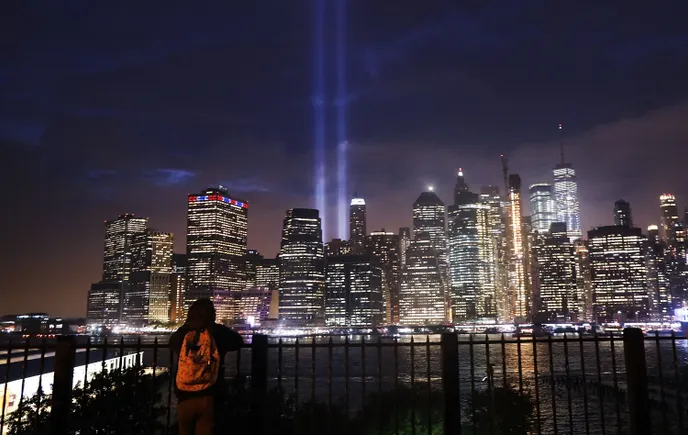
Every September, Sonia Corlew, a middle school teacher at Sycamore Canyon School in Newbury Park, California, leads her eighth-grade students through Billy Collins's poem "The Names" to open discussions about the anniversary of 9/11. The poem, which includes the names of those killed in the attacks, serves not only as a text for students to analyze, annotate, and discuss poetic techniques, but also as a key medium for Corlew to guide students in understanding that history.
"Deep down, this poem isn't in my curriculum," Corlew said, "but I bring it into the classroom to honor all those who died and to make sure students remember and never forget, because they don't know the full story."
As the twentieth anniversary of 9/11 approaches, some educators are seeking ways to bring the details of that day into the classroom. For most K-12 students, the day has become pure history—they are too young to have experienced it firsthand.
For other teachers, they might spend a class period or more discussing the day by reading poetry written by the then-U.S. Poet Laureate or writing thank-you letters to today's first responders. Teachers planning to discuss 9/11 this year aim to bring some of that history into the classroom and pass it on to students.
Incorporating Family and Community into the Experience
Corlew added the 9/11 unit to her curriculum about eight years ago, and she also incorporates students' families into the assignment design. She emails parents a link to a recording of Collins reading the poem and informs students that they must interview a family member about their personal memories of 9/11.
When students return to class with their interviews, Corlew has everyone share what they learned, listening to perspectives that parents or other family members may have experienced—including those of families who may have been living in other countries twenty years ago.
Corlew says she has not received objections from parents about discussing 9/11 in school; instead, she has received thank-you notes for bringing up the topic and giving adults the opportunity to talk about their own experiences.
"They tell me how much they enjoyed sharing their stories with their children and what that day was like," she said.
Terri McDaid, a teacher at Cedar Crest Middle School in Lebanon, Pennsylvania, also begins her sixth-grade 9/11 unit by sharing her own experience from that day in 2001. McDaid was not teaching then; she was at a doctor's office with her young daughter and only learned of the attacks when she returned to her car and heard the news on the radio.
Similar to Corlew, she encourages students to go home and ask the adults in their households: what they were doing when they learned of the attacks, where they were, and other memories of that day.
Additionally, McDaid combines the 9/11 curriculum with a service project focused on first responders in the school community, including firefighters and other emergency personnel. In some years, her class has personally visited police stations, fire stations, and ambulance and security personnel to deliver handmade cards and baked goods made by students. Even during the pandemic, McDaid had the class make and send cards.
Using Memorial Resources for Interactive Engagement
McDaid also typically has her class participate in an online live conversation hosted by the 9/11 Memorial & Museum in New York, where students can interact one-on-one with museum volunteers and staff. Before the event, McDaid has the class submit questions they want to ask, and then she selects a few to pose.
This year, the museum is also offering a 30-minute on-demand webinar, "Anniversary in the Schools," which will feature first-person accounts from various individuals about their memories of that day.
"I want them to understand the events and people's personal stories, how they were affected, and how people responded."
—Terri McDaid, teacher at Cedar Crest Middle School, Pennsylvania
McDaid believes that the more personal the narratives students hear, the better they understand the impact of 9/11. In addition to participating in the online program from the 9/11 Memorial & Museum, she also introduces books like "The Red Bandanna," which tells the story of Welles Crowther—a stock trader and volunteer firefighter who helped lead people out of the World Trade Center on the morning of the attacks before dying. Other discussions cover topics such as fireboats that rescued people from the Hudson River in lower Manhattan.
To mark the twentieth anniversary, other teachers at the school (including English language arts and reading teachers) are collaborating with McDaid to expand the unit to include memorials beyond New York, such as the Pentagon Memorial in Washington, D.C., and the Flight 93 National Memorial in Pennsylvania.
"I want them to understand the events and people's personal stories, how they were affected, and how people responded," she said.
The New-York Historical Society has also digitized some of its 9/11 artifacts for online access, including a worker's ID badge from the World Trade Center and items found after the towers collapsed.
Preparing to Support Students
Laura Tavares, director of organizational learning and thought leadership at Facing History and Ourselves, believes that even teachers who have not formally designed a 9/11 unit should be prepared to respond when students come to class with questions.
As the twentieth anniversary approaches, students are likely to see related videos and images on social media and various media outlets on that day and even throughout the week. This means children will likely come to school wanting to talk about what they have seen and heard, or even share stories of how that day affected their families.
"I might consider leaving space for students to reflect," Tavares said.
To ensure teachers are ready to support students, Tavares encourages them to consult Facing History & Ourselves's checklist, which includes suggestions on how to discuss current events in the classroom. Additionally, there are resources to help students process emotionally difficult experiences like 9/11, including strategies ranging from journaling to graffiti boards.
Finally, Tavares encourages teachers to leave space to discuss how the aftermath of 9/11 affected people in the days, months, and years that followed.
"They can examine the legacy of this historical date, justice and injustice, harm and responsibility," she said. "They can discuss, when we look back twenty years, through that lens, what do we see."
